The 8 Best Places to Visit in Africa and Oceania This Summer 2026
From the Great Migration's river crossing in Kenya to a midwinter arts festival in Tasmania, here are eight destinations across Africa and Oceania that hit their absolute best between June and August 2026.
FortripAI
Share
The 8 Best Places to Visit in Africa and Oceania This Summer 2026
Where to Go in June, July, and August 2026 — From the World's Greatest Wildlife Spectacle to a Midwinter Arts Festival at the Bottom of the World
There's a persistent logic to summer travel: most people chase the sun north, crowding into Europe and the Caribbean while half the planet tilts quietly away into its other season. That logic leaves behind some of the best experiences on earth. June, July, and August are not the months to think about Africa and Oceania — until you look at what's actually happening there. Then they become the only months that matter.
The destinations below are not interchangeable. Each has a specific reason to be visited in this specific window — a wildlife event, a flood cycle, a festival that only exists in winter, a whale migration timed to the southern cold. None of them offer a merely decent experience in June through August. They offer their best one.
Share
Start a trip Fortrip can actually defend.
Sketch a brief. We come back with an itinerary that reads like a recommendation, not a checklist — and tell you what we’d change about it.
Most of Cusco's points of interest run on one bundled ticket system, not pay-as-you-go gates. Here's what the Boleto Turístico covers, what it leaves out, and how to pace the altitude.
Resonance ranks London first, Time Out ranks Porto second, Travel + Leisure's readers pick Florence. None of them are wrong — they're measuring different things. Here's how to build a shortlist from all three, plus what July actually costs in heat and crowds.
Here are eight.
1. MASAI MARA, KENYA
The River Crossing the Whole World Has Been Waiting For
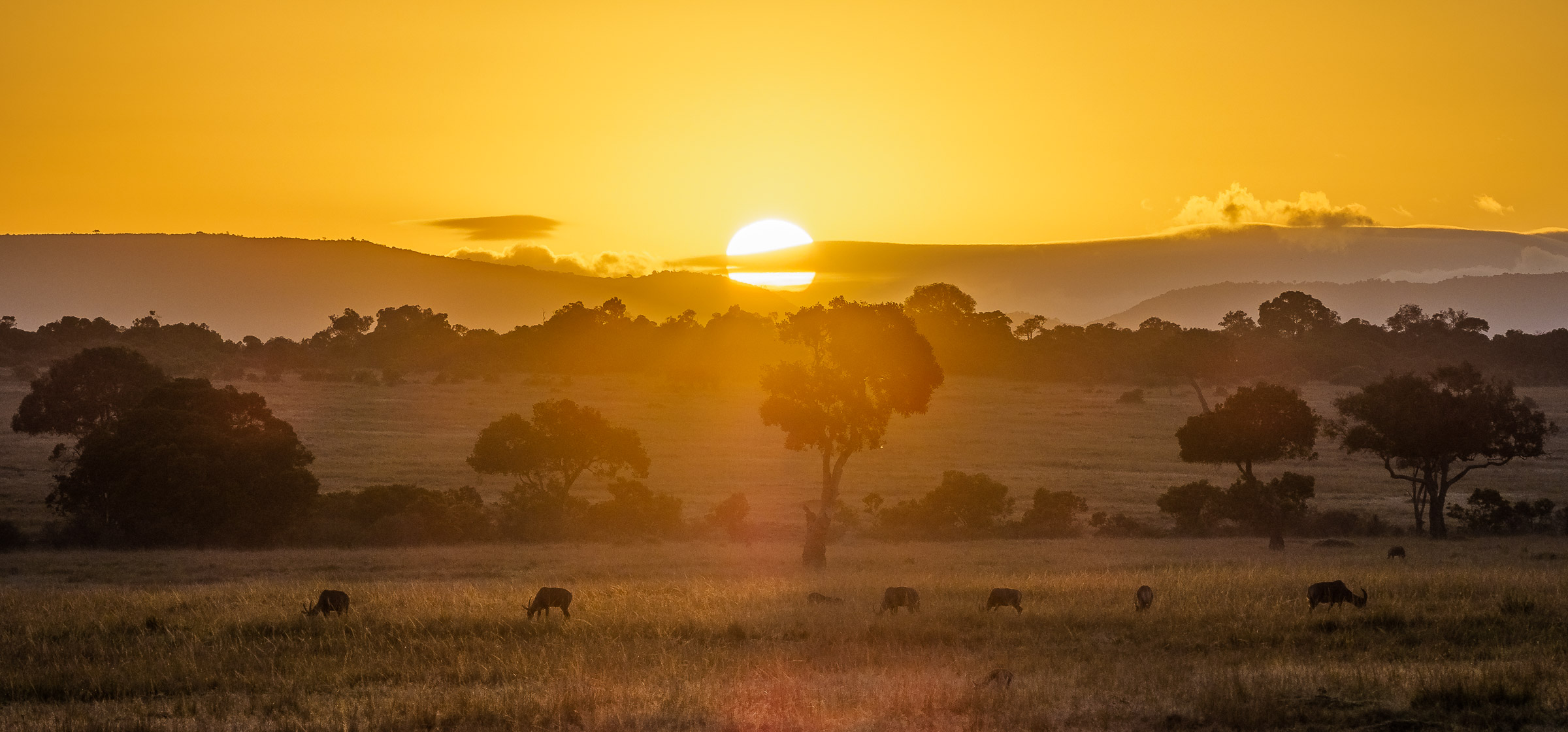
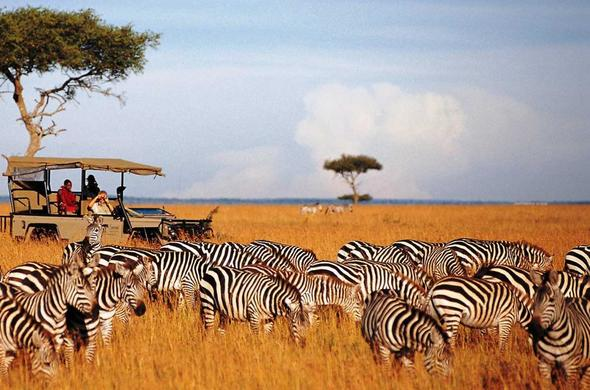
No wildlife event on earth has been written about more, filmed more, or anticipated more — and it still exceeds expectations. The Great Migration is the circular movement of roughly 1.5 million wildebeest, 250,000 zebra, and 400,000 Thomson's gazelles through the Serengeti-Mara ecosystem, a journey driven entirely by rainfall and the relentless arithmetic of grass. They don't move on a schedule. They move when hunger tells them to.
August is when that logic deposits the herds at the Mara River — the most dramatic crossing point in the world, and the one that produces the images you've seen. The mechanics are ancient and brutal: a million animals massed on one bank, over 3,000 Nile crocodiles in the water, and a drop of several metres into a current strong enough to kill. The herds will stand at the edge for hours, sometimes days. Then one wildebeest leaps, and in seconds the entire bank collapses into the water.
Only the Mara River delivers this. The two other rivers wildebeest cross entering Kenya — the Sand River and the Talek — are shallow; the drama there is minimal. The Mara is the one.
August is generally considered the peak month for crossings. Herds typically begin arriving in the reserve from mid-to-late July and the most concentrated river activity runs through August and into September. The experience transforms the entire reserve: predator density surges, game drives carry an intensity the rest of the year cannot match, and the plains hold numbers of animals that have to be seen to register.
Book well in advance. Camps along the Mara River crossing points — especially in the Mara Triangle and surrounding conservancies — sell out 12 to 18 months ahead.
Getting There: Fly into Nairobi (Jomo Kenyatta International, served by most major international carriers). The most efficient onward option is a scheduled light aircraft flight from Wilson Airport to one of the Mara's several airstrips — the journey takes around 45 minutes. Road transfer from Nairobi is possible but takes five to eight hours on routes that slow further during peak season.
4-Day Itinerary — Masai Mara
Day 1: Fly into Nairobi, overnight near Wilson Airport. Brief afternoon game drive or sundowner.
Day 2: Morning flight to the Mara. Afternoon game drive along the Mara River corridor. First crossing attempt.
Day 3: Full day in the reserve, positioned near the primary crossing points. Dawn and afternoon drives. Sundowner on the plains.
Day 4: Early morning drive, then return flight to Nairobi for onward connections.
2. OKAVANGO DELTA, BOTSWANA
A Desert That Floods in Winter — and 2026 Is the Best Year in Decades
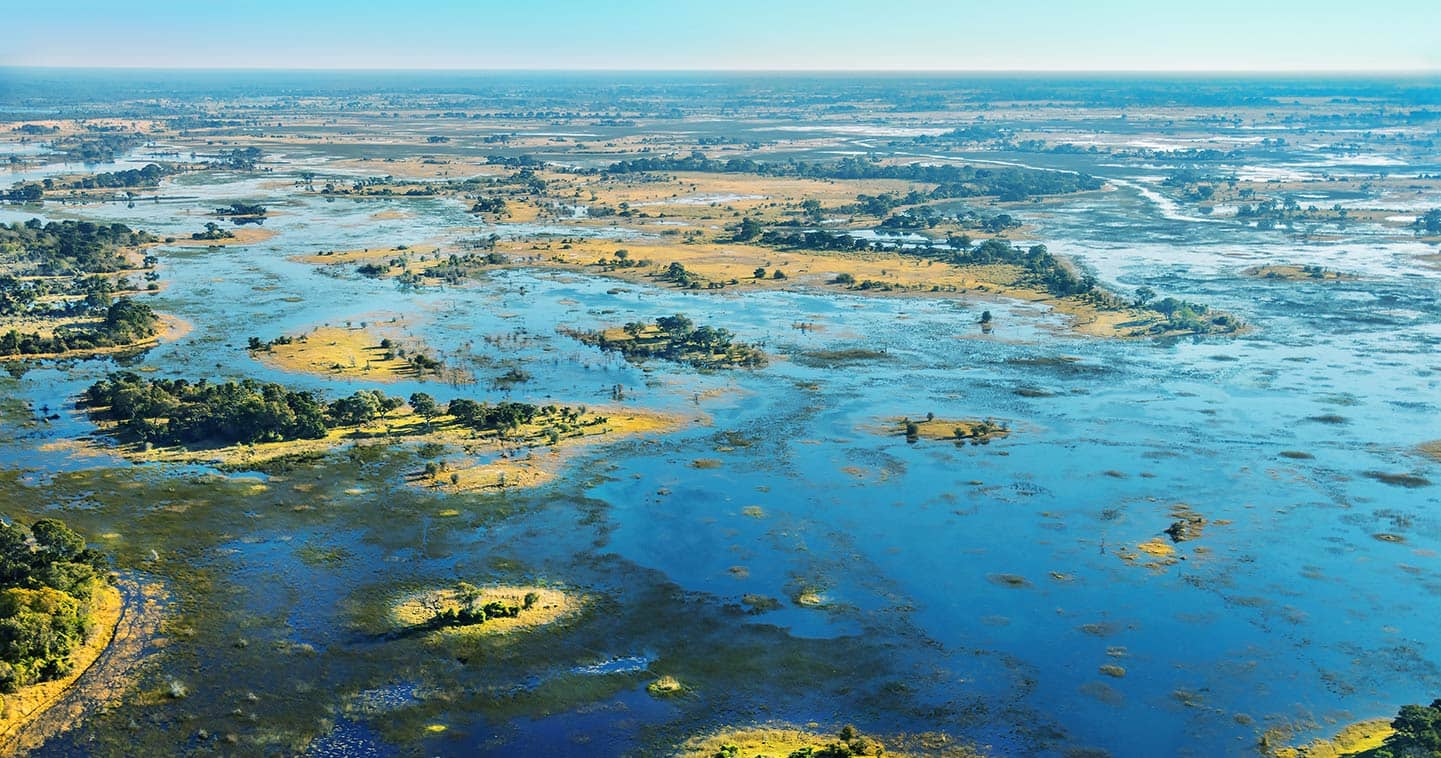
The Okavango Delta operates on counterintuitive logic: the floodwaters arrive during the dry season. Rain falls in the Angolan Highlands between November and March, feeds into the Okavango River, and travels more than 1,000 kilometres south before spreading across northern Botswana's Kalahari as the rest of the continent turns brown. The result is an inland delta — Africa's largest endorheic delta and a UNESCO World Heritage Site since 2014 — that peaks between June and August, expanding to three times its permanent size when nowhere else in the region has any water at all.
Wildlife logic follows water logic. Animals converge on the delta from across the region as sources elsewhere dry up. The Okavango supports 130 mammal species, including the world's largest elephant population, as well as lion, leopard, cheetah, African wild dog, hippo, and all the antelope that accompany them. Game drives along the flood edges become a study in animal density.
The distinctly Okavango experience, though, is the mokoro — a traditional dugout canoe poled silently through the reed channels by a local guide. You sit at water level, drifting through papyrus, close enough to hippos and crocodiles that the guide's knowledge is the only meaningful separation. No engine, no noise, no vehicle. It is one of the most immersive wildlife experiences Africa offers.
2026 is a particular year to visit. Rainfall upstream in Angola has been exceptional, and hydrological assessments describe the 2026 flood as one of the strongest in decades — channels that have lain shallow for years are filling again, opening up areas of the delta that have been inaccessible for a generation.
Getting There: Fly into Maun, the gateway town to the delta, via Johannesburg (O.R. Tambo International) or Gaborone. Multiple daily connections run from Johannesburg. From Maun, camp access is by light aircraft or boat, depending on the concession.
4-Day Itinerary — Okavango Delta
Day 1: Fly into Maun via Johannesburg. Light aircraft transfer to a water-channel camp. Afternoon mokoro excursion.
Day 2: Morning and afternoon mokoro, exploring the flooded interior. Sundowner on an island.
Day 3: Game drive along the flood edge toward Moremi — predator activity is highest here. Return to camp for an evening walk.
Day 4: Dawn bird walk along the channels, then light aircraft back to Maun for onward connections.
3. SOSSUSVLEI, NAMIBIA
The World's Oldest Desert at Its Most Photogenic
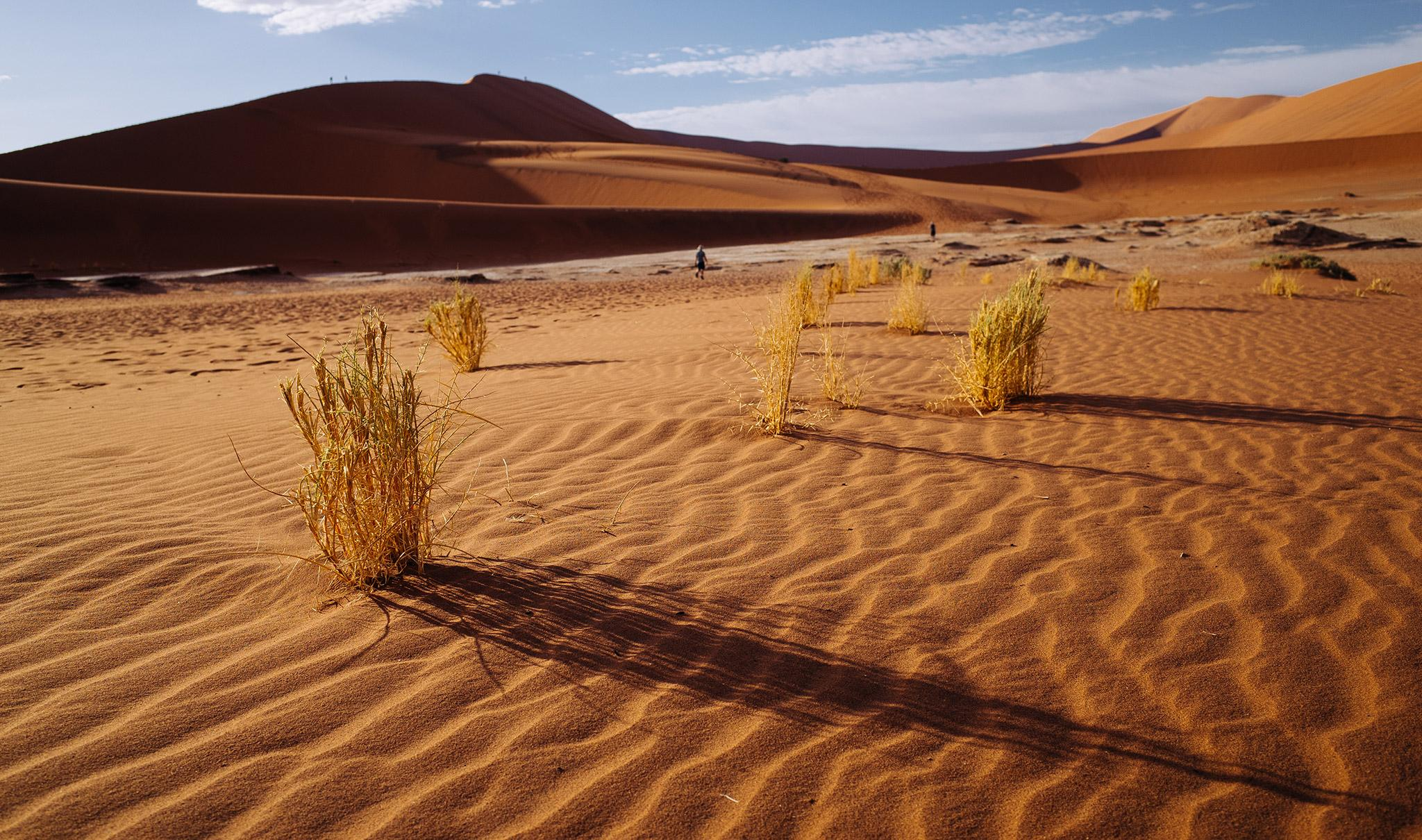
The Namib is the oldest desert on earth. Its dunes have been building for roughly five million years. The sand is red because of iron oxide — a slow oxidation, the same rust that colours it being a measure of geological age. The oldest dunes are the deepest red.
Sossusvlei sits in the heart of the Namib-Naukluft National Park, where these dunes reach their most theatrical expression. Dune 45 — named for its position at the 45-kilometre mark on the road from Sesriem gate — rises 170 metres and is the most photographed dune in Namibia, its knife-edge ridge catching the earliest light before the sun climbs and flattens the shadows. Behind it, Big Daddy stands at 325 metres, one of the tallest dunes in the Sossusvlei area, looming over the white expanse of Deadvlei — an ancient clay pan where camel thorn trees died approximately 800 years ago and have been mummifying in the desert air ever since. The combination of orange sand, white pan, and black skeletal trees is the image that represents Namibia to the world.
June and July are the best months to be here. Daytime temperatures sit between 20 and 28°C — warm and clear, with the sky the kind of blue that makes the dunes glow. Nights drop to near freezing, which creates the condition that makes Sossusvlei genuinely exceptional: darkness so complete and clear that the Milky Way reflects off the salt pan, and lodges offer outdoor star beds for those willing to sleep under it.
Etosha National Park, a five-to-six hour drive north, is simultaneously in its own peak season. The dry winter forces wildlife to the waterholes in predictable patterns; lion, elephant, giraffe, rhino, and zebra are reliably visible from fixed viewpoints, day and night. Pairing the two creates a trip that covers both the geological extreme and the wildlife density that define Namibia.
Getting There: International flights land at Hosea Kutako International Airport near Windhoek, served from Frankfurt (Lufthansa), Johannesburg, Cape Town, and several other African hubs. Sossusvlei is a 340-kilometre drive south on well-maintained roads, approximately four hours. Most visitors rent a car in Windhoek.
4-Day Itinerary — Sossusvlei and surrounds
Day 1: Fly into Windhoek, collect rental car, drive to Sesriem. Arrive before dusk for sunset on Elim Dune.
Day 2: Pre-dawn entry into the park. Climb Dune 45 at sunrise. Walk to Deadvlei. Afternoon at Sossusvlei pan. Stargazing.
Day 3: Drive north toward Etosha. Afternoon arrival. Sundowner game drive and waterhole visit.
Day 4: Full day at Etosha — morning and afternoon drives from your camp, timing waterhole visits for peak predator activity.
4. ÎLE SAINTE-MARIE, MADAGASCAR
A Pirate Island Where Humpback Whales Come to Give Birth
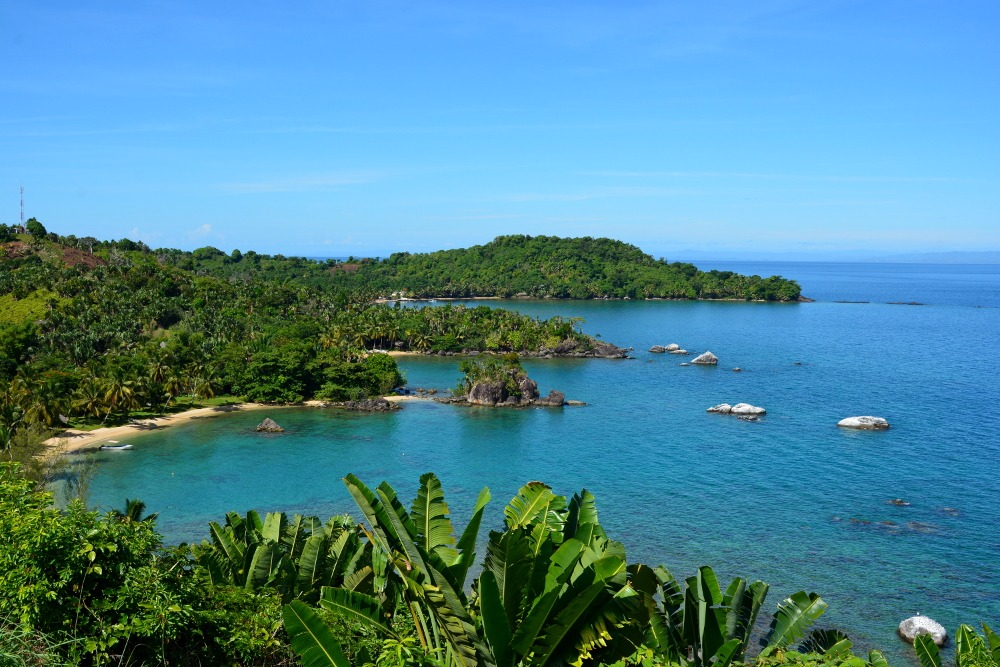
Sixty kilometres long and seven wide, Île Sainte-Marie sits five kilometres off Madagascar's east coast — close enough to the mainland to feel protected, remote enough to feel like the end of the map. In the 18th century, it was one of the most active pirate bases in the Indian Ocean; by some accounts, over a thousand pirates operated from here at the height of the golden age of piracy. The only documented pirate cemetery in the world is here, accessible at low tide via a causeway, with roughly thirty stone headstones still bearing carved skull and crossbones worn soft by centuries of salt air.
That history has been thoroughly upstaged by what happens every year between July and September. Humpback whales migrate from Antarctic feeding grounds to the sheltered channel between Sainte-Marie and the Malagasy coast to breed, give birth, and raise their calves in warmer water. They choose this channel because it is shallow, calm, and protected — exactly what a mother and newborn calf require. The result is one of the highest whale densities of any coastal location on earth during these months.
Boat tours run two to three hours, with hydrophones on board so passengers can hear the whales singing underwater. The animals breach, lunge, and slap their flukes close enough to boats that spray reaches the deck. Mothers and calves rest at the surface. Males pursue females in long competitive sequences called heat runs. July and August are the peak months; by September, many families have begun the journey south.
Away from the whales, the island runs at a pace several steps slower than the rest of the world — bicycles through vanilla and clove plantations, snorkelling on intact coral reefs, and small wooden fishing boats crossing the lagoon at dawn in colours that make photography feel almost too easy.
Getting There: The most practical route is a flight from Antananarivo (Ivato International Airport) to Sainte-Marie Airport — the journey takes approximately 45 minutes. Antananarivo is served from Paris, Nairobi, Johannesburg, and several regional hubs. A boat transfer from the eastern coast of Madagascar is possible but significantly longer.
4-Day Itinerary — Île Sainte-Marie
Day 1: Fly in from Antananarivo. Check into a beach lodge. Afternoon exploration of Ambodifotatra, the island's main town.
Day 2: Morning whale watching boat tour (2–3 hours). Afternoon at the pirate cemetery and the 1857 colonial church. Snorkelling in the lagoon at dusk.
Day 3: Full day cycling the island interior — vanilla and clove plantations, fishing villages, empty beaches. Pirogue sunset cruise.
Day 4: Early morning whale watch. Return flight to Antananarivo.
5. THE GARDEN ROUTE, SOUTH AFRICA
Three Hundred Kilometres of Coast, Whales, and the World's Best Oysters
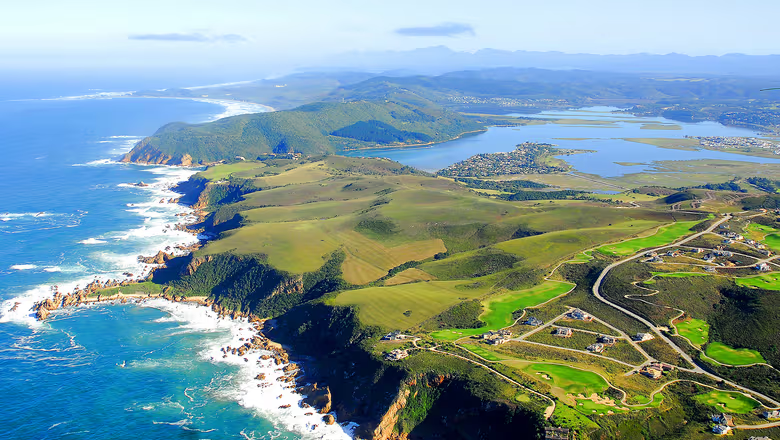
South Africa's Garden Route runs 300 kilometres along the southern coast of the Western and Eastern Cape, from Mossel Bay in the west to Storms River in the east. It is one of the world's most celebrated driving routes — a loose string of coastal towns and national parks stitched together by the N2 highway, with the Indian Ocean to the south and the Outeniqua Mountains rising inland. Most tourists come in the summer. Most of them miss the point.
The Garden Route in winter — June through August — has two things summer cannot offer. The first is whales. Southern right whales migrate from Antarctic waters to the sheltered bays along the Cape coast to breed between June and November, with sightings beginning reliably in early June. Hermanus, a small town roughly 120 kilometres east of Cape Town and a natural pause before the Garden Route proper, is consistently rated among the best land-based whale watching destinations on earth. The whales breach, roll, and lobtail close to shore; on the right day, standing on the cliffs above the old harbour, you are watching animals the size of buses perform fifty metres below you. Hermanus employs a dedicated whale crier — a man who walks the town blowing a kelp horn to alert residents to whale positions.
The second is the Knysna Oyster Festival, confirmed for 3–12 July 2026. Running since 1983, this ten-day event is built around the wild oysters harvested from the Knysna Lagoon — one of the most unusual estuaries in the world, accessible to the ocean through a narrow rocky gap called the Heads. The festival folds in trail running, mountain biking, wine tastings, and live music, but the core of it is standing at a harbour table eating cold oysters with lemon and a glass of Chenin Blanc while the sun sits somewhere behind the clouds and the mountains turn grey in the mist. This is what South African winter tastes like.
Along the route itself: shark cage diving in Mossel Bay, the indigenous forest trails of Tsitsikamma National Park, the Knysna Heads viewpoint, swimming with seals near Plettenberg Bay, and the ostrich farms of Oudtshoorn just inland.
Getting There: Fly into Cape Town International Airport, served from most major international hubs. Mossel Bay, the western starting point of the Garden Route, is 390 kilometres east — approximately four hours on the N2. Car rental is strongly recommended; this is a driving route.
4-Day Itinerary — Garden Route
Day 1: Fly into Cape Town. Drive east on the N2. Stop in Hermanus for whale watching from the coastal cliffs. Overnight in Hermanus.
Day 2: Continue east to Knysna. Visit the Heads viewpoint. If visiting 3–12 July: Oyster Festival (book ahead). Overnight in Knysna.
Day 3: Drive to Plettenberg Bay — seal swimming and Robberg Nature Reserve coastal trail. Afternoon at leisure. Overnight in Plettenberg Bay.
Day 4: Drive through Tsitsikamma National Park. Suspension bridge at Storms River Mouth. Return toward Cape Town or continue east.
OCEANIA
---
6. NINGALOO REEF, WESTERN AUSTRALIA
The Only Place on Earth Where You Can Reliably Swim Beside the World's Largest Fish
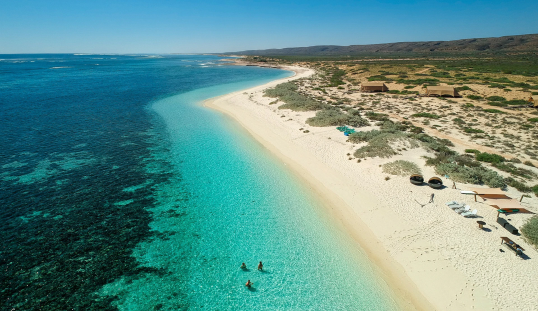
Ningaloo stretches 260 kilometres along Western Australia's North West Cape — one of the world's longest fringing reefs, and unlike the Great Barrier Reef, in places only metres from the beach. A UNESCO World Heritage Site since 2011, it supports 500 species of fish, 250 species of coral, six of the world's seven marine turtle species, year-round manta rays, and dugongs feeding in the sea-grass lagoons.
In June, two things happen simultaneously that happen nowhere else together. The official whale shark season runs from March through July, with Exmouth-based tours continuing into August. Whale sharks — the world's largest fish, filter feeders that can reach 18 metres in length — aggregate at Ningaloo each year following coral spawning, drawn by the plankton bloom. Ningaloo is one of the only places on earth where these animals reliably gather in accessible, shallow water in numbers large enough to run a reliable tour operation. You get in the water. A spotter aircraft radios coordinates. You swim alongside an animal larger than a bus that has no interest in you whatsoever except mild curiosity.
From June onwards, humpback whales begin migrating north from Antarctica along the reef — tens of thousands of them annually, passing close to shore. By August, licensed operators add humpback swimming to their programs, making Ningaloo's June and July window the brief overlap when both encounters are possible.
The base town is Exmouth — small, unhurried, built around the reef. Cape Range National Park runs directly adjacent, with red gorges, canyon walks, and isolated beaches that feel like the edge of the accessible world.
Getting There: Fly from Perth (Perth Airport, served by international carriers from most hubs) to Learmonth Airport, approximately 1,200 kilometres north — the flight takes two hours. Exmouth is a 35-minute drive from the airport. Alternatively, drive from Perth in around 12 hours, a popular option for those combining Ningaloo with other Western Australian destinations.
4-Day Itinerary — Ningaloo Reef / Exmouth
Day 1: Fly from Perth to Learmonth. Transfer to Exmouth. Afternoon snorkel direct from the beach — the reef is accessible without a boat.
Day 2: Full-day whale shark tour with a spotter aircraft. Swim brief includes pre-departure briefing on interaction protocols.
Day 3: Cape Range National Park — Yardie Creek gorge walk, Mandu Mandu gorge at dusk. Optional afternoon snorkel.
Day 4: Half-day kayak or glass-bottom boat tour over the coral. Afternoon departure flight to Perth.
7. QUEENSTOWN, NEW ZEALAND
Winter in the Adventure Capital of the Southern Hemisphere
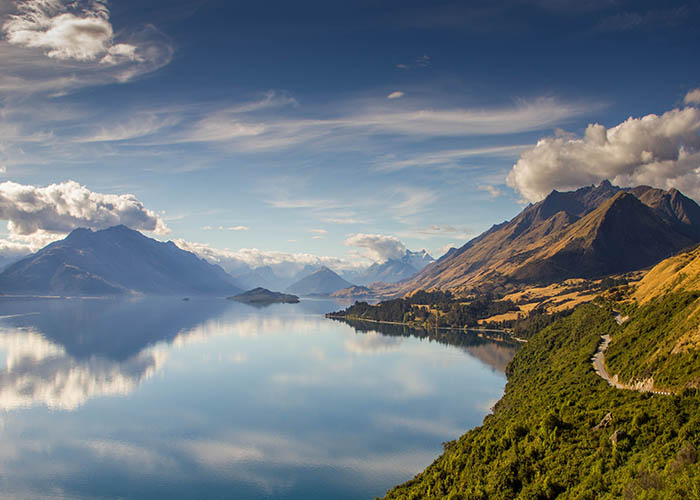
Most cities empty for winter. Queenstown fills. The South Island town on the shores of Lake Wakatipu has built an entire economy around the cold months, and in 2026, it has invested heavily in making the season start earlier and run more reliably than ever before.
Four ski fields operate within easy range. Coronet Peak and The Remarkables — both opening 13 June 2026 — are the closest, with Coronet Peak a 20-minute drive and The Remarkables 40 minutes. Cardrona, which was named New Zealand's Best Ski Resort at the 2025 World Ski Awards, is an hour away near Wānaka. Treble Cone, a more technical mountain with advanced terrain, opens 27 June. The headline development for 2026 is Coronet Peak's new Snow Factory — a first for the South Island, capable of producing snow in any conditions, including temperatures of 20°C. The result is more reliable early-season coverage and a learner area guaranteed to be operational from the end of May.
The best snow conditions typically run from late July through early September. Night skiing at Coronet Peak runs Wednesday and Friday evenings from late June into September — a genuinely unusual experience, skiing floodlit runs above the lights of the town below.
Queenstown in winter is not only skiing. The bungee operation at the Kawarau Bridge Gorge runs year-round; so do the jet boats on the Shotover River. Lake Wakatipu, with the Remarkables reflected in it, is possibly at its most striking when the surrounding hills are white. The town's restaurant and bar culture, which punches well above its population, is more enjoyable in winter than in the peak summer crush.
Getting There: Queenstown Airport receives direct international flights from Sydney, Melbourne, Brisbane, Singapore, and several other cities, operated by Air New Zealand, Qantas, and Singapore Airlines. The airport is ten minutes from the town centre.
4-Day Itinerary — Queenstown
Day 1: Fly in. Check in. Afternoon at leisure — walk along the lake front, dinner in town.
Day 2: Full ski day at Coronet Peak. Night ski on selected evenings.
Day 3: Cardrona Alpine Resort — a longer drive, but the terrain variety warrants it. Return via Crown Range Road for the view over Wānaka.
Day 4: Wakatipu lakeshore walk or canyon swing. Afternoon bungee at Kawarau Bridge. Evening flight out or dinner in town.
8. HOBART, TASMANIA
The Most Interesting Winter Festival in the Southern Hemisphere
No one goes to Hobart for the winter. That is the point.
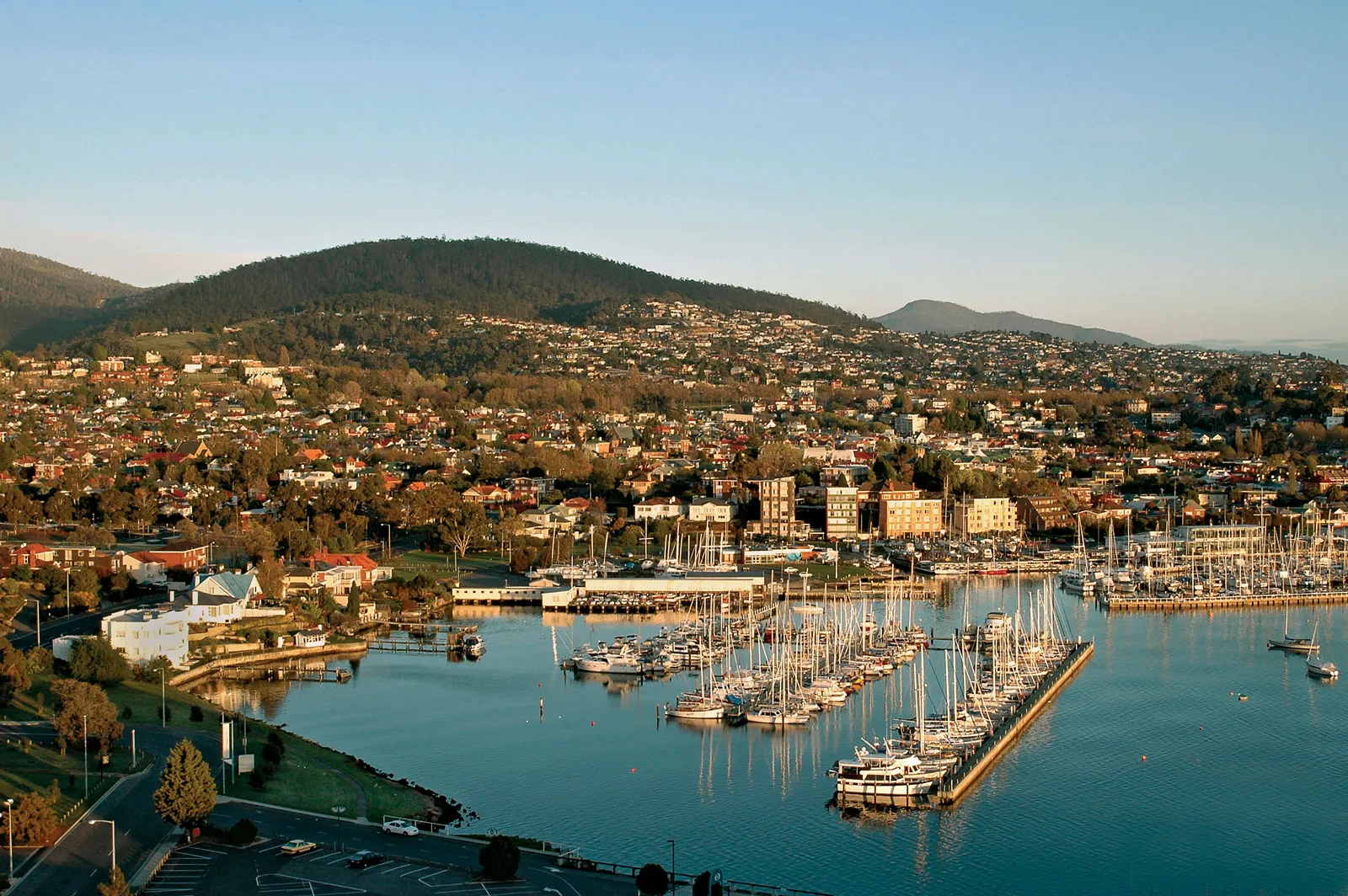
The island of Tasmania sits at the far south of Australia, below the 42nd parallel, where the Roaring Forties blow in from the Southern Ocean and the nights in June extend longer than anywhere else on the Australian mainland. It is cold. The hills surrounding Hobart turn white. And since 2013, the Museum of Old and New Art — MONA, a private museum of deliberately confrontational art built into a sandstone cliff face below a Hobart suburb — has been hosting Dark Mofo: a midwinter festival that has made Hobart one of the most talked-about cultural destinations in the southern hemisphere.
Dark Mofo 2026 runs 11–22 June, and the full program is the most ambitious the festival has mounted. Large-scale public art takes over unconventional sites across the city, including the Spirit of Tasmania V, a 48,000-tonne ship moored in Dark Park as a venue. MONA itself opens major new exhibitions. The music program brings international and local artists into spaces that include warehouses, deconsecrated churches, and the museum's underground galleries. The Winter Feast — two long weekends of Tasmanian food, wine, and spirits consumed around outdoor fire pits on Princes Wharf — anchors the experience in something fundamental: eating well in the dark and the cold, which turns out to be one of the better things a person can do.
The signature ritual is the Winter Solstice Nude Swim, in which hundreds of people of all ages enter the Derwent River at dawn on the solstice. It is exactly as freezing as it sounds, and attendance grows every year.
Beyond Dark Mofo: the Tasmanian Whisky Week in August, the Festival of Voices in late June and July, Cradle Mountain-Lake St Clair National Park with its snow-capped peaks and frozen-edged Dove Lake, Port Arthur Historic Site in its proper atmospheric season, and the chance — on clear winter nights at the right latitude — of seeing the Aurora Australis.
Getting There: Hobart Airport receives direct flights from Sydney, Melbourne, Brisbane, and Adelaide on Qantas, Jetstar, and Rex. The airport is 20 minutes from the city centre. International visitors typically connect via Sydney or Melbourne.
4-Day Itinerary — Hobart / Dark Mofo
(Best timed 11–22 June to coincide with the festival. Book accommodation months in advance — Dark Mofo drives Hobart to full capacity.)
Day 1: Fly in. Afternoon walk through Salamanca Place. Evening: Winter Feast opening at Princes Wharf.
Day 2: Morning MONA by ferry from Brooke Street Pier — allow four hours minimum for the collection. Afternoon: rest. Evening: Night Mass or live music program.
Day 3: Day trip to Port Arthur Historic Site (90 minutes each way, haunting in winter light). Return to Hobart for fire pit dinner.
Day 4: Cradle Mountain or Richmond village in the morning. Afternoon departure, or extend for more festival programming.
---
A NOTE ON TIMING AND HEALTH
All eight destinations above were selected for June through August 2026, and each has been verified clear of active health or disease advisories relevant to travellers as of mid-June 2026.
Book camps and lodges well in advance for the Masai Mara and Okavango Delta — peak season inventory at quality properties is limited and fills early. The Knysna Oyster Festival and Dark Mofo both apply pressure to accommodation in their respective towns; early booking is non-negotiable for either.