Best Places to Visit in Europe This Summer: 8 Destinations Worth the Trip in 2026
Eight European destinations worth visiting in 2026, from Barcelona's Sagrada Família centenary to Oulu's midnight sun, Gdańsk's Baltic coast, and the Azores' volcanic islands.
Best Places to Visit in Europe in Summer 2026: 8 Destinations Worth the Trip
Europe in summer is a well-worn argument, and most of the destinations you already know are exactly as good as advertised — and exactly as full of other people who arrived at the same conclusion. This list is built differently. Barcelona earns its place because a 144-year construction project completes on June 10, and the Pope is flying in for it. Oulu earns its place because it's the European Capital of Culture in 2026 and will never be again. The Lofoten Islands earn their place because the sun doesn't set in June, and that fact changes something fundamental about how a place feels. The other five are here because they are, variously, the finest stretch of Ionian coast that isn't yet ruined, the most underrated peninsula in Greece, an Italian region most tourists skip on their way to Amalfi, a Baltic port city that tends to stop people in their tracks, and a mid-Atlantic archipelago that looks like somewhere invented for a novel. None of them are filler.
Share
Start a trip Fortrip can actually defend.
Sketch a brief. We come back with an itinerary that reads like a recommendation, not a checklist — and tell you what we’d change about it.
Most of Cusco's points of interest run on one bundled ticket system, not pay-as-you-go gates. Here's what the Boleto Turístico covers, what it leaves out, and how to pace the altitude.
Resonance ranks London first, Time Out ranks Porto second, Travel + Leisure's readers pick Florence. None of them are wrong — they're measuring different things. Here's how to build a shortlist from all three, plus what July actually costs in heat and crowds.
EIGHT DESTINATIONS · SUMMER 2026
01 · BARCELONA Spain · Catalonia Gaudí Centenary · A 144-Year Building Finally Finishes Architecture · Gaudí Year · World Heritage · Urban Culture
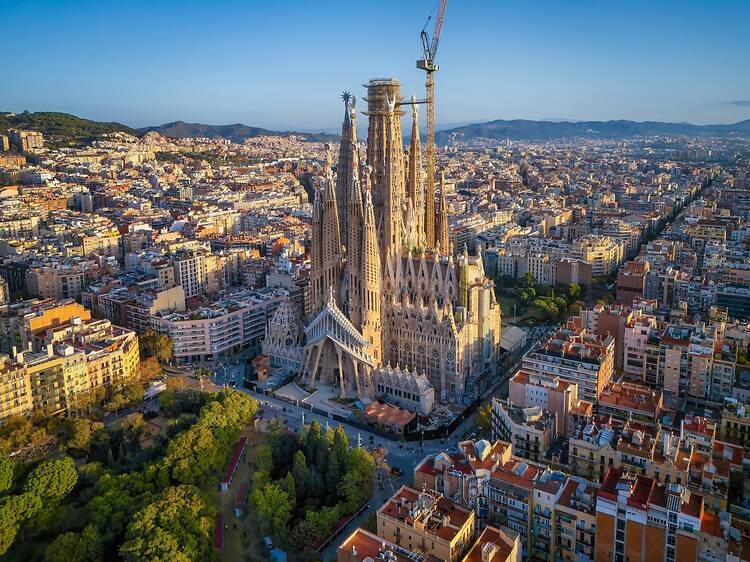
The destination Gaudí died on June 10, 1926, struck by a tram on Gran Vía and taken to a pauper's hospital because nobody recognised him. Three days later, when his identity became known, Barcelona shut down for his funeral. One hundred years later, on the exact centenary of his death, Pope Leo XIV will stand inside the Sagrada Família — the building Gaudí spent the last 43 years of his life living inside, sleeping in his workshop, eating almost nothing, dedicating everything — and inaugurate the Tower of Jesus Christ. At 172.5 metres, it makes the Sagrada Família the world's tallest church, surpassing Ulm Minster in Germany. The cross at its summit weighs 100 tonnes, is made of steel and glass, and was installed on February 20, 2026.
The tower itself is not open to the public — that comes in 2027. What 2026 gives you is something different: a city wearing its best clothes, 1,500 events across 170 institutions, nightly light projections mapping Gaudí's symbolism onto his buildings' facades, the 2026 Gaudí International Congress at La Pedrera, and the particular atmosphere of a place that knows it is, for once, at the centre of history.
Beyond the Sagrada Família The Gaudí circuit — Casa Batlló, Casa Milà (La Pedrera), Park Güell, Palau Güell, Casa Vicens — is absorbing in any year. In 2026, every site has enhanced programming. Barcelona is also the UNESCO World Capital of Architecture this year. Outside Gaudí: the Eixample grid, Barceloneta's beach, La Boqueria (go early), El Born neighbourhood for tapas and cocktails at a sensible hour, the Picasso Museum, and the extraordinary Palau de la Música Catalana.
Why summer 2026 This is a once-in-the-building's-history event. If you visit Sagrada Família in any other year, the tower is either under construction or complete — but the year the Pope inaugurated it, the year the centenary fell, that was 2026. Book Sagrada Família tickets 3–4 weeks ahead; the site routinely sells out in summer. Do not attempt a walk-up visit.
4 Days · Barcelona Day 1 — Arrive Barcelona. Wander El Born and La Barceloneta. Late evening: Park Güell (book timed entry). Dinner at a terrace restaurant in Gràcia. Day 2 — Morning Sagrada Família (book the earliest slot — stained glass on the Nativity side catches the morning sun perfectly). Afternoon: Casa Batlló or Casa Milà (La Pedrera). Evening: cocktails and dinner in Eixample. Day 3 — Palau Güell (often less crowded than the main Gaudí sites). Afternoon: El Raval and MACBA (contemporary art museum). Evening: walk along the Passeig de Gràcia. Day 4 — Day trip to Montserrat (1 hr by train) — the monastery and cable car viewpoints. Return for a final evening in El Born.
Getting There Fly into Barcelona–El Prat Airport (BCN) — one of Europe's best-connected airports, with direct flights from across Europe, North America, Latin America, the Middle East, and Asia. From the airport, the Aerobús runs directly to Plaça de Catalunya (~35 min) and is the simplest option. The Metro L9 also connects the airport to the city. All Gaudí sites require advance ticket booking — no walk-up tickets exist in summer 2026.
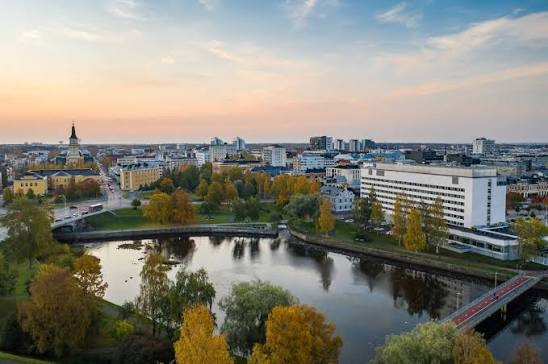
02 · OULU Finland · North Ostrobothnia European Capital of Culture 2026 · Midnight Sun · Sauna as Philosophy Culture Programme · Midnight Sun · Sámi Heritage · Sauna Festivals
The destination Oulu sits on the Gulf of Bothnia, 250 kilometres south of the Arctic Circle, and in any normal year almost no international visitors find their way here. In 2026 it is the European Capital of Culture — a designation shared with Slovakia's Trenčín — and the programme it has built around that title is quietly one of the most inventive in the award's history. The anchor events run across 40 municipalities, from the Russian border to the Swedish border. But summer in Oulu specifically: the Sauna Festival (June 5–9 at Tuiran Beach) combines sauna rafts floating down the Oulujoki River, art installations inside purpose-built outdoor saunas, and live music in a format that has no equivalent anywhere in Europe. The Air Guitar World Championships — a real competition with real international contestants, held in Oulu annually since 1996 — is in August, and is exactly as absurd and precisely as entertaining as it sounds. The Climate Clock public art trail scatters contemporary installations across the city's coastline, river valleys, and forests; it is entirely free and navigable on foot or by bike.
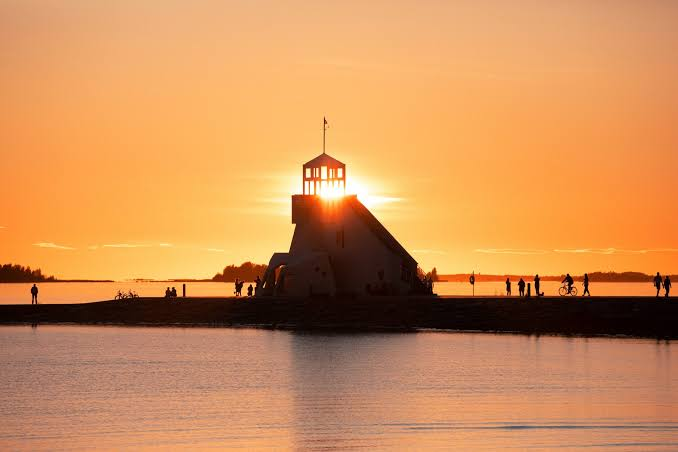
The midnight sun From mid-June through late July, the sun does not fully set in Oulu. This is not a metaphor. At midnight, the sky is orange. At 2am, it is still light enough to read. The effect on the human body is strange and worth experiencing at least once: you don't get tired at the right times, meals happen at wrong hours, and the city's residents move outside in a way that feels genuinely different from anywhere else in Europe.
Sámi culture Oulu2026 has put Sámi programming — the indigenous people of the Arctic North — at the centre of its cultural year in a way that few European capitals ever have. Concerts, visual art, and the world premiere of an original Sámi opera are among the headline events. This matters, and it makes Oulu a more interesting proposition than a city showcasing only its own history.
Why summer 2026 Oulu is the European Capital of Culture once. That is the entire argument. After 2026, it goes back to being a city that most European travellers have never considered. The summer programme combines the outdoor midnight sun season with the cultural year's peak outdoor events — it is the densest version of what Oulu 2026 has to offer.
4 Days · Oulu Day 1 — Fly into Oulu (OUL). Pikisaari island — the wooden house neighbourhood in the river delta; evening in the outdoor cafes, sunset at 11pm. Day 2 — Sauna Festival at Tuiran Beach (if June 5–9): river sauna rafts, outdoor performances, communal bathing. Otherwise: Climate Clock art trail on foot or by hire bike, covering the coastal installations. Day 3 — Day trip north along the coast: Liminganlahti Bay (one of Finland's most important bird wetlands, extraordinary in summer). Return for an evening meal at one of the Arctic Food Lab programme restaurants. Day 4 — Nallikari beach (the city's main summer beach, Baltic sand, surreal in midnight sun). ARToulu art area in the river delta. Evening flight or overnight train south to Helsinki.
Getting There Fly into Oulu Airport (OUL) — several daily flights from Helsinki Vantaa (HEL, ~1 hour on Finnair and Norwegian). International visitors typically connect via Helsinki. Alternatively, the overnight VR train from Helsinki to Oulu takes approximately 7 hours and is a scenic, comfortable option. Within Oulu, the city is easily navigated by hire bicycle — the terrain is flat and the cycling infrastructure is excellent.
03 · HIMARA & THE ALBANIAN RIVIERA Albania · Ionian Coast Europe's Last Affordable Coastline · Still Ionian Sea · Ancient Ruins · Coastal Hiking · Seafood
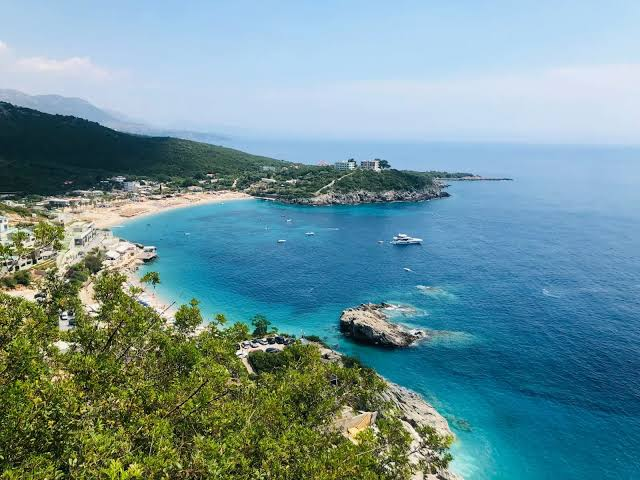
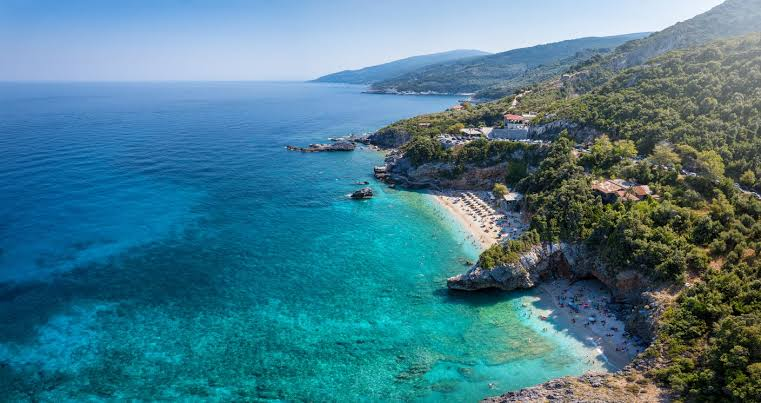
The destination The Albanian Riviera runs south from Vlorë to the Greek border, the Ceraunian Mountains on one side and the Ionian Sea on the other, the SH8 coastal road cutting through a landscape that oscillates between dramatic gorge and turquoise bay with very little preparation. Himara is the cultural centre of the southern stretch: a bilingual town (Albanian and Greek) with a castle above, fourteen beaches below, and a seafood tradition built around whatever came in that morning. Gjipe is the standout — a canyon that opens onto a beach accessible only by boat or a forty-minute hike through limestone, the kind of place that looks implausible from the photograph. Livadhi is the family beach. Drymades stretches for a kilometre of uncrowded sand. Spile is five minutes from the town and perfectly serviceable for a morning swim.
An hour south, Butrint National Park is a UNESCO site of genuine stature: a small peninsula on which Greeks, Romans, Byzantines, and Ottomans each built their city on top of the previous one, leaving behind a layered archaeological site with a theatre, Roman baths, a Byzantine baptistery with an intact mosaic floor, and Venetian towers all within a twenty-minute walk of each other. Corfu is visible across the water.
Honest note on the Riviera Sarandë and Ksamil — the most photographed, most TikToked parts of the Albanian Riviera — have been heavily developed and are genuinely overcrowded in July and August, with beach clubs packed so tightly you can barely find the sand. The beaches are still beautiful; the experience is not what the imagery suggests. Himara, thirty kilometres north, is what the whole coast was a decade ago. Go in June and you will find it before the worst of the peak-season volume arrives.
Why summer 2026 June is the optimal month: weather is perfect, the Ionian is already warm enough for swimming, crowds are a fraction of July and August, and prices are noticeably lower. The whole coastline is open. This is a destination that is getting more developed every year — the argument for going sooner rather than later is not hyperbole.
4 Days · Himara-Based Day 1 — Fly into Tirana (TIA), take the bus to Himara (4–5 hrs via the coastal road; or Sarandë then 1.5 hrs north). Check in. Evening at the harbour with grilled octopus and local raki. Day 2 — Gjipe canyon hike and beach (allow 3–4 hrs return on foot, or 15 min by boat). Afternoon: Livadhi beach. Sunset from Himara Castle above the old town. Day 3 — Full day at Butrint National Park: hire a car or local taxi from Himara (1 hr each way). The ruins are best walked slowly in the morning before the tour groups arrive. Day 4 — Drymades beach in the morning. Drive or bus south to Sarandë for the evening ferry to Corfu (1 hr), or back to Tirana for a flight.
Getting There Fly into Tirana International Airport (TIA) — served from many European cities on Wizz Air, Ryanair, British Airways, and others. From Tirana, take the Fios bus or a shared taxi south to Himara (4–5 hrs on the coastal road, or inland via Gjirokastër). Alternatively, fly into Corfu (CFU) in Greece and take the ferry to Sarandë (1 hr), then a bus or taxi north to Himara (~1.5 hrs). No train service exists in southern Albania.
04 · LOFOTEN ISLANDS Norway · Arctic Circle Midnight Sun · The Edge of the Atlantic Hiking · Midnight Sun · Sea Kayaking · Rorbu Villages
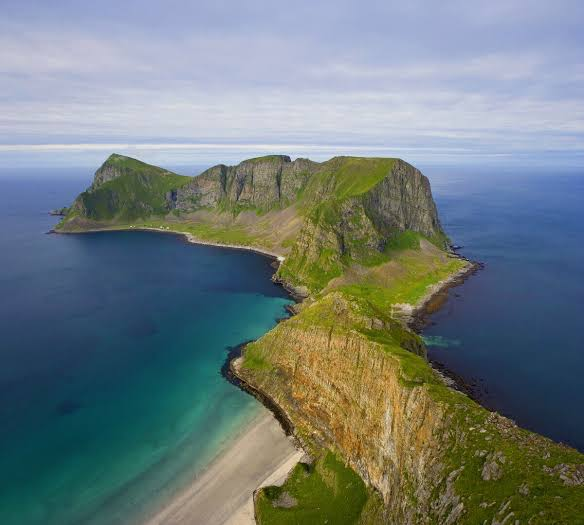
The destination The Lofoten Islands are a hundred-kilometre chain of peaks rising directly from the Norwegian Sea, the archipelago arranged in a long crescent west of the mainland. The mountains go straight into the water without transition. Red fishing huts (rorbuer) cluster on rocky outcrops above the sea. The light in June and July, when the sun never fully sets, turns everything amber for hours on end and then turns it amber again. Reinebringen — the hike above the village of Reine — is the defining experience: a steep, direct climb that rewards you with a view of the archipelago spreading out on both sides, every fjord and peak visible at once, the whole thing holding light that doesn't behave like light anywhere else. From Reine, small boats reach Bunes Beach, a white sand strip accessible only by sea, fronted by a 500-metre vertical cliff face.
The Lofoten Skrei — the annual cod migration that defines the islands' economy from February through April — is over by summer, but the fishing culture remains present in the traditional rorbuer converted to accommodation and the dried cod that hangs from wooden racks across every village. Henningsvær, built across two small islands connected by a narrow bridge, is the archipelago's most aesthetically concentrated village.
Why summer 2026 The midnight sun is the sole seasonal argument. From mid-June to mid-July, the sun sets for perhaps two hours but never fully darkens — the sky goes from deep orange to pale gold and back without any intermediate black. This is Lofoten at its most disorienting and most beautiful. June specifically is the shoulder of peak season: the midnight sun is fully active, the weather is typically good, and the islands haven't yet hit the density of late July and August. Book accommodation early — good rorbuer in Reine, Henningsvær, and Å book out months ahead.
4 Days · Lofoten Day 1 — Fly into Svolvær (SVJ) or Harstad/Narvik (EVE) and drive the E10 west. Check in at Henningsvær. Evening walk over the bridge and along the harbour. Day 2 — Reinebringen hike above Reine (allow 3 hrs return; start early to beat afternoon crowds). Late lunch in Reine. Evening drive to Å (the last village on the E10) — traditional fishing museum and dried cod racks. Day 3 — Morning sea kayaking from Henningsvær. Afternoon: drive north to Svolvær for the Svolværgeita (Goat) rock formation and the view over the inner fjords. Midnight photography session from any hilltop above the village. Day 4 — Ferry or flight back to the mainland. The ferry from Moskenes to Bodø (3.5 hrs) is scenic and cheaper than a return flight.
Getting There Fly into Harstad/Narvik Airport (EVE) — connections from Oslo on Widerøe — then drive the E10 across to Lofoten (~3 hrs). Alternatively, fly into Svolvær (SVJ, small regional airport). The overnight Hurtigruten coastal ferry from Bergen northward is the classic approach, passing the islands over three days — expensive but spectacular. From Bodø on the mainland, a car ferry crosses to Moskenes in 3.5 hours. A rental car is strongly recommended — the E10 is the main artery and the island's villages are connected by this single road.
05 · PUGLIA & MATERA Italy · Heel of the Boot Baroque Lecce · Cave City Matera · Adriatic Coast Cave Dwellings · Baroque Architecture · Adriatic Beaches · Local Food
The destination Lecce is built from a pale local limestone that takes the summer afternoon light in a way that seems almost designed to be photographed, which is why thousands of people photograph it and why it still works: the Baroque churches and palazzi are extraordinary regardless of how many cameras are pointed at them. The Basilica di Santa Croce, with its facade carved in such high relief it looks assembled from a dream, took over a century to build. The Piazza Sant'Oronzo and the Roman amphitheatre beneath it — one of the best-preserved in Italy, still partially buried under the square — give the city a chronological depth that feels casually maintained.
Matera, an hour and a half west in Basilicata, is the subject of a different conversation. The Sassi — cave dwellings carved into two ravines of the Gravina gorge — were inhabited continuously for approximately 10,000 years, from the Palaeolithic to the mid-20th century, when the Italian government forcibly evacuated them as a national embarrassment. Pier Paolo Pasolini shot The Gospel According to St. Matthew here in 1964. Mel Gibson's Passion of the Christ used the Sassi for Jerusalem. The cave hotels that have opened in the past decade are among the most unusual places to sleep in Europe.
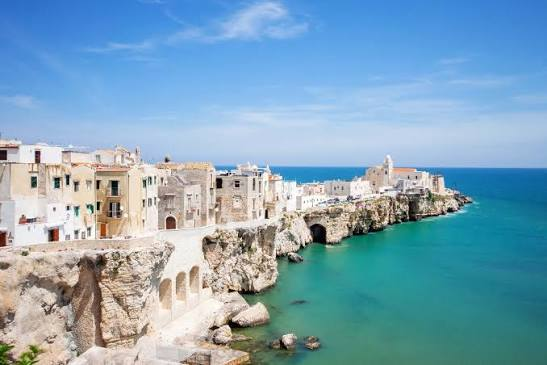
Polignano a Mare, on the Adriatic coast between Bari and Brindisi, is a village perched above white limestone cliffs over clear blue water. It is the most beautiful small town on the Adriatic coast, its clifftop terraces positioned directly above the sea.
Why summer 2026 Puglia's heat in July and August is serious — 35°C-plus in the interior. June is the sweet spot: warm enough for the Adriatic, not yet brutal in the midday hours. The Amalfi Coast, four hours north, is genuinely miserable in August (traffic, crowds, the heat trapped in the gorges). Puglia has equivalent quality and a fraction of the congestion.
4 Days · Lecce + Polignano + Matera Day 1 — Fly into Brindisi (BDS). Drive to Lecce (45 min). Afternoon in the centro storico — Basilica di Santa Croce, Piazza Sant'Oronzo. Evening passeggiata and dinner. Day 2 — Drive north along the coast to Polignano a Mare (1 hr 15 min). Morning swim in the sea cave at Cala Porto. Lunch on a clifftop terrace. Afternoon: Alberobello (trulli stone dwellings, 30 min inland) or continue north to Locorotondo. Day 3 — Day trip to Matera (1.5 hrs from Lecce): walk through the Sassi Caveoso and Barisano ravines, visit the rupestrian churches carved into the cave walls, lunch underground. Return to Lecce. Day 4 — Otranto on the southeastern tip: Byzantine mosaics in the cathedral, Aragonese castle, clear Adriatic water. Evening return to Brindisi for flight.
Getting There Fly into Brindisi (BDS) or Bari (BRI) — both served from many European cities on Ryanair, Wizz Air, easyJet, and national carriers. A rental car is essential for moving between Lecce, Polignano, Matera, and the coast — public transport links exist but are slow. The Frecciarossa high-speed train connects Bari and Naples in ~3 hours, making it possible to combine Puglia with a Matera visit more efficiently with rail.
06 · PELION PENINSULA Greece · Thessaly Where Greece Goes on Holiday · Almost No Foreign Tourists Mountain-to-Sea Hiking · Aegean Beaches · Stone Villages · Mythology
The destination The Pelion Peninsula is the finger of land southeast of Volos that juts into the Aegean, and in Greek mythology it is where the centaurs lived and where Chiron, the wisest of them, taught medicine, music, and the arts. Jason assembled the Argonauts here. The mountain rises to 1,624 metres, covered in chestnut, plane, and olive trees, and its trails — old mule paths paved in stone — descend from the cool village squares through dense forest to beaches that appear suddenly below. The western side faces the protected Pagasitic Gulf; the eastern side faces the open Aegean and catches the meltemi summer wind. Both are worth days.
Tsangarada is the finest of the traditional villages — four distinct neighbourhoods spread across a ridge in the northern Pelion, connected by stone paths, its central square shaded by a plane tree claimed to be the oldest in Greece. The tavernas here are frequented almost entirely by Greeks. Nobody is explaining the food to you. Mylopotamos beach, accessible from the village of Mouresi by a long stone staircase descending through forest, is the kind of beach that tends to appear in people's permanent memory of a summer.
Why summer 2026 Pelion is what the Greek islands looked like before they became famous. The tourists who come here are overwhelmingly Greek — this is where Athenians escape when they want to avoid the island package. Foreign visitors are genuinely rare, which in 2026 is a meaningful distinction. The walking trails are fully open in summer, the sea is warm from June, and the mountain keeps the temperatures below the coastal plains.
4 Days · Pelion Day 1 — Fly into Volos (VOL) or Athens (ATH, then drive ~2 hrs). Base in Tsangarada. Walk the old kalderimi stone path between villages, arriving in time for dinner at a taverna on the square. Day 2 — Mylopotamos beach: descend the stone staircase through forest (30 min), swim in the Aegean, return for lunch. Afternoon drive to Agios Ioannis (eastern coast) for a different sea view. Day 3 — Drive to Makrinitsa — the 'balcony of Pelion' — with views over Volos and the Pagasitic Gulf below. Afternoon: old Volos port for tsipouro and mezedes (the local ritual: small glasses of tsipouro with successive small plates). Day 4 — Southern Pelion: Milina village and the Pagasitic coast. More deserted than the north. Return to Volos for evening ferry or next-day flight from Athens.
Getting There Fly into Athens (ATH) — vast international connections — then rent a car and drive north to Pelion (~3 hrs via the E75). Alternatively, fly directly to Volos Airport (VOL) on domestic connections from Athens on Sky Express (30 min). Volos is the gateway city; from there, the peninsula's winding roads require a car. No major hotel chains operate on the Pelion — accommodation is in family-run guesthouses (archondika) and village rooms. Book ahead; summer fills the better properties by April.
07 · GDAŃSK & THE BALTIC COAST Poland · Pomeranian Voivodeship Hanseatic Port · Baltic Beaches · Solidarity History Medieval Harbour · Baltic Swimming · Amber · WWII History
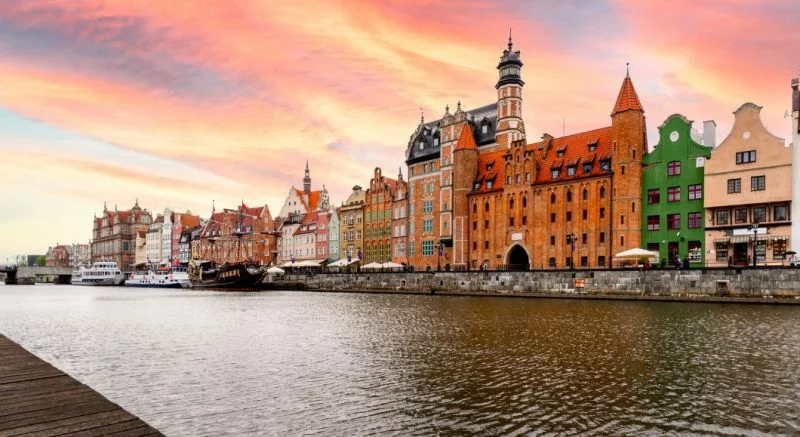
The destination Gdańsk is the most beautiful city on the Baltic coast, and it tends to stop first-time visitors in a way they didn't anticipate. The Długi Targ (Long Market) is lined with the painted façades of Hanseatic merchant houses — five and six storeys of Dutch Mannerist architecture in terracotta and gold, the water crane at the river end, the Green Gate leading to the embankment. This is a medieval trading city that was at the centre of the 20th century's defining conflicts: the first shots of the Second World War were fired at the Westerplatte peninsula outside the city on September 1, 1939; the Solidarity trade union movement that ultimately ended communism in Poland was born in the Lenin Shipyard here in 1980. The European Solidarity Centre, opened in 2014 on the shipyard site, is one of the finest museums in Europe — its permanent exhibition on the Solidarity movement is worth an entire morning.
Sopot, thirty minutes north by tram, is the Baltic's resort town: a wide beach, the 511-metre wooden pier extending into the sea, a pedestrian street full of restaurants and cocktail bars, and a summer festival programme that makes it one of the more unexpectedly lively places in northern Europe in July and August. The Hel Peninsula — a forty-kilometre spit of dunes and pine forest reaching into the Baltic — is accessible by new electric water tram from Gdańsk in 2026, a route that previously required a car or the slow land road.
Why summer 2026 Baltic swimming is genuinely viable from mid-June to September — the sea reaches 18–20°C by July. The new electric water tram to the Hel Peninsula makes a previously awkward day trip straightforward. Poland remains one of western Europe's best-value summer destinations. For a city trip combined with a beach, Gdańsk delivers both within the same postcode.
4 Days · Gdańsk + Sopot + Hel Peninsula Day 1 — Fly into Gdańsk (GDN). Walk the Długi Targ and the waterfront crane. Evening: the Old Town and dinner at a Baltic seafood restaurant. Day 2 — European Solidarity Centre (allow 3 hrs — this is worth your full morning). Afternoon: Westerplatte memorial. Evening: Sopot — pier walk, dinner on the beach promenade. Day 3 — Electric water tram to the Hel Peninsula (new 2026 route from Gdańsk). Walk or hire a bike along the dune trail. Baltic swimming on the open sea side. Return by tram. Day 4 — Malbork Castle (60 km south of Gdańsk) — the largest Gothic castle in the world, a Teutonic Knights fortress in red brick that takes the breath away from the river approach. Return to Gdańsk for evening flight.
Getting There Fly into Gdańsk Lech Wałęsa Airport (GDN) — served from across Europe by Ryanair, Wizz Air, LOT, Lufthansa, and others. Direct flights from London, Amsterdam, Berlin, Vienna, Rome, and many other cities. From the airport, the SKM train reaches the city centre in 30 minutes. Public transport in the Tri-City area (Gdańsk, Sopot, Gdynia) is efficient and cheap — trams and the SKM commuter rail cover most destinations. Car rental is needed only for Malbork or the Kashubian lake district.
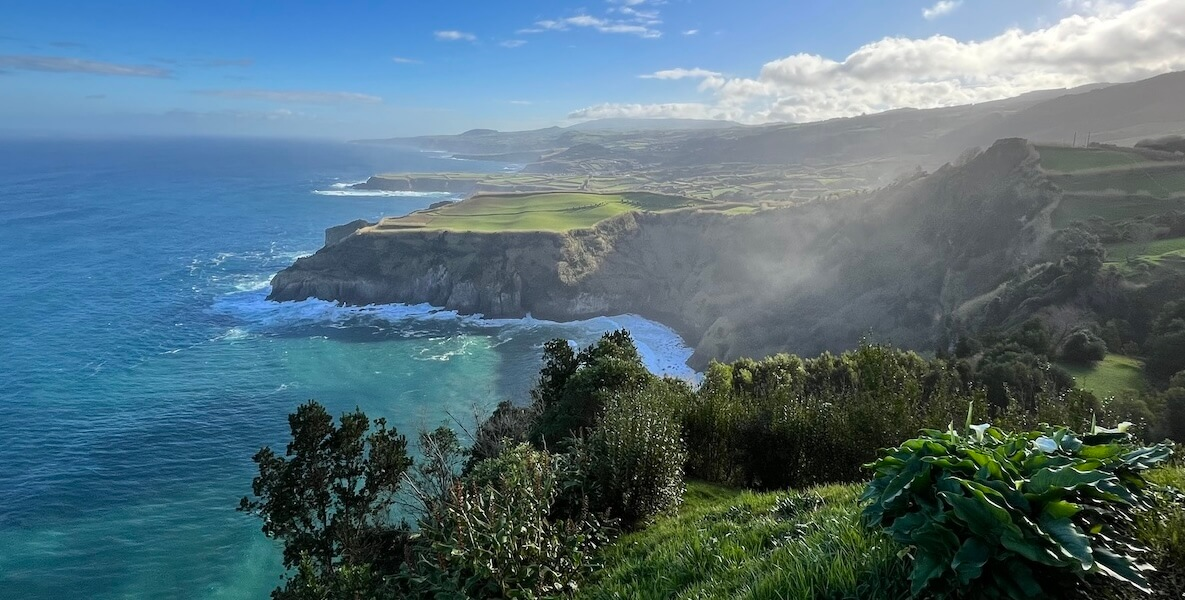
The destination The Azores are a Portuguese archipelago in the Atlantic, 1,500 kilometres west of Lisbon, and they look like the result of a geological argument. São Miguel, the largest island, has volcanic calderas filled with lakes, hydrothermal vents, and pastures so aggressively green they seem artificially saturated. Sete Cidades is the most dramatic: two crater lakes — one blue, one green in certain light conditions — contained within a caldera rim six kilometres across, with a village at the water's edge and trails that circle the rim in four to five hours. Caldeira Velha is a thermal spring where hot water erupts through fern-covered rock into a natural pool you can swim in. Furnas valley is geothermal at scale: mud pools bubbling at 100°C, the local stew (cozido) cooked underground by volcanic heat and served in a restaurant at the caldera's edge.
Faial, reached by a 35-minute inter-island flight, has the Caldeira do Faial — an 8-kilometre crater with trails along the rim, the interior dropping away in a bowl of forest and mist. The western tip of Faial has a lighthouse at Ponta dos Capelinhos, where a 1957 volcanic eruption extended the island by two square kilometres and buried a village, the houses now excavated and preserved as a geological museum under the ash.
Whale watching The Azores are among the best locations for whale watching on earth. Sperm whales are resident year-round; blue whales, fin whales, and sei whales pass through in summer. From June, the season hits its stride: 24 species of cetacean have been recorded in these waters. Traditional whalemen's vigias — stone lookout posts on the clifftops — are still used by operators to spot the animals before the boats go out.
Why summer 2026 The season properly opens in June when sea conditions stabilise after spring Atlantic weather. Summer is peak whale-watching season. The thermal pools and crater lakes are accessible year-round, but the longer days and mild temperatures make summer the most comfortable combination of outdoor activities. Direct summer charter flights from multiple European cities make the connection easier than in any previous year.
4 Days · São Miguel + Faial Day 1 — Fly into Ponta Delgada, São Miguel (PDL). Sete Cidades drive: the crater rim road at dusk, village of Sete Cidades below. Dinner back in Ponta Delgada. Day 2 — Caldeira Velha thermal spring swim in the morning. Furnas valley afternoon: geothermal pools, Terra Nostra Garden (botanical garden with a large thermal swimming pool open to visitors), cozido dinner. Day 3 — Inter-island flight to Faial (FLW, 35 min). Caldeira do Faial rim hike (3 hrs). Horta marina and the tradition of painted dock art from passing Atlantic sailors. Day 4 — Early whale watching boat trip from Horta or Pico (sperm whales most reliable before noon). Return flight to Ponta Delgada and connecting flight home.
Getting There Fly into Ponta Delgada, São Miguel (PDL) — direct flights from Lisbon (~2 hrs) on TAP and SATA/Azores Airlines. In summer 2026, direct summer charters operate from London Gatwick, Manchester, Amsterdam, Paris, Frankfurt, and other European cities. Inter-island flights to Faial (FLW) and other islands run on SATA (30–45 min). No visa required for EU and most Western nationality passport holders. Driving is the best way to explore São Miguel — car hire is cheap and available at the airport.
EIGHT SUMMERS. ONE CONTINENT.
The Sagrada Família completes after 144 years. The midnight sun is free and available in June. The last stretch of uncrowded Ionian coastline is still accessible if you go now. None of these things stay the same forever. The building finishes; the coastline develops; the crowd finds the village. The argument for going this summer isn't that Europe is better in 2026 than it was. It's that some specific windows — a centenary, a cultural year, a peninsula not yet famous — are open now and won't be in quite the same way again.