Best Places to Visit in Asia in Summer 2026: 8 Destinations Worth the Heat
A focused guide to eight Asia destinations that are genuinely worth visiting in summer 2026, chosen for seasonal timing, limited windows, and high-value experiences.
Best Places to Visit in Asia in Summer 2026: 8 Destinations Worth the Heat
Asia in summer is a list of trade-offs that most travel guides refuse to make explicit. The crowds are real. The monsoon is real. The heat in Bangkok in July is not a rumour. But so is this: the lavender fields of Hokkaido bloom for three weeks and then they're gone. Naadam happens on July 11th and nowhere else produces anything like it. Some windows are measured in weeks; some are specific to a year that won't repeat. These eight destinations were chosen on the same principle — each one has a specific argument for summer 2026, and none of them is filler.
EIGHT DESTINATIONS · SUMMER 2026
Japan · Hokkaido Flower Fields · Cycling · Farm Stays · National Park Hiking
About the author
Fortrip Editorial Team · Travel Research Desk
Fortrip's editorial team curates practical, timing-based destination guidance for independent travelers.
Plan a trip with Fortrip
Use Fortrip to draft and validate itineraries with travel-specific reasoning — not generic chat answers.
Summer Temp: 20–25°C (vs 35°C in Tokyo) Lavender Peak: Mid-July to early August Rainy Season: None (unlike Honshu) Best Window: July 15–25, before school holidays
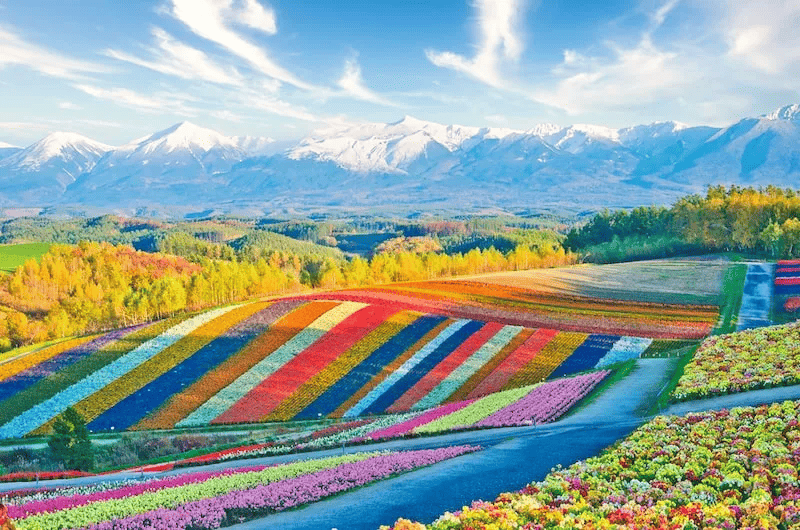
The destination While Tokyo hits 35°C and Honshu sweats through rainy season, Furano and Biei sit at 20–25°C with low humidity and clear blue skies — a climatic accident that produces what might be Japan's most improbable landscape. Farm Tomita's lavender fields turn the hillsides a deep, saturated purple from mid-July onward. Biei's Patchwork Road — rolling hills planted with lavender, sunflowers, cosmos, and wheat — looks from above like a quilt left in the sun. Daisetsuzan National Park, the largest in Japan, opens its high-altitude trails in summer: wildflower meadows at 1,800 metres, volcanic peaks, and a silence that's genuinely hard to find in Japan. Farm visits come with lavender soft-serve ice cream and perfume-making workshops.
Why summer 2026 Hokkaido has no rainy season — unusual for Japan — making it the country's most reliably pleasant summer destination. The lavender season is strictly mid-July to early August; outside that window, you're looking at an empty field. Book accommodation in Furano or Biei well ahead; the farmhouse inns fill in June for July peak dates.
4 Days · Furano & Biei Day 1 — Fly into Sapporo (New Chitose Airport, CTS). JR Furano Line to Furano (~2 hrs). Afternoon at Farm Tomita — lavender fields, flower gardens, lavender soft-serve. Day 2 — Rent a bicycle or car in Biei. Patchwork Road loop: Shikisai-no-Oka, Panorama Road, Blue Pond at Shirogane Onsen. Evening soak. Day 3 — Daisetsuzan National Park: Kurodake Ropeway to the alpine zone. Summer wildflower trail at 1,600m. Return via Sounkyo Gorge. Day 4 — Furano winery and local farm market. Return to Sapporo by JR. Optional: Sapporo Beer Garden before evening flight.
Getting There Fly into New Chitose Airport (CTS) — direct international flights from Seoul, Beijing, Shanghai, Taipei, Hong Kong, and Bangkok, plus frequent domestic connections from Tokyo (~1.5 hrs). JR Furano Line from CTS to Furano takes ~2 hrs. For Biei, change at Asahikawa. A JR Hokkaido Rail Pass covers most routes.
02 · YAEYAMA ISLANDS & NAHA Japan · Okinawa Prefecture Expedia #2 Global Destination 2026 Reef Diving · Eisa Dance Festival · Ryukyu Culture · Stargazing
Summer Temp: 29–32°C, subtropical Shuri Castle: Final reconstruction phase (full reopening targeted autumn 2026) Eisa Festival: Late July–August (Obon season) Ishigaki: Japan's first International Dark Sky Park
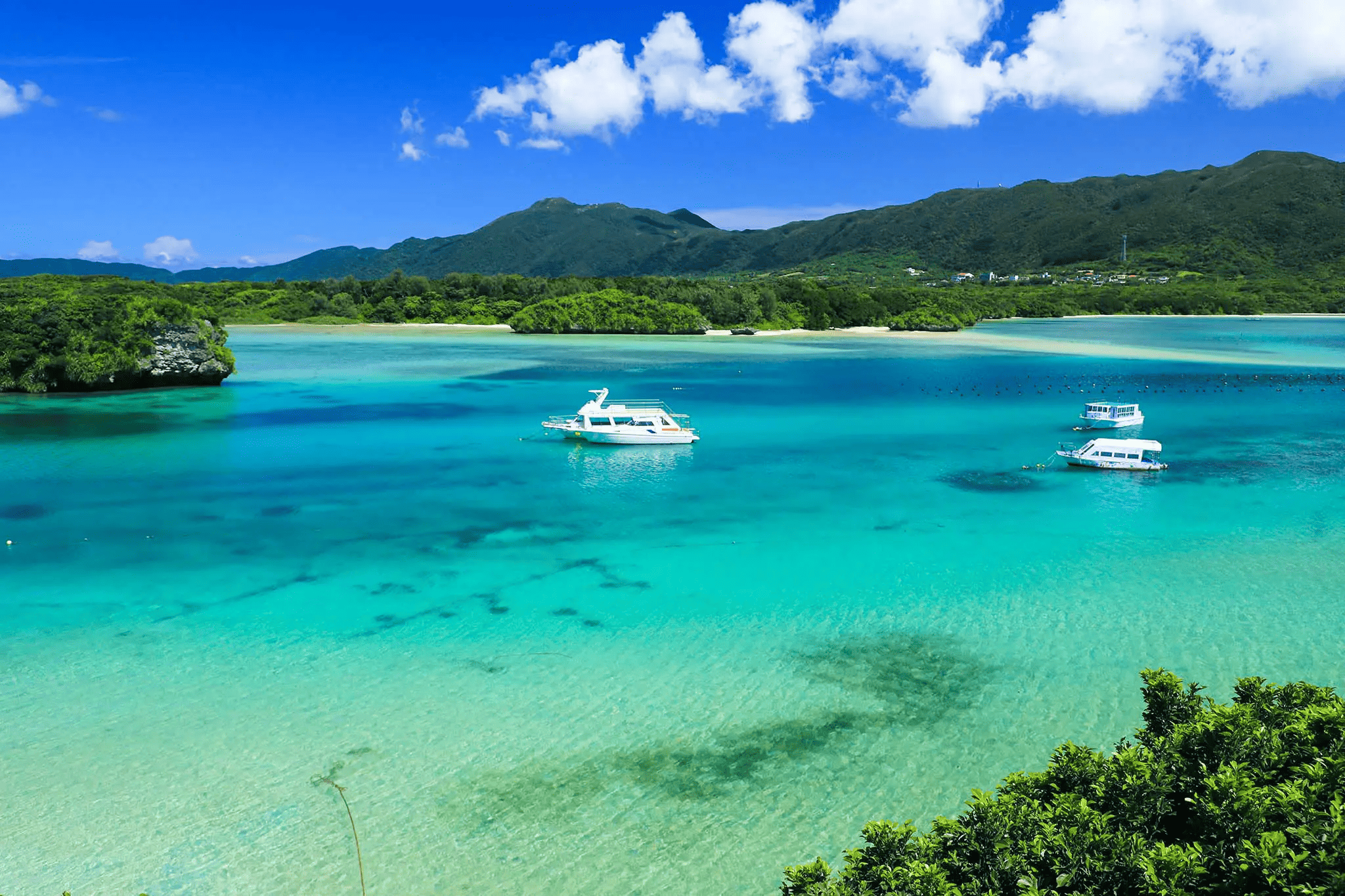
The destination Okinawa occupies a separate cultural universe from mainland Japan — the legacy of the Ryukyu Kingdom, which ruled these islands as an independent maritime state until 1879. The food is different (goya champuru, rafute braised pork, Orion beer at dusk), the architecture is different, and the pace is different: slower, less governed by the particular social pressures of Honshu. The Yaeyama Islands — Ishigaki, Iriomote, Taketomi — sit at the far southern end, closer to Taiwan than to Tokyo. Iriomote is 90% jungle, crossed by two rivers and almost entirely designated national park. Taketomi is a preserved Ryukyuan village where water buffalo carts move at the island's official pace. Ishigaki holds Japan's only International Dark Sky Park certification — in summer, the Milky Way is visible from the beach with the naked eye.
In Naha, Shuri Castle is in the final stages of its reconstruction after the 2019 fire. Summer 2026 visitors find the exterior largely complete and interior restoration actively underway. Full reopening is autumn 2026; summer visitors see something arguably more interesting — a 700-year-old castle being rebuilt by hand, craftsmen visible through the scaffolding exhibition.
The Eisa festival Eisa is Okinawa's summer drum-and-dance tradition, performed during Obon (late July through August) to welcome ancestral spirits. Young men and women in traditional dress perform choreographed routines with taiko drums and sanshin in the streets of every village. It is not a tourist spectacle. It happens whether visitors are there or not.
Why summer 2026 Searches for Okinawa surged 71% year-on-year in 2026 travel data. The reconstruction completes in autumn — summer is the last chance to witness the live process. The Yaeyamas are at their most vivid in the summer heat; the dark sky certification on Ishigaki is best experienced in the clear nights of July and August.
4 Days · Naha + Ishigaki Day 1 — Fly into Naha (OKA). Shuri Castle grounds and reconstruction exhibition. Kokusai Dori evening — Ryukyuan crafts, awamori tasting, goya champuru dinner. Day 2 — Flight or ferry to Ishigaki (ISG, 45 min). Snorkel at Kabira Bay. Sunset at Cape Hirakubo. Day 3 — Iriomote Island day trip (ferry, 40 min): kayak the Urauchi River through jungle mangroves, waterfall hike. Back to Ishigaki. Stargazing from the beach after 9pm. Day 4 — Taketomi Island morning (water buffalo cart through preserved Ryukyuan village). Return to Ishigaki or Naha for onward flight.
Getting There Fly into Naha (OKA) — domestic connections from Tokyo, Osaka, and other Japanese cities on ANA, JAL, and Peach; international from Taipei, Seoul, Hong Kong, and Shanghai. For the Yaeyamas, connect from Naha to Ishigaki (ISG), 1-hour domestic flight. Iriomote and Taketomi by ferry from Ishigaki harbour (20–40 min).
03 · ZHANGJIAJIE NATIONAL FOREST PARK China · Hunan Province Avatar Landscapes · Real-Life Pandora Sandstone Pillar Hiking · Cable Car · Tujia Culture · Photography
Elevation: 800–1,200m (cooler than lowland China) Summer Temp: 22–28°C at park level Best Fog Window: 7–9am, more frequent in summer Visa: 30-day visa-free for many nationalities in 2026
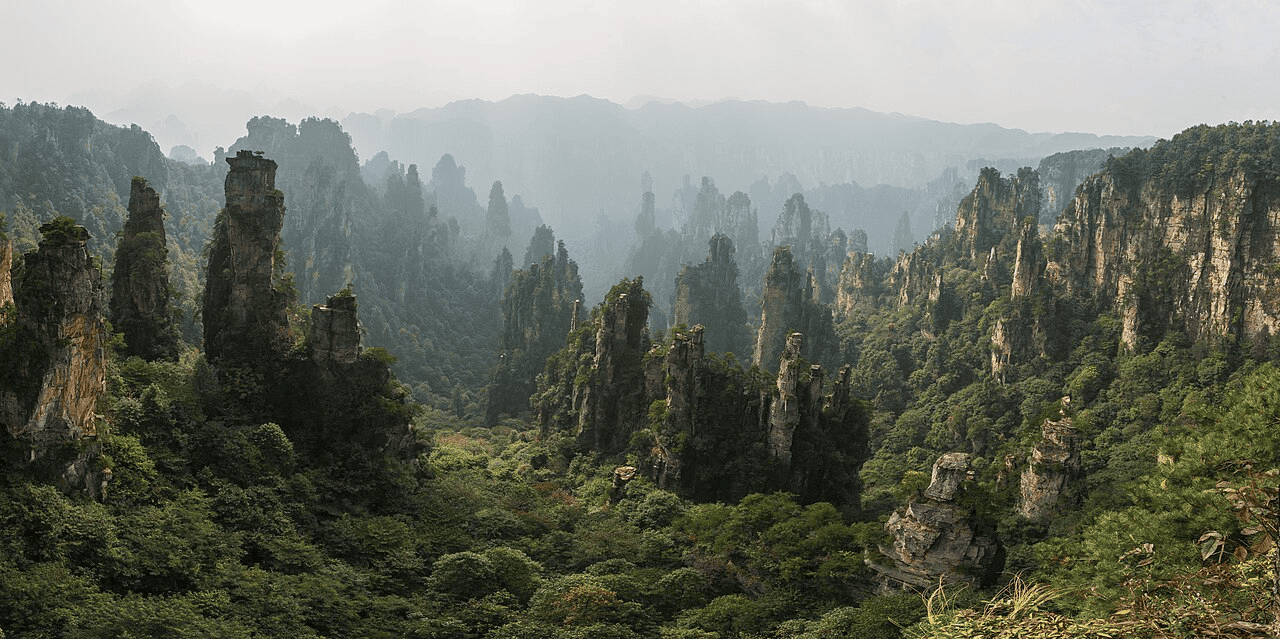
The destination The quartz sandstone pillars of Zhangjiajie rise several hundred metres from a forested valley floor, their tops often lost in low cloud. James Cameron's team came here before filming Avatar and left with the floating Hallelujah Mountains. In daylight the resemblance is unmistakable; in early morning fog, when the pillars disappear above the cloud layer and only their bases are visible, the comparison becomes insufficient — the real thing is stranger. The Bailong Elevator ascends 326 metres of cliff face in 88 seconds. The world's longest cable car (7.2km) reaches Tianmen Mountain, where a massive natural karst arch at 1,500 metres frames a rectangle of sky visible from the town below. Glass bridges cross gorges deep enough to produce their own weather. Tujia culture — one of China's 55 recognised ethnic minorities — gives the region its wooden stilted houses, weaving traditions, and a cuisine distinct from Hunanese cooking.
Why summer 2026 Summer brings higher humidity and more frequent morning fog — precisely the condition that produces the most dramatic pillar photography. The park's elevation keeps temperatures 8–10°C cooler than the Hunan lowlands. China's expanded visa-free programme for 2026 covers many nationalities for up to 30 days, removing the main practical friction for first-time visitors.
4 Days · Zhangjiajie Day 1 — Fly into Zhangjiajie Hehua Airport (DYG). Tianmen Mountain cable car (world's longest) and Tianmen Cave at the summit. Day 2 — Enter at 7am. Zhangjiajie National Forest Park: Bailong Elevator, Yuanjiajie viewing platform (Hallelujah Mountain). Leave before midday crowds peak. Day 3 — Tianzishan sector: Heaven and Earth Pillar viewpoint, Index Finger Peak. Afternoon: Yellow Dragon Cave (one of Asia's largest cave systems, fully lit). Day 4 — Baofeng Lake (boat through flooded gorge). Tujia cultural village and local market before afternoon flight.
Getting There Fly into Zhangjiajie Hehua Airport (DYG) — direct flights from Beijing, Shanghai, Guangzhou, and Chengdu. High-speed train from Changsha (~3 hrs) if no direct flight available. From the airport, 45 minutes by taxi to the national park. Verify your nationality's current visa-free status before travelling — China's 2026 exemptions cover many but not all passports.
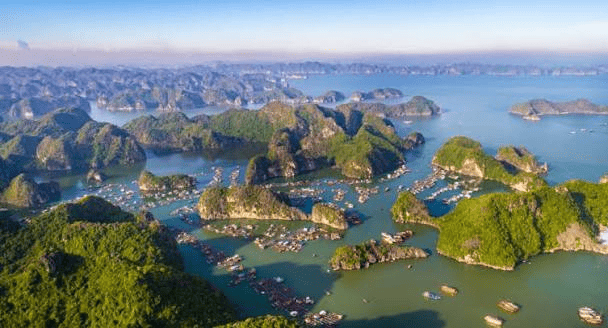
04 · HA LONG BAY & CAT BA ISLAND Vietnam · Quảng Ninh Province UNESCO World Heritage · Iconic Seascape Overnight Cruise · Kayaking · Limestone Cave Exploration · Cat Ba Hiking
Summer Temp: 28–33°C, calm seas Best Cruise Window: April–June and September–November 2026 New: Bhaya Soul wellness cruise launched Cat Ba: UNESCO Biosphere Reserve, hiking and kayaking
The destination More than 1,600 limestone islands rise from the Gulf of Tonkin — a seascape so dense with karst formations that navigating it by boat feels like moving through a maze that changes shape with the light. At dusk, the rock faces turn orange and the water between them goes dark green. At dawn, a low mist settles and the islands appear to float. The bay is intensely visited, which means the quality of your experience depends almost entirely on which boat you choose. The best operators reach Lan Ha Bay and the waters around Cat Ba Island, where the caves and floating fishing villages are still largely unhurried. Cat Ba itself warrants a day: the national park trails reach limestone summits with panoramic views over the bay, and the island's freshwater lakes and langur monkey colonies are genuinely wild. In 2026, Bhaya Cruises launched Bhaya Soul — the bay's first wellness-focused all-inclusive cruise, combining meditation, Vietnamese herbal treatments, and locally sourced meals on a boutique vessel.
Why summer 2026 Early summer (June) sits at the edge of the best season before August typhoon risk builds. The new wellness cruise infrastructure makes the overnight experience significantly more interesting than the standard junk-boat format that dominated for decades. Book well ahead; quality accommodation on Cat Ba is limited.
4 Days · Ha Long Bay & Cat Ba Day 1 — Fly or train to Hanoi. Transfer to Ha Long Bay harbour (3.5 hrs). Board overnight cruise in the afternoon. Day 2 — Full day cruising: kayaking through sea caves and floating villages, Sung Sot Cave, sunset on deck. Overnight in a sheltered cove. Day 3 — Disembark at Cat Ba Island. Afternoon hike in Cat Ba National Park — Hospital Cave and summit viewpoint over Lan Ha Bay. Day 4 — Morning kayak around Lan Ha Bay. Return to Hanoi by speedboat and road transfer. Evening flight.
Getting There Fly into Hanoi Noi Bai (HAN) — served from across Asia, Europe, and the Middle East. Cruise operators arrange transfers to Tuan Chau harbour (~3.5 hrs by road). Alternatively, Hai Au Aviation runs seaplanes from Hanoi directly to the bay (~45 min) — a dramatically different arrival. Cat Ba is reachable by speedboat from both Ha Long City pier and Hai Phong.
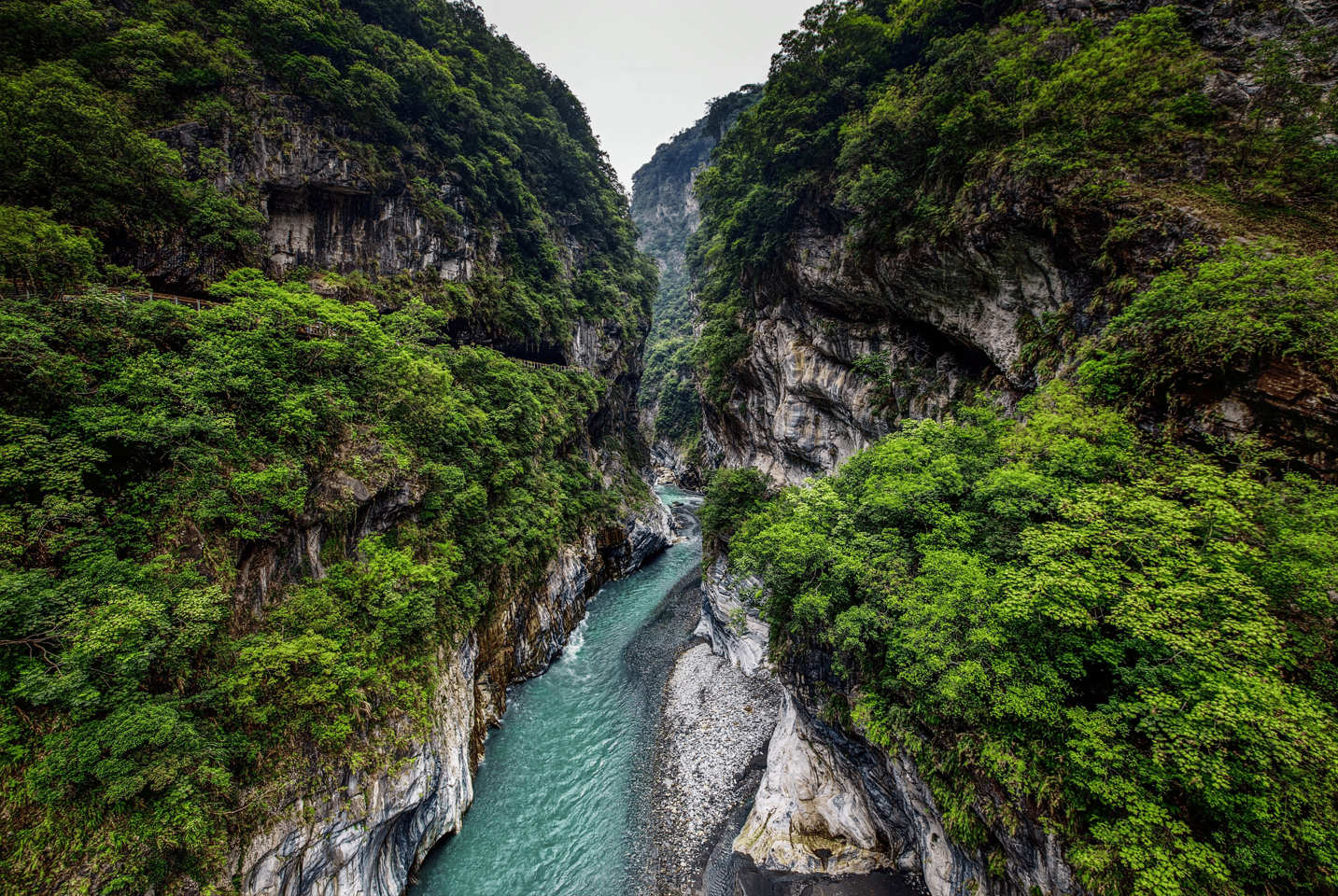
05 · TAROKO GORGE & HUALIEN Taiwan · Hualien County Most Underrated Canyon in Asia Gorge Hiking · Indigenous Culture · Hualien Night Market · East Coast Road Trip
The destination The Liwu River has spent millennia cutting through the Central Mountain Range's marble and schist, and Taroko Gorge is the result: sheer walls of white and grey marble rising 1,000 metres from a river that runs jade-green between them. The Shakadang Trail follows the river at water level through a section where the walls are close enough to touch on both sides and the path has been carved directly into the cliff face. The Zhuilu Old Trail — a former Truku aboriginal path — traverses a section of vertical cliff at 500 metres above the gorge on a path barely wide enough for two people. Hualien, the nearest city, is relaxed in the way that east-coast Taiwan tends to be: good seafood, a night market that doesn't feel designed for visitors, and the starting point for the East Coast Scenic Area — a coastal road south through indigenous communities, surf beaches, and rice paddies ending at Taitung.
Why summer 2026 Summer is when the Truku people hold harvest and ancestral ceremonies — a chance to encounter Taiwan's indigenous culture in its own context. Taiwan's overall travel popularity has surged in 2026, making Hualien a logical addition to any trip that avoids the Taipei-Jiufen-Sun Moon Lake circuit.
Honest caveat — typhoons and trail closures Taroko sits in Taiwan's most typhoon-exposed region. Gorge trails are frequently closed after significant rainfall due to rockfall risk — check with Taroko National Park's official website before planning specific walks. Hualien was also affected by a 2024 earthquake; some infrastructure remains under restoration.
4 Days · Hualien & Taroko Day 1 — Fly or Puyuma Express train to Hualien. Afternoon: harbour area walk, night market. Day 2 — Full day in Taroko: Swallow Grotto, Tunnel of Nine Turns, Changchun Shrine. Shakadang Trail riverside walk. Day 3 — Zhuilu Old Trail (advance permit required from the park office). Afternoon: Truku cultural centre and weaving demonstration. Day 4 — East Coast Scenic Area drive south to Fuyuan Beach and Xiuguluan River rafting. Return to Hualien for evening train to Taipei.
Getting There Fly into Hualien Airport (HUN) from Taipei Songshan (TSA, 40 min on Mandarin Airlines or UNI Air). Alternatively, Taiwan High-Speed Rail to Hualien Station then Puyuma Express (total ~2.5 hrs from Taipei). Rental scooter or car strongly recommended for the East Coast section.
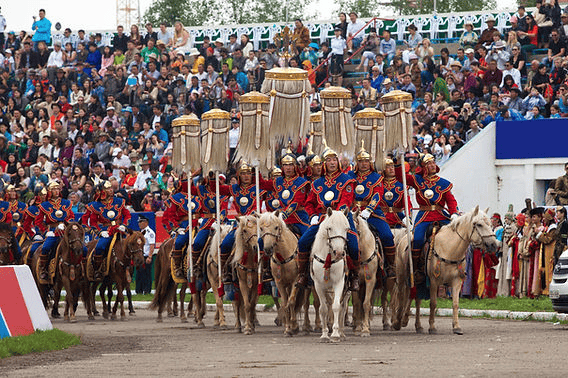
06 · GOBI DESERT & NAADAM FESTIVAL Mongolia · South Gobi & Ulaanbaatar Naadam: July 11–13 · Summer Only Naadam Festival · Ger Camp Stays · Gobi Desert · Horse Riding
Summer Temp: 15–35°C (Gobi); 20–28°C (Ulaanbaatar) Naadam Dates: July 11–13, Ulaanbaatar (national holiday) Gobi Access: July–August only (winter impassable) Stay Options: Nomadic ger camps with local families
The destination Mongolia is one of the least densely populated countries on earth, and the Gobi Desert is its emptiest region: 1.3 million square kilometres of steppe, saxaul forest, sand dunes, and rocky desert where the silence is a physical presence. Summer is the only practical time to visit — winter temperatures reach -40°C and the unsealed tracks are often buried or impassable. The Khongor Sand Dunes rise 300 metres from the flat desert floor and groan in the wind — the locals call it singing sand. The Flaming Cliffs at Bayanzag, where Roy Chapman Andrews first discovered dinosaur eggs in 1923, glow orange in afternoon light against a sky wide enough to fit several weather systems simultaneously. Ger camp stays with nomadic families are the standard accommodation; horses, camels, and the particular hospitality of people who live somewhere that requires genuine generosity of neighbours.
Naadam — inscribed on UNESCO's Intangible Cultural Heritage list — is held on July 11–13 in Ulaanbaatar every year. Three events: wrestling, archery, and horse racing. The horse race takes place across open steppe; the jockeys are children, sometimes as young as five, riding semi-wild horses over 15–30 kilometres. The wrestling is conducted without weight classes. The opening ceremony in the National Central Stadium involves military parades, traditional music, and the President of Mongolia. It is unlike any sporting event in the world.
Why summer 2026 Naadam is July 11–13, every year, no exceptions. The Gobi is physically reachable only in July and August. Combine the two and you have the most compressed version of Mongolia's identity available in a single trip. Operators book up six to twelve months ahead for Naadam week.
4 Days · Ulaanbaatar + Gobi Sample Day 1 — Fly into Ulaanbaatar (ULN). Chinggis Khaan Museum, Sukhbaatar Square. Evening welcome dinner with traditional music. Day 2 — Naadam Opening Ceremony at the National Central Stadium (July 11). Afternoon: horse racing at Hui Doloon Khudag (~30km from UB). Day 3 — Day trip: Genghis Khan Equestrian Statue Complex and Terelj National Park. Ger stay in a nomadic valley. Horse riding in the afternoon. Day 4 — Optional domestic flight to Dalanzadgad for Gobi extension (add 3–5 nights for Khongor Dunes and Flaming Cliffs). Or return flight from UB.
Getting There Fly into Chinggis Khaan International Airport (ULN) — MIAT Mongolian Airlines operates from Beijing, Seoul, Tokyo, Istanbul, and Frankfurt; Air China, Korean Air, and Turkish Airlines also serve the route. For the Gobi, MIAT and Hunnu Air run domestic flights from ULN to Dalanzadgad (45 min). No rental car system exists outside the city; all Gobi travel requires a local operator with a 4WD vehicle.
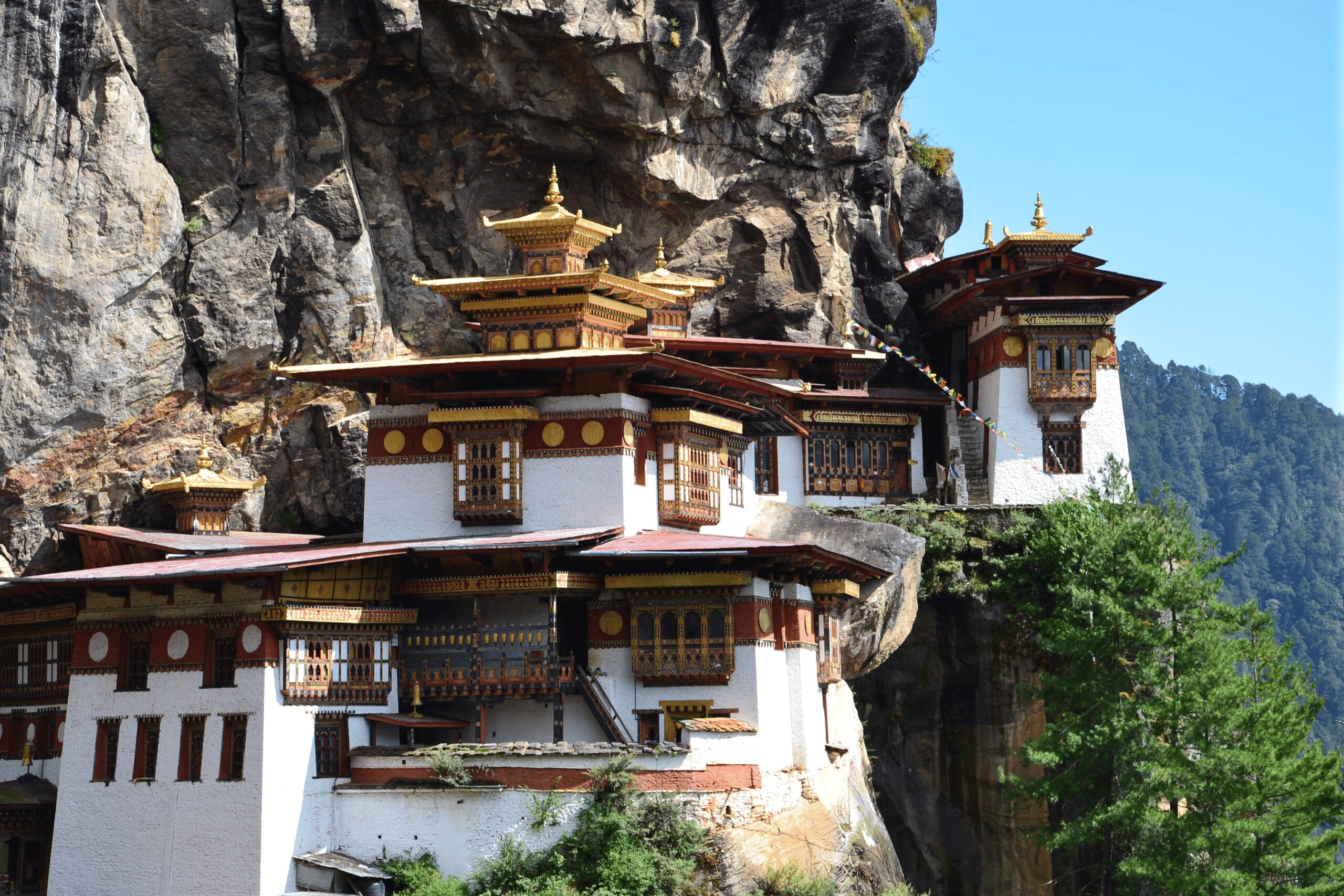
07 · PARO TAKTSANG & PUNAKHA Kingdom of Bhutan Last Buddhist Kingdom · Controlled Access Tiger's Nest Hike · Dzong Architecture · Tsechu Mask Dance · Himalayan Valley
SDF Fee (2026): USD $100 per person per night (valid until August 2027) Summer Temp: 15–25°C (Paro/Thimphu); warmer in Punakha Tsechu Festival: Monastery mask dances; timing varies by dzong Tiger's Nest Hike: 4–5 hrs return, 900m elevation gain
The destination Paro Taktsang clings to a cliff face at 3,120 metres in the Paro Valley. It is a monastery complex built in the 15th century on a site where, according to Vajrayana tradition, Guru Rinpoche flew on the back of a tigress to meditate in a cave. The four-to-five-hour hike to reach it is steep, forested, and punctuated by prayer flags strung across the gorge. The monastery is a series of temples connected by wooden stairs cut into the rock — incense, butter lamps, and monks chanting in rooms you can barely stand up in. Punakha, in a lower valley, holds the Punakha Dzong — Bhutan's most beautiful fortress monastery — at the confluence of two rivers. In summer, the surrounding valley is bright with rice terraces and wildflowers. Tsechu festivals, held at various dzongs throughout the year, feature mask dances of ancient lineage performed by monks in elaborate costumes; check the Bhutan calendar before booking as timing varies by location.
The Sustainable Development Fee — clearly stated The SDF is USD $100 per person per night, every night you spend in Bhutan. A four-night trip costs $400 per person in SDF alone, before accommodation, food, or transport. This is not a day fee or an entry fee — it accumulates nightly. The discounted rate (reduced from $200 in 2023) is locked in until August 31, 2027. All tours must be arranged through a licensed Bhutanese operator; independent travel is not permitted for international visitors.
Why summer 2026 The valley landscapes around Punakha and Paro are at their most saturated in summer — rice paddies deep green, wildflowers on the hillsides, the mountain backdrop cloud-wreathed in a way that feels specifically Himalayan. Summer is shoulder season for Bhutan (spring and autumn are peak), meaning slightly fewer visitors and more availability at better lodges. The reduced SDF, now in its third year, has made the country more accessible than at any point in recent history.
4 Days · Paro + Thimphu + Punakha Day 1 — Fly into Paro (PBH). Acclimatise: Rinpung Dzong and the National Museum. Afternoon walk in Paro valley. Day 2 — Paro Taktsang full-day hike. Start at 8am to beat the midday heat. Cafeteria viewpoint for lunch. Descent by 3pm. Day 3 — Drive to Thimphu (45 min): National Memorial Chorten, Takin Preserve, Tashichho Dzong. Continue to Punakha (2.5 hrs over Dochu La pass, prayer flags at 3,100m). Day 4 — Punakha Dzong morning visit. Suspension bridge walk. Return to Paro for morning flight. Note: all Paro flights depart before 11am due to valley wind conditions — plan accordingly.
Getting There Paro Airport (PBH) is served only by Druk Air and Bhutan Airlines, flying from Delhi, Kolkata, Bangkok, Singapore, Kathmandu, and Dhaka. The approach is one of the most technically demanding commercial landings in the world — only a handful of pilots are certified for it. Book through a licensed Bhutanese tour operator, which is required for visa issuance. The SDF and a USD $40 visa fee are paid as part of the booking process before arrival.
08 · CORON ISLAND & BUSUANGA Philippines · Palawan Province WWII Wrecks · Stratified Lakes · Dry Season Diving WWII Wreck Diving · Freshwater Lakes · Snorkeling · Island Hopping
Water Temp: 27–29°C Visibility: 15–30m (best May–October) Wreck Depths: 10–43m (recreational to advanced) Kayangan Lake: National Geographic's cleanest lake in Asia
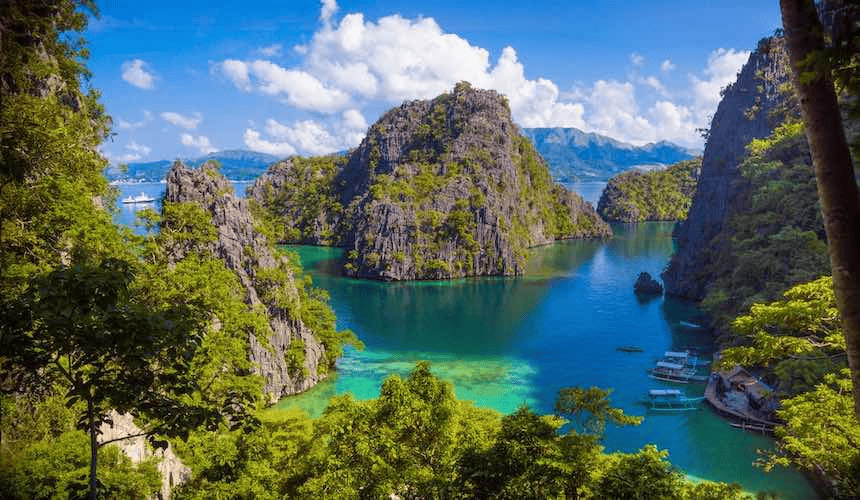
The destination In September 1944, American aircraft attacked a Japanese supply fleet sheltering in Coron Bay and sank twelve ships in a single raid. Those ships now lie at depths between 10 and 43 metres, their hulls colonised by coral, their cargo holds still identifiable — engines, anchors, medicine bottles, rice bowls. The Okikawa Maru (12–33m) is the most accessible; the Irako (41m) is the most intact. On land, Coron Island — a Tagbanwa tribal reserve — holds a series of marine lakes whose water is stratified: clear and cool at the surface, saline and thermocline-warm below, the boundary visible as a shimmering layer when you dive through it. Kayangan Lake is the most photographed, its limestone walls reflected in water that National Geographic described as the cleanest in Asia. Barracuda Lake has a temperature layer sharp enough to feel on your skin. The island-hopping routes connecting these lakes, the coral gardens of Twin Peaks, and the sandbar at Banana Island form one of the Philippines' most concentrated day-trip circuits.
Why summer 2026 May through October is Coron's dry season — calmer seas, better visibility, peak wreck diving conditions. Coron is significantly less developed than El Nido (two hours south by boat), with fewer resorts and a more honest backpacker-meets-diver atmosphere that is disappearing fast as tourism infrastructure expands. June is the moment before it gets much busier.
4 Days · Coron & Busuanga Day 1 — Fly into Busuanga (USU). Transfer to Coron town (~45 min). Afternoon: Kayangan Lake and Barracuda Lake by banca boat. Day 2 — Two wreck dives: Okikawa Maru (12–33m, Open Water) and Akitsushima seaplane tender (25–40m, Advanced). Afternoon: Twin Peaks coral garden snorkel. Day 3 — Irako wreck (advanced, 41m) + Skeleton Wreck. Non-divers: Coron Island lagoon tour with tribal land permit. Sunset from Mount Tapyas viewpoint. Day 4 — Morning dive at East Tangat Gunboat (shallow, intact, surrounded by reef fish). CYC Beach and Banana Island sandbar. Afternoon flight from Busuanga.
Getting There Fly into Francisco B. Reyes Airport, Busuanga (USU) from Manila (MNL) — Philippine Airlines and AirAsia operate daily flights (~1 hr). Coron town is 45 minutes by van from the airport; dive centres arrange transfers. An overnight ferry from Manila to Coron (~12 hrs) is the slower but scenic alternative. No direct international flights serve Busuanga — Manila is the hub for all connections.
EIGHT REASONS TO BE IN ASIA THIS SUMMER.
The lavender doesn't keep. The festival is on the 11th. The castle opens in autumn and the moment to watch it being rebuilt by hand is right now. Some of these windows are measured in weeks; some are specific to a year that won't repeat. Asia in summer is not a consolation prize for people who couldn't get somewhere else. It is a season with its own logic, its own calendar, and its own once-in-a-decade appointments. The only question is which one is yours.