World Cup 2026 & Beyond: 8 Best Places to Visit in the Americas This Summer
The World Cup final lands at MetLife on July 19. Chicago's Obama Presidential Center just opened on Juneteenth. Whale sharks are massing off Isla Mujeres, orcas are back off Vancouver Island, and Medellín's flower farmers are getting ready to walk down from Santa Elena with 80 kilograms on their backs. Eight places, eight specific reasons to be there this summer — with exact dates for each.
The Americas in summer operates on two calendars simultaneously. In the Northern Hemisphere, summer is the season itself — the World Cup running from June 11 to July 19 across eleven US cities, two Canadian cities, and three Mexican cities; the Obama Presidential Center opening in Chicago on Juneteenth; the whale sharks arriving off Isla Mujeres in June and staying through September. In the Southern Hemisphere, June through August is winter, which rules out Patagonia, Tierra del Fuego, and the southern Andes for anything resembling trekking — a fact that most travel lists quietly ignore. Colombia sits near the equator and plays by different rules entirely: Medellín's Feria de las Flores happens in late July and early August regardless of hemispheric season, and its climate is a stable 20°C year-round.
The eight destinations below were selected for specific summer 2026 reasons. Three are World Cup host cities worth visiting for reasons that extend well beyond the matches. Two are Colombian cities with distinct arguments. One is a stretch of the Canadian Rockies that peaks in June specifically. One is a Mexican coast with a whale shark season and a cave-diving system both at their best simultaneously. And one is the city that produced what is arguably the most significant American cultural opening of the decade.
Share
Start a trip Fortrip can actually defend.
Sketch a brief. We come back with an itinerary that reads like a recommendation, not a checklist — and tell you what we’d change about it.
The whale shark is a filter-feeding fish, not a whale, and the largest confirmed individual measured 61.7 feet. Here's what it actually is, where it lives, and the seasonal windows at Ningaloo, Holbox, La Paz, and the Maldives where you can swim near one.
Among cheap diving destinations, Utila and Dahab still anchor the budget certification market, while shore-access towns like Tulamben, Moalboal, and Koh Tao beat liveaboard-dependent sites like Raja Ampat on pure cost. Here's what actually drives the price gap, with sourced pricing, a quick-answer summary, and an FAQ so the comparisons hold up.
Once you've picked your city, FortripAI can turn the "4 Days" outline under each one into an actual day-by-day plan, priced and booked around your dates.
Eight Destinations · Americas Summer 2026
01 · New York / New Jersey Metro
United States · New YorkThe World Cup Final Is Here. July 19.
World Cup Final · NYC Summer · Hudson River · Boroughs
Summer temp: 24–30°C (humid)
World Cup matches: 8 total — including 5 group stage, Round of 32, Round of 16, and the Final
Final date: July 19, 2026 — MetLife Stadium, East Rutherford, New Jersey
Halftime show: Coldplay confirmed — first halftime show in World Cup history
The destination
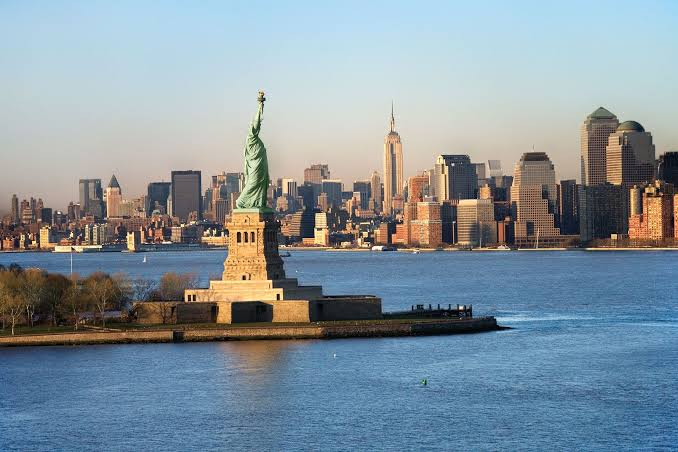
The 2026 World Cup Final is at MetLife Stadium on July 19, presided over by forty thousand live fans and watched by something close to half the world's population. Coldplay's halftime show is the first in the tournament's history — a deliberate nod to the NFL Super Bowl format and a signal that this World Cup is doing things differently. The stadium, in East Rutherford across the Hudson from Manhattan, holds 82,500 in FIFA configuration. New York is getting eight matches total, anchored by the Final and including a Round of 16 and a Round of 32 tie. The city itself — whatever your feelings about the World Cup — is simply New York in summer: the Hudson River parks filling up, the rooftop bars, the outdoor dining, the particular energy of a place where a million different things are happening simultaneously and nobody seems surprised by any of them. The Bronx, Brooklyn, Queens — the football supporter bases from Brazil, Argentina, Spain, England, and West Africa that make up New York's demographics will turn this into the loudest tournament city on the schedule.
Why summer 2026
The World Cup Final will not be at MetLife Stadium again in any near future. Outside the football, summer New York is the city at its most extroverted — free concerts in Central Park, the High Line, the Coney Island boardwalk, ferry rides to the Statue of Liberty with the skyline behind you in July light. If you are visiting for the Final week specifically, book accommodation at least six months ahead; hotels in Manhattan and Jersey City are essentially sold out for Final weekend.
4 Days · New York Metro
Day 1 — Arrive JFK, Newark (EWR), or LaGuardia (LGA). Check into Brooklyn or Lower Manhattan — better value than Midtown, faster access to everything interesting. Walk the Brooklyn Bridge at dawn.
Day 2 — Match day or fan zone day: FIFA Fan Festival in Central Park or on the Hudson Piers. FIFA Fan Zone is free and open to all ticket holders and non-ticket holders alike — check the official FIFA2026 website for locations.
Day 3 — The Boroughs: Flushing (Queens) for the best dim sum outside Hong Kong, or Arthur Avenue in the Bronx. Museum of Modern Art in the afternoon. The High Line at dusk.
Day 4 — Day trip: take the train to Asbury Park or Princeton, or spend the morning in Williamsburg before evening flight.
Getting there
Three airports serve the metro area: JFK (international hub, most direct international flights), Newark Liberty (EWR, often cheaper, well-connected to Midtown via AirTrain + NJ Transit), and LaGuardia (LGA, domestic only, recently rebuilt). From JFK, the AirTrain to Subway takes ~45 minutes to Midtown. From EWR, the AirTrain to Penn Station NJ Transit takes ~35 minutes. Taxis and rideshare are available at all three but cost significantly more. MetLife Stadium is reachable from Penn Station via NJ Transit train (30 minutes) — by far the best option on match days.
Final week logistics get complicated fast between match tickets, fan zone timing, and a city that's already booked out. Worth mapping the whole trip before you commit to flights.
02 · Chicago
United States · IllinoisObama Presidential Center Opens. Juneteenth.
Obama Presidential Center · Lollapalooza · Route 66 · Lake Michigan
Summer temp: 22–28°C
Obama Center opens: June 19, 2026 (Juneteenth) — Hyde Park, South Side
Opening weekend: June 19–21, free public events
Lollapalooza: July 30–August 2, Grant Park — eight stages, four days
The destination
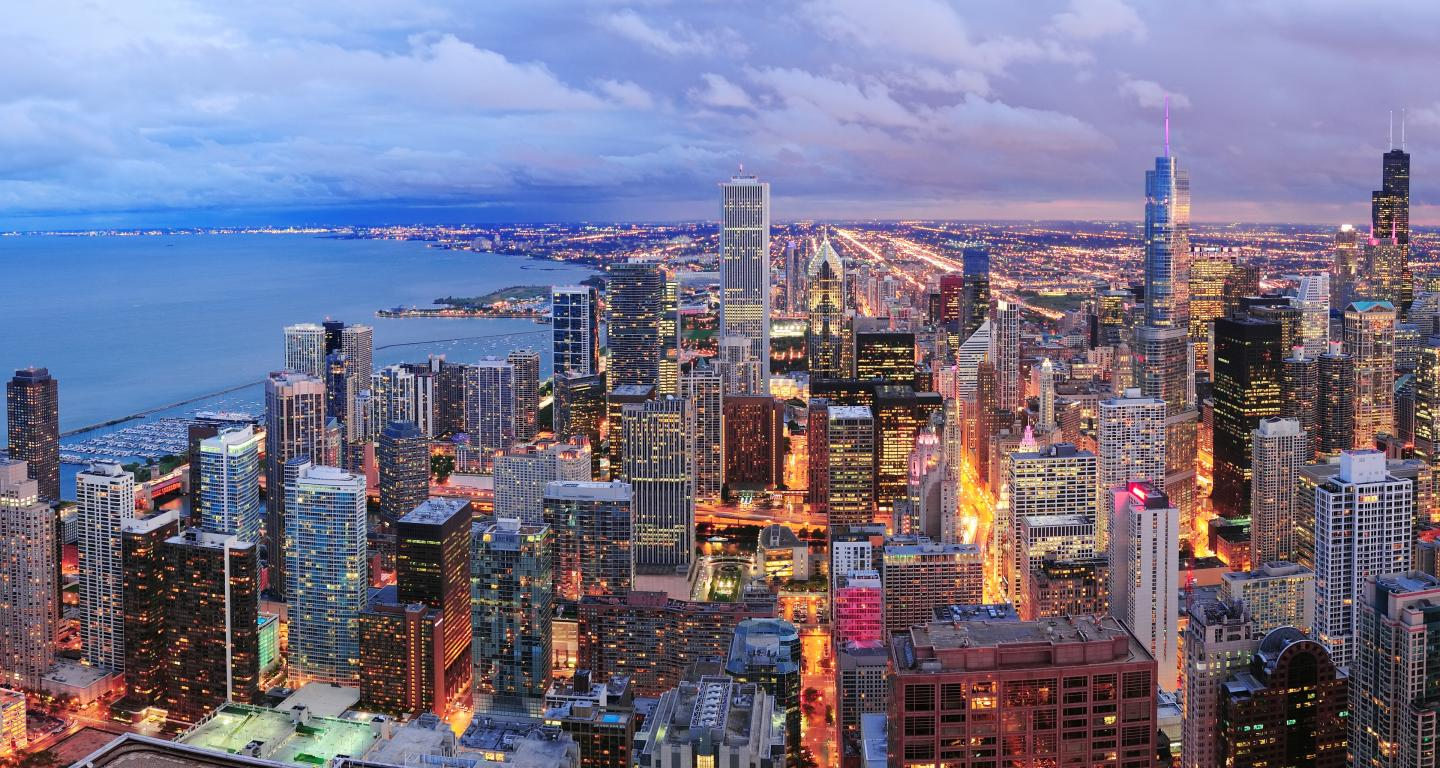
The Obama Presidential Center opened on June 19, 2026 — Juneteenth — in Jackson Park on Chicago's South Side, the neighbourhood where Barack Obama first worked as a community organiser in his mid-twenties. The campus cost $850 million, covers 19.3 acres, and was designed by Tod Williams Billie Tsien Architects. It contains a four-floor museum tracing the Obama presidency, a full-scale Oval Office replica, a Chicago Public Library branch, an athletic facility, gardens by Michael Van Valkenburgh Associates, and the Sky Room on the museum's upper level, where visitors look out over the South Side through the words of Obama's 2015 Selma speech, carved into the façade. The opening weekend ran three free days of programming — DJs on the plaza, performances by Chicago's eight professional sports teams, guided tours — and the centre is expected to draw roughly 700,000 annual visitors to the South Side. Beyond the OPC: Chicago in summer means Millennium Park, Navy Pier, the Chicago River Architecture Foundation cruise (one of the best ways to understand the city's building history), the Chicago Blues Festival in June, and Lollapalooza at the end of July. The Route 66 centennial — Chicago is the official starting point — has programming running all year with a summer peak.
Why summer 2026
The OPC's first complete summer is a moment in its own right. It opened on Juneteenth deliberately; visiting in the weeks after that opening carries a specific cultural significance that will fade over time as the centre becomes simply a fixture. For Lollapalooza, book accommodation in July well ahead — the city fills fast for the four-day festival.
4 Days · Chicago
Day 1 — Arrive O'Hare (ORD) or Midway (MDW). Obama Presidential Center in Hyde Park — allow at least three hours for the museum. Dinner in Bronzeville.
Day 2 — Chicago Architecture River Cruise (90 minutes; book ahead). Millennium Park and the Bean. Chicago Institute of Art (one of the world's great museums; free on Thursday evenings). Deep-dish pizza debate resolved by eating at multiple places.
Day 3 — Wicker Park neighbourhood on foot. Chicago Blues Festival in Grant Park (early June, free). Evening: rooftop bar in the West Loop.
Day 4 — Day trip to Evanston along the lake, or drive the beginning of Route 66 south from the loop. Return for evening flight.
Getting there
Fly into O'Hare International (ORD) — the more international-connected of the two airports, served from Europe, Asia, Latin America, and across North America. Midway (MDW) handles Southwest Airlines primarily and is closer to the South Side. From O'Hare, the Blue Line subway reaches downtown in ~45 minutes; the train is significantly cheaper than a taxi and reasonably direct. The Obama Presidential Center is in Hyde Park, accessible by the #6 bus from downtown or the Metra Electric line from Millennium Station to 59th Street.
03 · Banff & The Icefields Parkway
Canada · AlbertaThe Most Beautiful Road in North America. Late June Is the Moment.
Icefields Parkway · Rocky Mountain Hiking · Lake Louise · Wildlife
Summer temp: 15–22°C (cool mountain air)
Best window: Late June — fewer crowds than July–August, all roads open, lakes at peak colour
Icefields Parkway: 293 kilometres, Banff to Jasper
Wildlife: Grizzly bears with cubs, moose, elk, bighorn sheep — most active in June
The destination
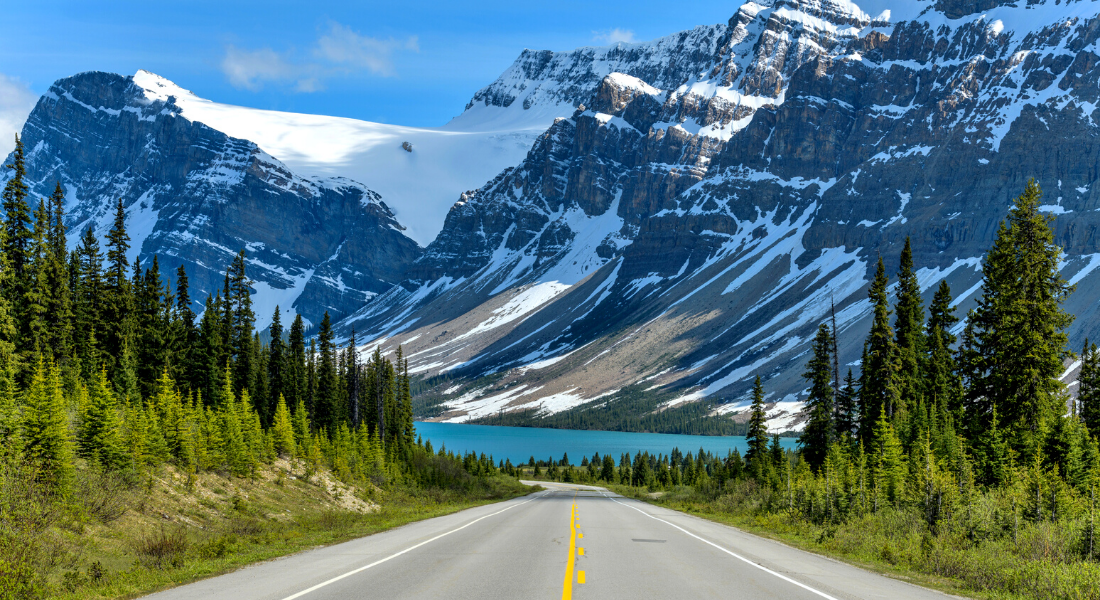
The Icefields Parkway runs 293 kilometres from Banff north to Jasper through a landscape that does not behave like other landscapes. The mountains are too large. The lakes are the wrong colour — that blue-green that is actually the result of glacial rock flour in suspension, which the eye reads as somehow artificial. Peyto Lake, viewed from the Bow Summit, is a shape and shade that photographers spend years trying to capture and mostly fail. The Columbia Icefield, visible from the road, covers 325 square kilometres and feeds eight major river systems. The Athabasca Glacier descends almost to the highway and has retreated 1.5 kilometres since 1870, a fact that becomes visceral when you stand at the marked posts tracking its recession year by year. Lake Louise is on every poster of Canada and on every poster of Canada for good reason; go before 7am to see it without three hundred other people in the same photograph. The town of Banff itself — surrounded on all sides by national park, serviced by a good main street, and accessible by a direct shuttle from Calgary — functions as the base for everything above.
Why late June specifically
Late June is when the high-altitude roads reopen after winter, the snowline is still high enough to make the peaks dramatic against the lakes, and school summer holidays haven't yet begun in the US or Canada. Late June combines excellent weather with lower crowds as schools remain in session. By July the parking lots at Louise and Moraine Lake fill before 7am; in late June you have a reasonable chance of arriving at 8am and finding a spot. Wildfire smoke, a real concern in July and August, is minimal in June. Book accommodation in Banff town at least three months ahead regardless of timing.
4 Days · Banff & Icefields Parkway
Day 1 — Fly into Calgary (YYC). Banff Airporter shuttle to Banff (~1.5 hrs). Afternoon walk along the Bow River and up to the Banff Centre viewpoint. Dinner on Banff Avenue.
Day 2 — Lake Louise at 6:30am — genuinely worth the early alarm. Hike the lakeshore trail to the Plain of Six Glaciers teahouse. Afternoon: Moraine Lake if the road is open (book the Parks Canada shuttle from Lake Louise ahead of time).
Day 3 — Drive the Icefields Parkway north: Peyto Lake (Bow Summit), Athabasca Falls, Columbia Icefield. Stop as often as the light demands. Stay the night in Jasper.
Day 4 — Jasper townsite and Pyramid Lake before driving south. Wildlife watching at dawn — elk in the Athabasca River floodplain is reliably productive. Return to Calgary for evening flight.
Getting there
Fly into Calgary International Airport (YYC) — direct flights from Toronto, Vancouver, Montreal, London, Frankfurt, Amsterdam, Reykjavik, and numerous US cities. From the airport, the Banff Airporter runs directly to Banff town (roughly 1.5 hours, no car needed). A rental car is strongly recommended for the Icefields Parkway itself — it is a road trip, not a tour bus experience. Note: Moraine Lake road access requires advance booking via Parks Canada's reservation system; check current season rules before you arrive.
The parking-lot math on this one is unforgiving — miss the 7am window at Lake Louise and the whole day shifts. FortripAI can build the drive around that instead of the other way around.
04 · Tulum & The Yucatán Peninsula
Mexico · Quintana Roo & YucatánWhale Sharks in June. Cenote Light at Its Best.
Whale Shark Snorkelling · Cenote Cave Diving · Cozumel Reef · Mayan Ruins
Water temp: 27–30°C (ocean); 24°C (cenotes, constant year-round)
Cenote best light: May–September (morning sun angles into caverns)
Whale shark rule: Snorkelling only — no scuba, no touching
The destination
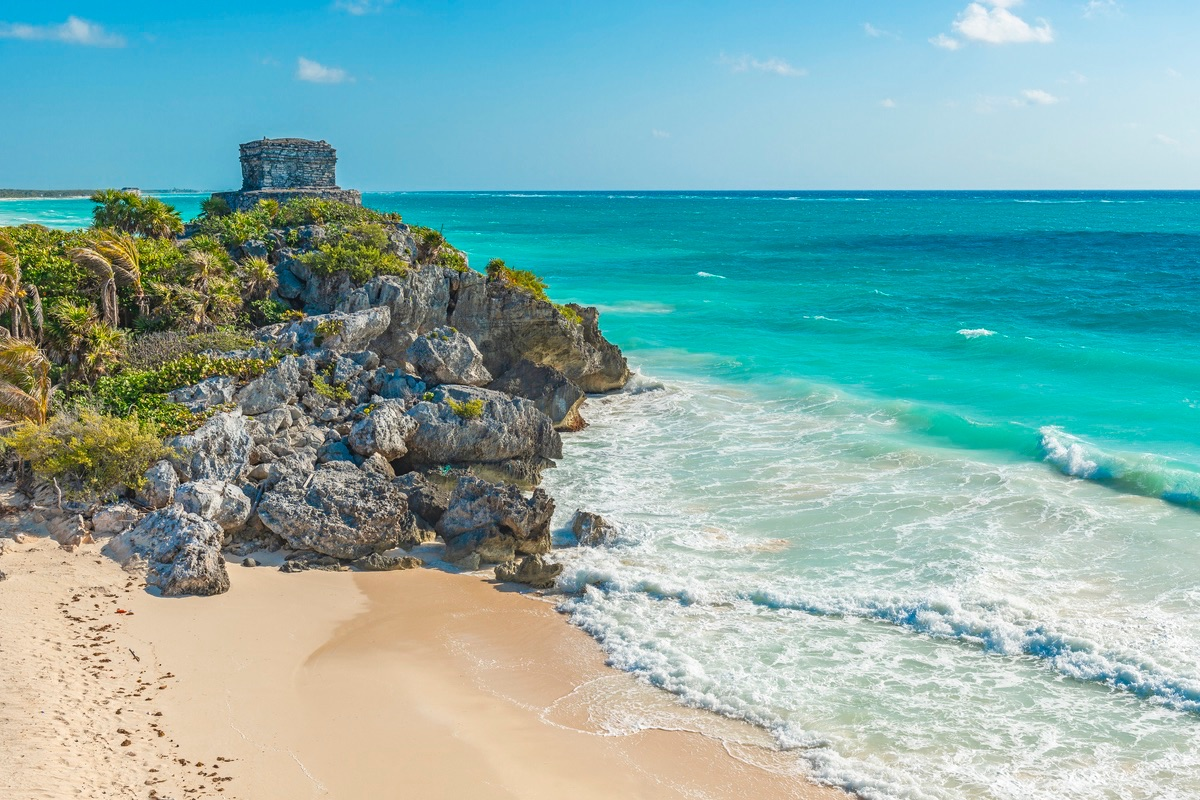
The Yucatán is two completely different dive destinations sharing a geography. Below the jungle: the world's longest mapped cave system — hundreds of kilometres of flooded limestone tunnels, still water so clear it effectively has no colour, morning light entering through the cavern openings at angles that photographers have been chasing for twenty years. This is the cenote system, carved by millennia of rainwater dissolving the limestone from beneath. The caves hold both freshwater and saltwater layers at different depths, the boundary between them visible as a shimmering halocline that distorts everything below it like a funhouse mirror. Then forty minutes by boat from Cancún: the open Caribbean, and from June through September, the whale sharks. The aggregation off Isla Mujeres and Holbox is the largest documented gathering of the species on the planet. On a good day the boats find groups of thirty, forty, a hundred animals feeding at the surface on fish spawn, enormous and unhurried, their mouths open like gates. You snorkel with them — Mexican law prohibits scuba — and the encounters typically run twenty to thirty minutes at a stretch. Cozumel, an hour south by ferry, adds drift diving on the Mesoamerican Barrier Reef, the second-longest barrier reef in the world, to round out the underwater programme.
Why summer 2026
June opens the whale shark season and hits the peak of the cenote light window simultaneously. It sits before the worst of the Atlantic hurricane season (which intensifies in August–October) and before the highest-volume tourist period in July–August. Tulum as a base works well: closer to the best cenotes, with reasonable access to Cancún for whale shark tours and Cozumel for reef diving.
4 Days · Yucatán Peninsula
Day 1 — Fly into Cancún (CUN). Rent a car and drive south to Tulum (~2 hrs). Afternoon: ruins of Tulum on the clifftop above the Caribbean — the only major Mayan site overlooking the sea.
Day 2 — Full-day whale shark tour from Isla Mujeres (drive north to Cancún, take ferry to Isla Mujeres, or book a boat directly from Playa del Carmen). Return to Tulum by evening.
Day 3 — Cenote diving: Dos Ojos or Gran Cenote in the morning (two dives; book with a local guide — cavern zones suitable for Open Water, full cave requires cave certification). Afternoon: Cobá ruins and the lagoon.
Day 4 — Ferry from Playa del Carmen to Cozumel (~1 hr). Two drift dives on the reef — Palancar Caves, Santa Rosa Wall. Return to Cancún for evening flight.
Getting there
Fly into Cancún International Airport (CUN) — one of the best-connected airports in the Western Hemisphere, with direct flights from most major US, Canadian, European, and Latin American cities. From CUN, ADO buses run south to Playa del Carmen (~1 hr) and Tulum (~2 hrs). A rental car from the airport is the more flexible option. Whale shark tours depart from Isla Mujeres (25-minute ferry from Puerto Juárez, north of Cancún) and from Holbox (a different route, ~2.5 hours from Cancún). Hurricane season begins June 1 — the risk in June is historically low but real; travel insurance is worth having.
05 · Guadalajara
Mexico · JaliscoWorld Cup Host City. And Then Some.
World Cup Matches · Orozco Murals · Tequila Country · Mariachi Capital
Summer temp: 22–28°C (dry season, mild evenings)
World Cup: 6 matches at Estadio Akron (group stage)
Tequila town: 60km northwest — blue agave fields in summer
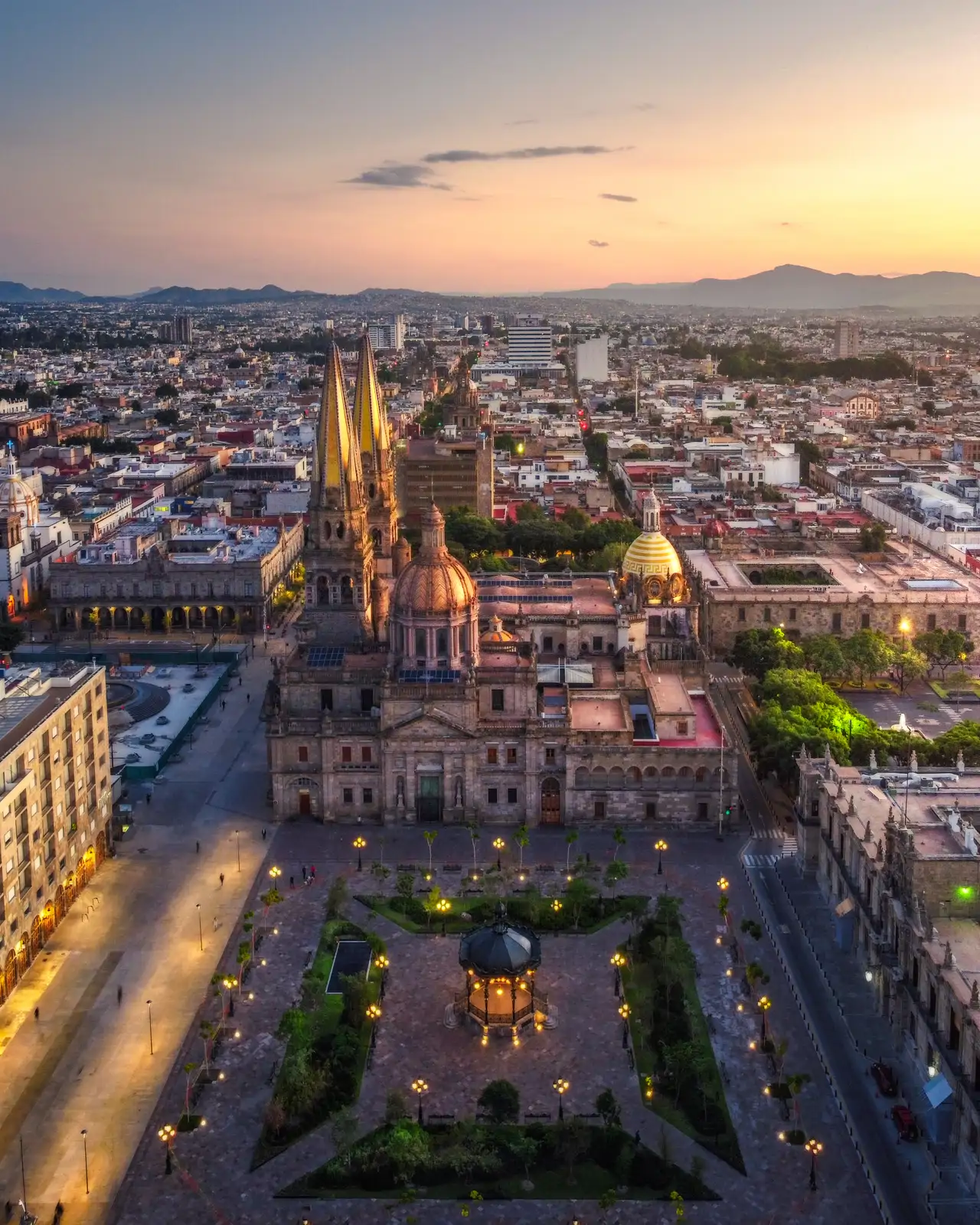
Guadalajara is hosting six World Cup group-stage matches at Estadio Akron, a striking stadium shaped to evoke the volcanic landscape of the region. The football is a bonus. The city is Mexico's second largest and its most culturally assertive: mariachi music originated here, tequila is produced in the fields and distilleries of the municipality to the northwest, and the Hospicio Cabañas — a UNESCO World Heritage Site built in 1810 as an orphanage — contains José Clemente Orozco's ceiling murals, which are widely considered the greatest murals in the Western Hemisphere. The Man of Fire fresco at the building's central dome is Orozco's signature work; the scale and ferocity of it, viewed from beneath, is genuinely shocking in a way that art rarely achieves. The historic centre has been restored to a standard that puts most Mexican cities to shame: the Teatro Degollado, the Catedral Metropolitana, and the Mercado San Juan de Dios (the largest indoor market in Latin America) are all within walking distance of each other. Sixty kilometres northwest, the town of Tequila sits in the Jalisco Highlands, surrounded by the blue-grey agave fields that produce the spirit. Visits to the Casa Herradura or José Cuervo distilleries are available by the day from Guadalajara.
Why summer 2026
The World Cup brings international visitors to a city that most of them have never considered, and Guadalajara is the one that is most likely to detain them. The summer dry season runs through June and July — days are warm and the evenings are cool enough to walk the historic centre without discomfort. The Tequila Express train (a tourist train from Guadalajara to Tequila) runs on Saturdays and is the most enjoyable way to do the distillery day trip.
4 Days · Guadalajara
Day 1 — Fly into Miguel Hidalgo y Costilla Airport (GDL). Historic centre on foot: Cathedral, Mercado San Juan de Dios, Plaza Tapatía. Evening: mariachi performance at the Plaza de los Mariachis.
Day 2 — Match day at Estadio Akron (if tickets available — book months ahead on FIFA.com) or Hospicio Cabañas (Orozco murals; allow two hours minimum). Afternoon: Tlaquepaque neighbourhood for craft shopping and mezcal.
Day 3 — Tequila Express Saturday train to the agave fields and distilleries (book in advance from Guadalajara's train station). Full day, returns in the evening.
Day 4 — Guadalajara's Zona Rosa and Chapultepec neighbourhood for Sunday market and coffee culture. Evening flight.
Getting there
Fly into Miguel Hidalgo y Costilla International Airport (GDL) — direct flights from Los Angeles, Chicago, Dallas, Houston, New York, and multiple other US cities, plus Mexico City, Cancún, and international connections via CDMX hub. The airport is 20 kilometres south of the city centre; taxis and Uber are both available. Estadio Akron is northwest of the city — accessible by metro and shuttle on match days. No car needed for the city itself; a rental is useful for the Tequila or Tlaquepaque day trips.
If match tickets come through on short notice, the rest of this itinerary needs to move around them fast. FortripAI can rebuild the plan in minutes once you know your dates.
06 · Vancouver & British Columbia
Canada · British ColumbiaWorld Cup on the Pacific. Orcas in July. Sea to Sky.
World Cup Matches · Sea to Sky Highway · Orca Season · Coastal Mountains
Summer temp: 18–24°C (driest and sunniest months)
World Cup: 6 matches at BC Place (group stage + Round of 32)
Orca season: July–September (southern resident orcas, San Juan Islands)
Sea to Sky: Whistler/Squamish/Garibaldi — 1.5 hrs from downtown
The destination
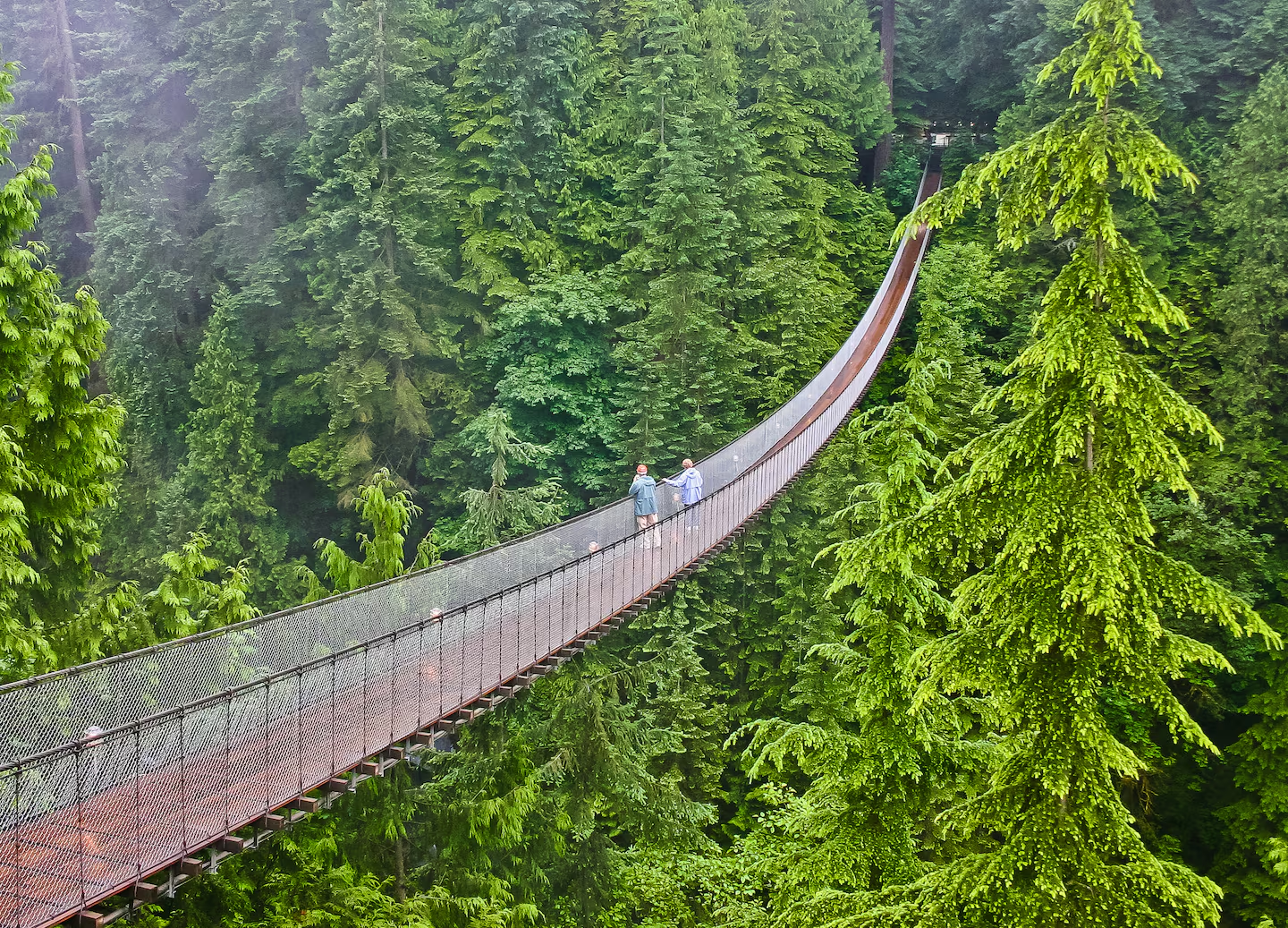
Vancouver is hosting six World Cup matches at BC Place stadium, the retractable-roof arena in the middle of downtown. The stadium is walkable from most of the city's best neighbourhoods — Yaletown, Gastown, the West End — and the combination of mountain backdrop, harbour, and forest means that the walk to a match here looks different from anywhere else in the tournament. The Sea to Sky Highway north to Whistler (Highway 99) takes about ninety minutes and passes Shannon Falls (the third-highest waterfall in British Columbia), the Chief — a massive granite dome rising 600 metres above Squamish — and Garibaldi Provincial Park, which offers high-alpine hiking through wildflower meadows with views across the Tantalus Range. July and August are the months when southern resident orca pods are most reliably present in the waters around Victoria and the San Juan Islands; day tours from Victoria Harbour have high success rates during these months. Stanley Park — 400 hectares of old-growth forest on a peninsula in the middle of the city — remains one of the great urban parks in the world, with a seawall walk that circumnavigates it in about two hours.
Why summer 2026
Vancouver's summer is specifically June through August — it is one of the few cities in Canada where summer is genuinely reliable in meteorological terms. June and July are the driest months. The orca season hits its peak in July. The Sea to Sky corridor is fully accessible and operating. World Cup group stage matches here run in June and July, overlapping with the best of the outdoor season.
4 Days · Vancouver & BC
Day 1 — Fly into Vancouver International (YVR). Stanley Park seawall walk. Granville Island Public Market for dinner ingredients or restaurant. Gastown in the evening.
Day 2 — Sea to Sky day: drive (or take the Greyhound bus) to Squamish and Whistler. Stawamus Chief hike if fit (strenuous, 2–3 hrs up). Whistler Village for lunch. Return via Brandywine Falls.
Day 3 — World Cup match at BC Place (if tickets secured) or Vancouver day: Capilano Suspension Bridge, the North Shore mountains, or a half-day kayak tour around Indian Arm.
Day 4 — BC Ferries to Victoria (1.5 hrs from Tsawwassen) for a half-day: afternoon tea, Butchart Gardens, Fisherman's Wharf. Return to Vancouver or catch a float plane directly back (~35 min).
Getting there
Fly into Vancouver International Airport (YVR) — one of the best-designed airports in North America, served from Asia (direct from Tokyo, Seoul, Hong Kong, Shanghai, Beijing, Taipei), Europe (London, Amsterdam, Frankfurt, Dublin), the US (direct from most major cities), and across Canada. Canada Line SkyTrain connects the airport to downtown Vancouver in 25 minutes. No rental car needed for the city itself; a rental is helpful for the Sea to Sky drive. BC Ferries to Victoria departs from Tsawwassen, reachable by transit from downtown (~1 hr).
07 · Cartagena
Colombia · Bolívar DepartmentWalled City. Caribbean Heat. June Is the Quiet Month.
UNESCO Old City · Caribbean Islands · Caribbean Coast Food · Coral Reefs
Water temp: 28–30°C
Air temp: 28–33°C year-round (no meaningful seasons)
Best month: June — fewer tourists than December–March, lower prices, same city
Rosario Islands: 45 minutes by speedboat — one of the clearest reefs on Colombia's coast
The destination
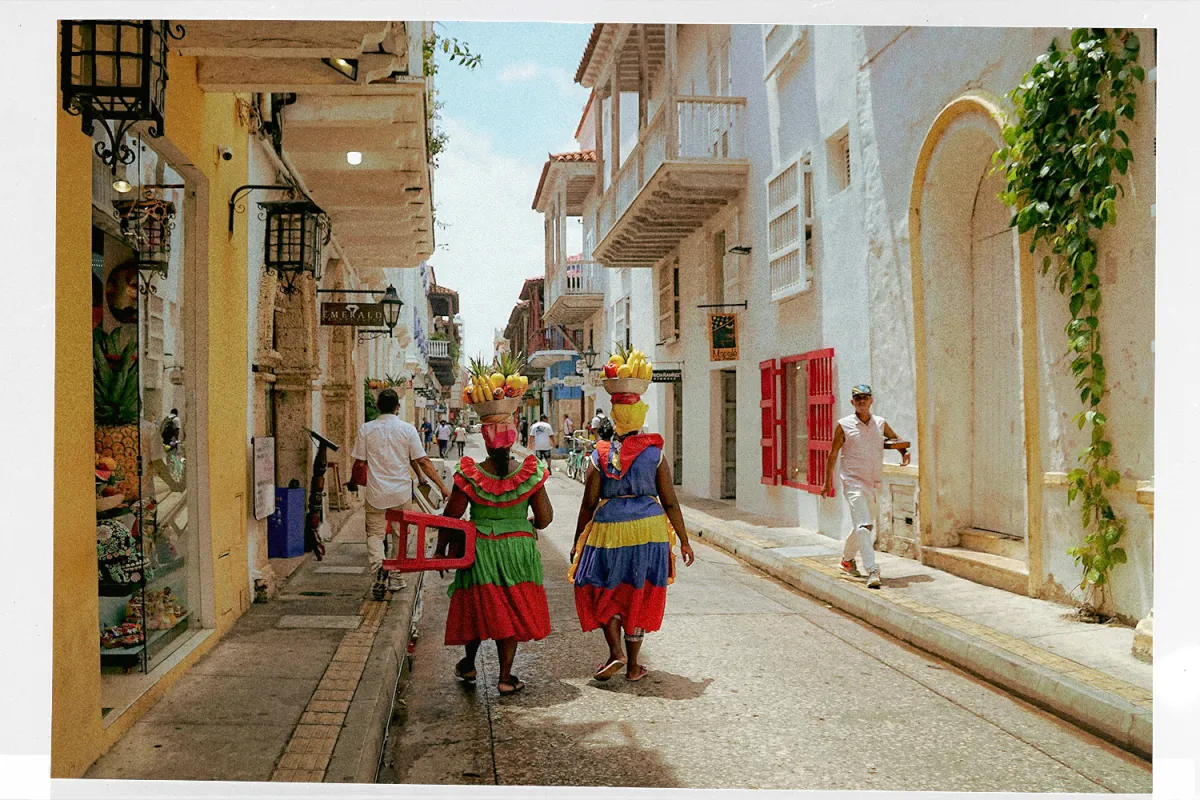
The walls of Cartagena were built in the 16th century to keep out pirates, and they worked — Sir Francis Drake attacked in 1586, was repelled, and accepted a ransom instead. The city inside those walls is a maze of narrow streets between houses painted in the same yellows, blues, and pinks that the colonial Spanish used throughout the Caribbean, every door frame festooned with bougainvillea, every balcony generating the kind of scene that photographers fly here specifically to capture. The Ciudad Amurallada (walled city) is a UNESCO World Heritage Site. In the evenings, the streets fill with people eating arepas de choclo and fried fish, and the rum is cheap and the music is inevitable. The Castillo San Felipe de Barajas — a Spanish fortress built in 1657 on a hill above the city — has a tunnel system beneath it that was used to move soldiers and supplies during sieges and is now open to visitors. The Rosario Islands, 45 minutes offshore by speedboat, have clear Caribbean water over shallow coral reefs suitable for snorkelling and diving; Playa Blanca on Barú island is a long white-sand beach accessible by public boat. Palenque, an hour from Cartagena, is the first free African slave settlement in the Americas, declared a UNESCO Intangible Heritage site; the community maintains its own distinct Creole language that survives nowhere else.
Why summer 2026
Cartagena's high season runs December through March, when the city is at maximum capacity and hotels charge peak rates. June is the beginning of the low season: fewer visitors, lower prices (20–40% cheaper in some categories), the same city, the same weather. The Caribbean heat in June is genuine — 30–33°C and humid — but no different from high season. The rainy season brings afternoon showers from May onward; they typically clear within an hour and the evenings are dry.
4 Days · Cartagena
Day 1 — Fly into Rafael Núñez Airport (CTG). Walk the walled city in the late afternoon — the light is best after 4pm. Dinner in Getsemaní, the neighbourhood just outside the walls that has overtaken the old city for restaurant quality.
Day 2 — Castillo San Felipe de Barajas in the morning. Speedboat to the Rosario Islands for snorkelling and a long lunch on the beach. Return by late afternoon.
Day 3 — Day trip to Palenque village (1 hr by shared taxi/colectivo from Cartagena's bus terminal). Cultural centre, traditional food, cumbia music. Return for evening in the walled city.
Day 4 — Playa Blanca on Barú by public boat from the Muelle de la Bodeguita (~2 hrs). White sand, clear water, fish sold from coolers on the beach. Return to Cartagena for evening flight.
Getting there
Fly into Rafael Núñez International Airport (CTG) in Cartagena — direct flights from Bogotá, Medellín, Miami, New York (JFK, seasonal), Fort Lauderdale, and Orlando. Most US connections go via Bogotá (BOG) or Medellín (MDE) if no direct flight is available. The airport is three kilometres from the walled city; taxi is the standard transfer (~15 minutes). No car needed; the walled city and Getsemaní are walkable, and tuk-tuks handle everything else.
08 · Medellín
Colombia · AntioquiaFeria de las Flores. July 31–August 9. Be There on August 9.
Feria de las Flores · Silleteros Parade · Cable Car Barrios · Eternal Spring
Air temp: 17–24°C year-round (1,495m altitude)
Festival dates: July 31–August 9, 2026 (68th annual edition)
Silleteros Parade: Sunday, August 9 — the climax of the festival
Parade tickets: Free from the street; official grandstand seats 100,000–400,000 COP
The destination
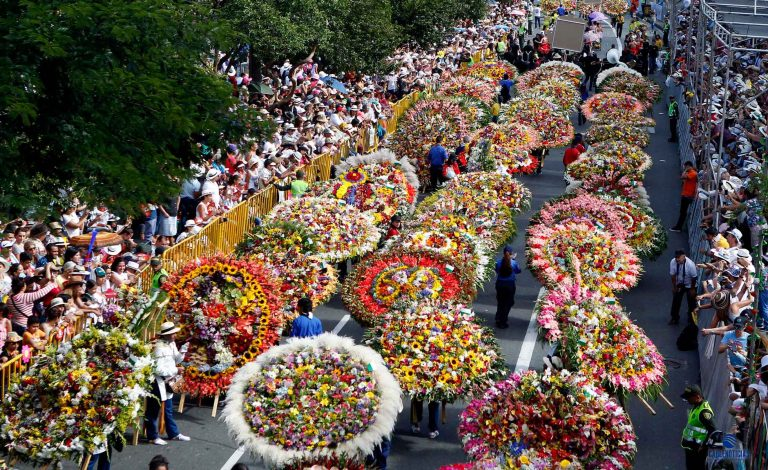
The Feria de las Flores runs ten days and takes over nearly every public space in Medellín. Flower farmers from the mountain village of Santa Elena — perched at about 2,500 metres east of the city — descend into Medellín carrying floral arrangements on their backs, some weighing up to 80 kilograms, handcrafted over months using up to 70 varieties of flowers. The Desfile de Silleteros on August 9 draws a million people onto the streets. The arrangements — called silletas — are not decorations carried in hands. They are worn as backpacks, and each one is a family's or community's artistic statement, some geometric and abstract, others depicting landscapes or historical scenes, each family with a distinct design tradition that has been passed down across generations. Four hundred silleteros participate each year. The parade takes three hours to pass. The festival in the ten days preceding the parade includes more than 110 events across 30+ locations: orchid exhibitions in the Botanical Garden, a classic car parade, concerts, cumbia and vallenato music at open-air venues, horse parades through the city centre, and the Noche de las Velitas (Night of Candles) on the evening before the parade. Beyond the festival: Medellín is the world's most instructive case study in urban transformation. The cable cars (Metrocable) that connect the hillside comunas to the city's metro system were built specifically to integrate neighbourhoods that had been physically and economically isolated; riding them reveals both the geography of the city and the scale of what changed. The Museo de Antioquia holds the largest collection of Botero's work — the sculptor and painter who was born here and donated extensively to the city.
Why summer 2026
The 68th Feria de las Flores. The Silleteros Parade is Sunday, August 9. This is not an event that needs a year-specific justification — it happens every year and is worth building a trip around in any year. The justification for 2026 specifically is that the festival now has genuinely good international infrastructure (direct flights from Miami, New York, Madrid; a hotel ecosystem that was rudimentary a decade ago and is now substantial) that makes attending it more practical than it has historically been.
4 Days · Medellín
Day 1 — Fly into José María Córdova Airport (MDE). El Poblado neighbourhood: check in, walk the Parque El Poblado, dinner in Laureles or Provenza.
Day 2 — Festival events: Botanical Garden orchid exhibition in the morning. Afternoon: Metrocable to the hillside comunas — take Line K to the top and walk through the urban escalator neighbourhood of Las Independencias. Evening: open-air concert or street festival.
Day 3 — Museo de Antioquia (Botero sculptures in the plaza outside; enter the museum for the full collection). Afternoon: day trip to Santa Elena village to visit a silletero flower farm before the parade (tours run during festival week).
Day 4 — August 9: Desfile de Silleteros. Position early on the parade route (Avenida El Poblado or Avenida Oriental are central). The parade runs mid-afternoon. Evening flight or extend the stay.
Getting there
Fly into José María Córdova International Airport (MDE), located about 45 minutes by road from Medellín city centre, in Rionegro. Direct flights from Miami (American Airlines), New York JFK (Avianca), Fort Lauderdale (Spirit), Bogotá (multiple daily), and Madrid (Iberia/Avianca). From the airport, taxis and Uber both operate; the ride to El Poblado costs roughly $15–20 USD. The metro system covers most of the city from the centre outward; El Poblado has its own metro station. During Feria week, demand for taxis and private drivers spikes — book airport transfers in advance and expect traffic on August 9.
Booking a Feria trip and a Cartagena trip back to back is one of the more common mistakes people make with this itinerary — the flights don't line up as neatly as the map suggests. Worth checking the connection before you commit.
Frequently Asked Questions
When is the World Cup 2026 final and where is it?
The final is on July 19, 2026, at MetLife Stadium in East Rutherford, New Jersey — just across the Hudson from Manhattan. It's the anchor match for New York's eight total games this tournament.
When is the best time to visit Banff and the Icefields Parkway?
Late June. All the high-altitude roads are open, the lakes are at peak colour, and the crowds haven't arrived yet — by July, parking lots at Lake Louise and Moraine Lake are full before 7am.
When can you see whale sharks in the Yucatán?
June through September, with tours departing from Isla Mujeres and Holbox near Cancún. June is the best month to combine whale shark season with peak morning light in the cenotes, and it's before the worst of hurricane season.
When is Medellín's Feria de las Flores in 2026?
July 31 through August 9, 2026 — the 68th edition. The Silleteros Parade, the festival's centerpiece, falls on Sunday, August 9.
Is June or December better for visiting Cartagena?
June, if you're after value. Cartagena's high season runs December through March; June sits in the quieter, cheaper season with the same weather and none of the peak-season crowding.
When do orcas appear near Vancouver and Victoria?
July through September is peak season for southern resident orca pods around Victoria and the San Juan Islands, with day tours running out of Victoria Harbour.
Eight Cities. One Continent. One Summer.
The World Cup Final is at MetLife on July 19. Obama's centre opened on Juneteenth. The whale sharks arrive in June and don't leave until September. The silleteros come down from Santa Elena on August 9 with 80 kilograms of flowers on their backs and a million people watching. Some of these things happen every year. Some are specific to 2026. All of them are reasons to be somewhere specific in the Americas this summer rather than just somewhere warm.
Picked your city? Tell FortripAI your dates and it'll turn any of the four-day outlines above into a real, bookable plan.