Best Scuba Diving in the Americas in June 2026: A Practical Guide
Galápagos whale sharks arriving, Yucatán cenotes at peak light, Cocos hammerhead season opening, Baja's mobula migration in its final weeks — six June dive destinations across the Americas, chosen for when the specific animal or phenomenon actually shows up.
Tubbataha's final crowd-free weeks, Sipadan glassy and wide open, Komodo's northern pinnacles at peak clarity, Nusa Penida's mola mola season just opening — six June scuba destinations chosen for what's actually in the water.
A WWII bomber intact at 72 metres in Croatia, a fissure between two tectonic plates in Iceland, basking sharks the size of a transit van off Cornwall — six European dive destinations chosen for what June specifically delivers.
June is when the Americas underwater calendar splits clean in two. In the Pacific — Galápagos, Cocos Island — the Humboldt Current arrives, the water cools, and the sharks gather in numbers that have to be seen to be believed. In the Gulf of Mexico, whale sharks materialize off Isla Mujeres by the hundreds, filter-feeding at the surface in the largest recorded aggregation of the species on the planet. In the Sea of Cortez, tens of thousands of mobula rays complete their annual migration in one of the ocean's great spectacles.
These six destinations are chosen precisely because June is when the specific animal or phenomenon that makes them remarkable is either starting, peaking, or only available for a short window.
1. Galápagos Islands — Ecuador, Pacific Ocean
Cool season opens · whale sharks arrive · liveaboard for Darwin & Wolf
Water temp: 18-24°C · Visibility: 10-40m (Darwin can exceed 40m) · Depth: 5-30m typical · Skill: intermediate to advanced · Whale shark season: June-November (peak August-October)
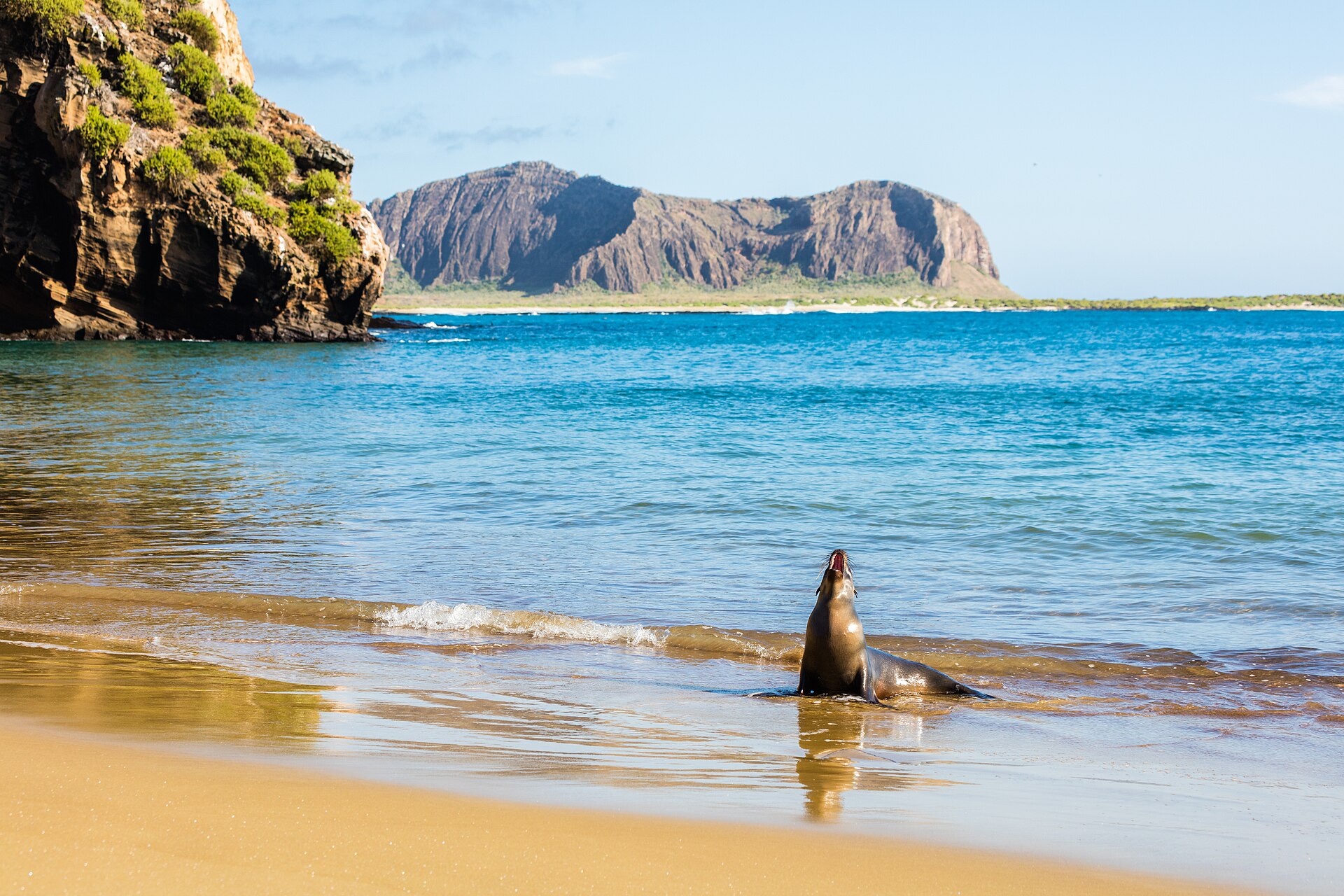
Darwin and Wolf Islands, in the remote northern archipelago, are accessible only by liveaboard and widely considered the greatest shark dive on the planet. Scalloped hammerheads sweep past in the hundreds, Galápagos sharks patrol the edges, and whale sharks materialise from the deep — most of them pregnant females up to 12 metres long, the largest individuals of the species reliably encountered anywhere on earth. Closer to the central islands, Gordon Rocks and Cousin's Rock offer hammerheads, sea lions, marine iguanas grazing underwater, penguins, mola mola, and green turtles — sometimes all on the same dive. The currents are strong and the rewards proportional.
Darwin and Wolf demand negative entries, reef hooks, and experience in current-driven environments. Most operators recommend 50+ logged dives and Advanced Open Water. Day trips from Santa Cruz and San Cristóbal reach the more forgiving central island sites. Liveaboards depart from Baltra Island.
Why June (honest version)
June opens the cool season: the Humboldt Current arrives, nutrients surge, and whale sharks begin appearing at Darwin — with the true peak running August to October. June offers a legitimate shot at both species, in better sea conditions than full peak months, with slightly more liveaboard availability. Book 12-18 months ahead regardless.
4-Day Liveaboard Sample
Day 1: Fly Quito → Baltra (via Guayaquil). Board liveaboard; 2-3 check dives at central island sites.
Day 2: Overnight sail north. Dawn arrival at Wolf Island: hammerheads, Galápagos sharks, silkies, possible whale shark.
Day 3: Darwin Island: Darwin's Arch (whale shark alley), Shark Bay, multiple drift dives. Night dive at anchor.
Day 4: Sail south. Cousin's Rock or Gordon Rocks — sea lions, rays, marine iguanas, mola mola. Disembark at Baltra.
Getting There
Fly to Quito (UIO) or Guayaquil (GYE), then domestic flights to Baltra (GPS) or San Cristóbal (SCY), ~2 hrs via Guayaquil, on LATAM or Avianca. A US$100 Galápagos National Park entry fee is required on arrival. All liveaboards arrange transfers from Baltra airport to the dock.
Water temp: 27-29°C ocean, 24°C cenotes year-round · Visibility: ocean 20-30m, cenotes 100m+ · Depth: 5-40m · Whale shark interaction: snorkelling only · Cenote best light: May-September
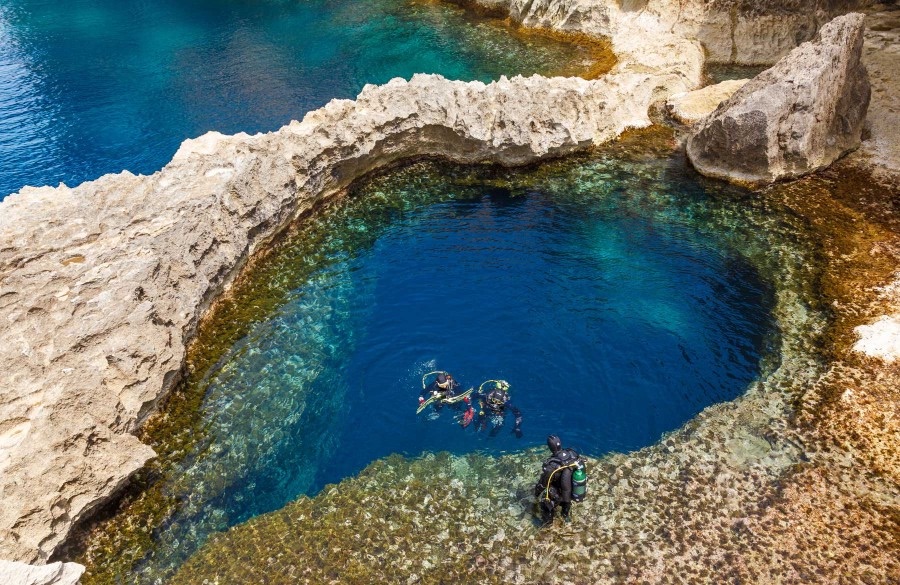
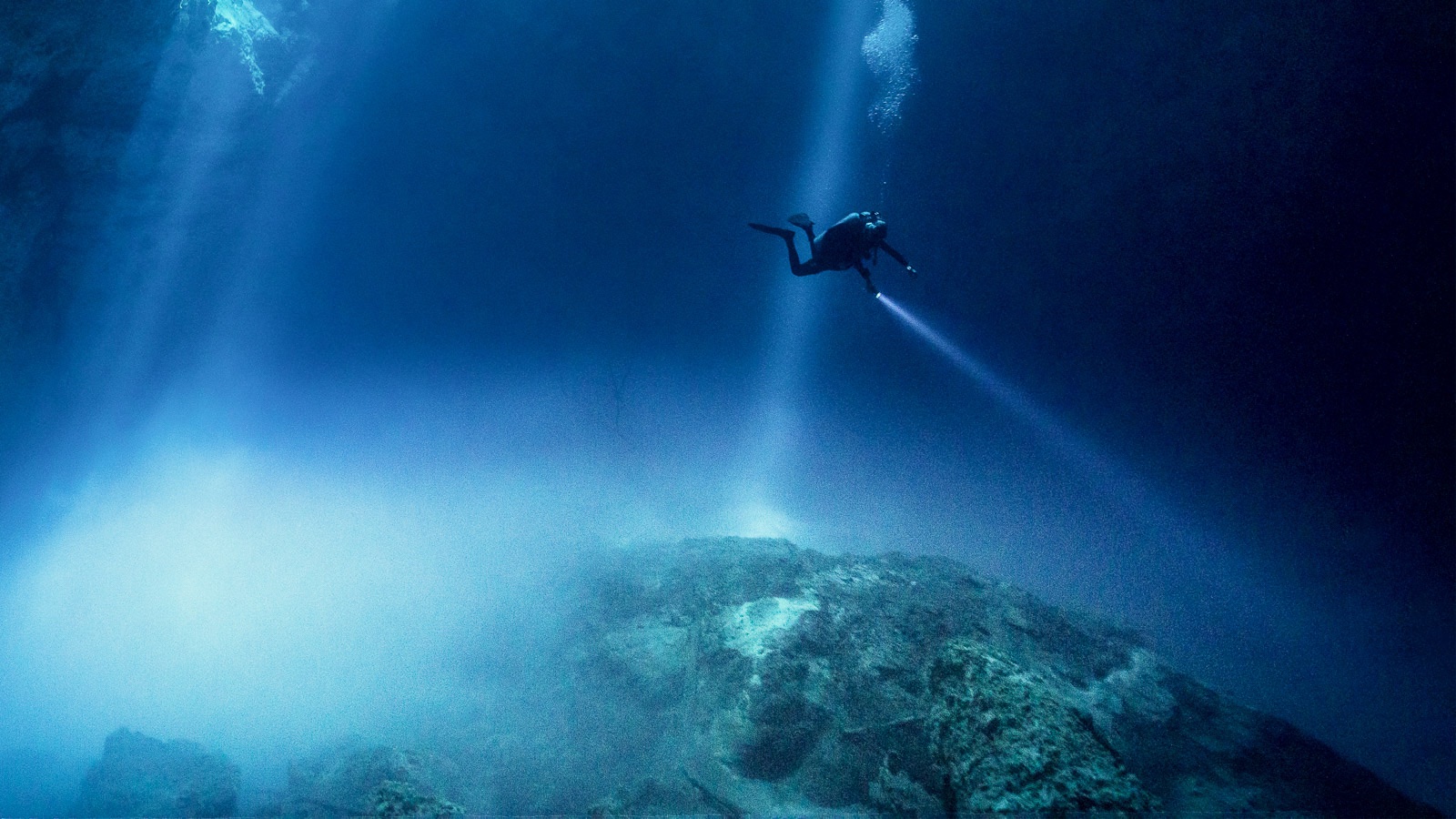
The Yucatán is two dive destinations layered on top of each other. Below ground: the world's longest mapped cave system — flooded limestone caverns lit by shafts of morning light, still water so clear it looks like glass, the Maya underworld. Then, forty minutes east by boat, the ocean: the Mesoamerican Barrier Reef, and from June through September, whale sharks. Off Isla Mujeres and Holbox, the world's largest documented aggregation gathers to feed on fish eggs near the surface, sometimes several hundred individuals in a single area.
Cenote cavern tours (always with visible daylight) are suitable for Open Water divers with a guide. Full cave penetration needs overhead environment certification. The whale shark encounter is snorkelling only — Mexican regulations prohibit scuba with whale sharks. Cozumel's drift dives add reef diving to the mix.
Why June
June opens whale shark season off Isla Mujeres, before July and August crowds arrive. Cenote light peaks May through September. Ocean conditions are generally calm before the heart of hurricane season. Early June is the best window: season open, crowds low, peak still ahead.
Honest caveat — hurricane season
June 1 marks the official start of Atlantic hurricane season. June is historically lower-risk than August-October, but trips can be disrupted by tropical storms on short notice. Travel insurance is strongly recommended. Cenotes are unaffected by surface weather.
4-Day Isla Mujeres & Riviera Maya Plan
Day 1: Arrive Cancún (CUN). Ferry to Isla Mujeres. Afternoon: reef snorkel at MUSA underwater sculpture museum or easy reef dive.
Day 2: Full-day whale shark tour from Isla Mujeres — boat, snorkelling, lunch.
Day 3: Drive 45 min south: cenote cave diving at Dos Ojos or Gran Cenote (morning, peak light). Afternoon free.
Day 4: Cozumel day trip (1.5-hr ferry from Playa del Carmen): Palancar Caves, Santa Rosa Wall drift dives. Return to Cancún for evening flight.
Getting There
Fly into Cancún (CUN) — direct from most US, Canadian, European, and Latin American cities. Whale shark tours depart from Isla Mujeres (25-min ferry from Puerto Juárez) and Holbox (~2.5 hrs from Cancún). Cenotes are 40-60 min by taxi or rental car. ADO bus covers the main corridor.
3. Cocos Island — Costa Rica, Pacific Ocean
Hammerhead season · apex expedition dive · liveaboard only
Water temp: 24-29°C (thermoclines can drop 6°C) · Visibility: 10-30m (variable) · Depth: 10-40m typical · Access: 36-hr liveaboard crossing from Puntarenas · Skill: advanced (50+ dives recommended) · Hammerhead season: June-November (peak August-September)
A UNESCO World Heritage Site 550 kilometres off Costa Rica's Pacific coast, accessible only by a 36-hour liveaboard crossing. Bajo Alcyone, Dirty Rock, Manuelita, and Dos Amigos are sites where scalloped hammerhead sharks gather in schools so dense they block the light. Tiger sharks, Galápagos sharks, silky sharks, and whitetip reef sharks are constants. Whale sharks appear from May through August. Schools of yellowfin tuna orbit the pinnacles. The film Howard Hall made here was called Island of the Sharks. That about covers it.
Strong currents, surge, deep drift dives, cold thermoclines. Advanced Open Water minimum; 50+ logged dives recommended. Standard trips run 10-12 nights with up to four dives per day. No night diving currently permitted at Cocos. Liveaboards depart from Puntarenas.
Why June
June opens the hammerhead season — larger schools driven by rainy-season nutrient upwellings. Whale sharks are still present (May-August). June and July offer "calm crossings plus big animals" — a better overall combination than either the full dry season (calmer but fewer sharks) or full peak season (maximum sharks, rougher crossing). August-September is peak for sharks but brings the roughest seas.
Practical note
Seasickness medication strongly recommended for the 36-hour crossing, June-November. Costa Rica National Park entry fee: US$490 (10-night trip). Liveaboard cost: approximately US$5,500-$7,000 for 10 nights, including diving, meals, and accommodation. Book 9-12 months ahead.
4-Day Snapshot (from a 10-night liveaboard)
Day 1: Fly to San José (SJO). Transfer to Puntarenas (~2 hrs). Board liveaboard; depart for Cocos.
Day 2: Crossing. Arrive Cocos. First dives at Manuelita — whitetips, eagle rays, moray eels.
Day 3: Bajo Alcyone: 3-4 dives at the hammerhead cleaning station. Reef hooks essential; currents strong.
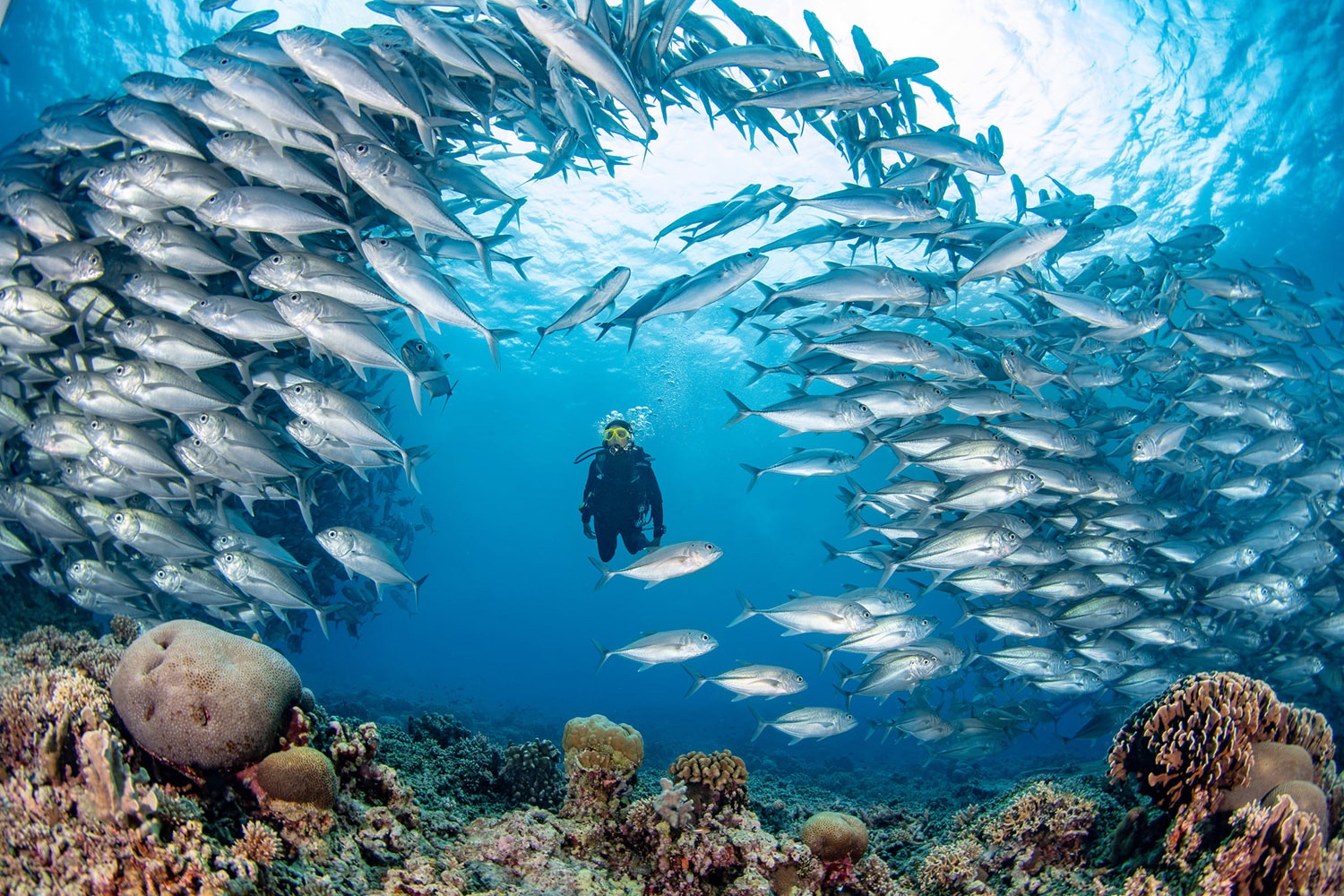
Day 4: Dirty Rock and Dos Amigos: hammerheads, tiger sharks, silkies, schooling jacks.
Getting There
Fly to San José (SJO) from North American, European, and South American hubs. Transfer to Puntarenas by road (~2 hrs; operators arrange this). All Cocos liveaboards depart Puntarenas — operators include Aggressor Fleet, Undersea Hunter, and Argo.
4. Baja — Mobula Ray Migration — Mexico, Baja California Sur
Migration window · early June peak
Water temp: 22-26°C (June) · Visibility: 15-25m · Depth: 5-30m · Mobula peak: late May to early July — density drops after mid-June · Los Islotes sea lion colony: closed June 1-August 31 for pupping
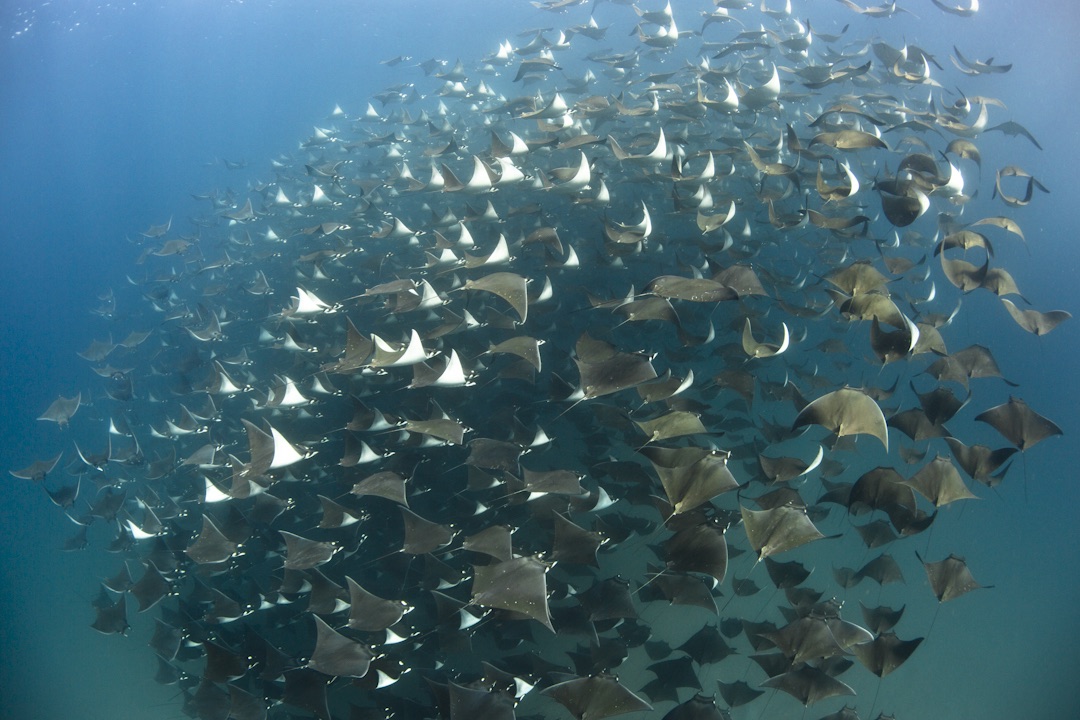
Every year between April and July, the Sea of Cortez hosts the largest aggregation of mobula rays on the planet. Tens of thousands of individuals school in the plankton-rich waters around La Ventana, La Paz, and Cabo San Lucas, leaping from the surface in aerial displays that have never been fully explained by science. Being in the water among them — a vast, silent, undulating field of rays extending in every direction — is one of the ocean's genuinely uncanny experiences. Cabo Pulmo National Park, a UNESCO-protected reef 60 kilometres north of Los Cabos, adds the kind of fish density that recalls descriptions of Caribbean reefs from the 1950s.
Mobula encounters work best via snorkelling and freediving — scuba entry can startle the schools. Licensed operators follow strict protocols. June marks the tail end of peak migration; early June still sees large aggregations, but density typically declines after mid-June. Scuba diving at Cabo Pulmo and La Paz reefs is available year-round.
Why June (timing matters)
The mobula migration's highest density is late May and early June — this is the case for June specifically. After mid-June, numbers decline. Book early June rather than late June. Note: Los Islotes, the famous sea lion colony, is closed June 1-August 31 for pupping season.
4-Day La Paz-Based Plan
Day 1: Fly into Los Cabos (SJD) or La Paz (LAP). Afternoon check dive at Isla Espíritu Santo reef.
Day 2: Full-day mobula ray expedition from La Ventana or La Paz — snorkel/freedive with migration schools.
Day 3: Fang Ming wreck dive + Amortajada seamount. Afternoon: Punta Lobos reef.
Day 4: Drive ~2 hrs to Cabo Pulmo for two reef dives — massive jack school at El Cantil. Return to Los Cabos for evening flight.
Getting There
Fly into Los Cabos (SJD) — direct from most US cities, Canada, and Mexico City — or La Paz (LAP), served from Mexico City, Guadalajara, and Tijuana. La Paz is the best base. From Los Cabos, drive ~2 hrs on Highway 1. Rental car recommended. Mobula expeditions depart from La Ventana (~70km from La Paz) and the La Paz waterfront.
Water temp: 27-28°C (June) · Visibility: 25-30m+ · Depth: 5-60m (most sites accessible from shore) · Marine Park Nature Fee: US$40/year · Visitor Entry Tax: US$75/person · Hurricane risk: minimal
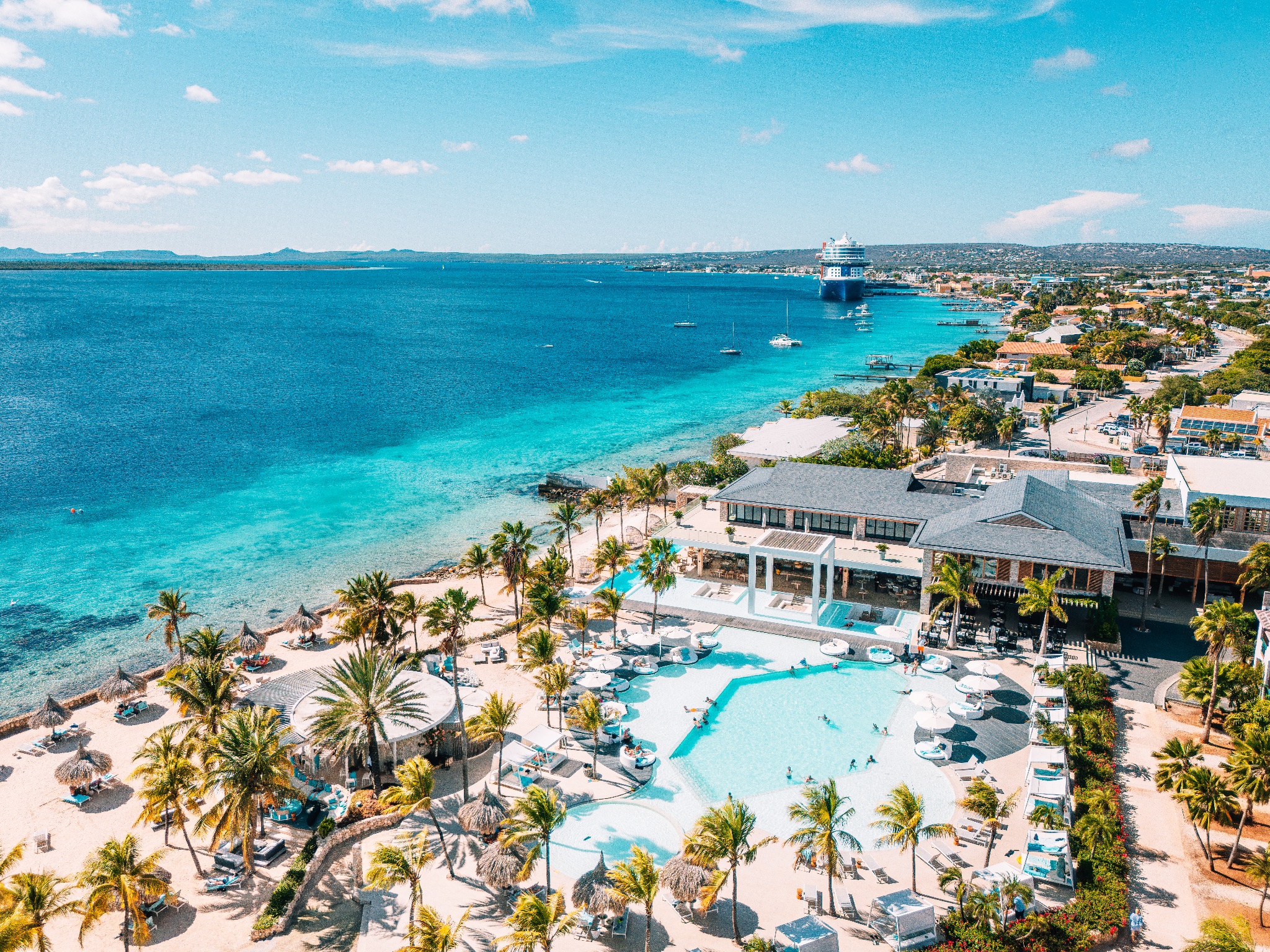
Bonaire's license plates say Diver's Paradise, and the claim is not marketing. Drive down any coastal track, find a yellow stone roadside marker, walk fifteen metres to the shore, and you're in. Eighty-plus dive sites, no boat required. Salt Pier is a macro photographer's obsession: seahorses, spotted drums, and nudibranchs crowd the pilings. The Hilma Hooker — a 71-metre cargo ship deliberately sunk in 1984 — lies at 30 metres, colonised by black coral and circled by fish. Across the channel, Klein Bonaire boat dives reach pristine reef where hawksbill turtle encounters are almost guaranteed. The trade winds blow consistently from the northeast, keeping the west coast calm year-round.
Bonaire works for beginners and technical divers equally. Shore diving removes the weather dependency that affects other Caribbean destinations. First-time visitors must complete a mandatory check dive before independent diving — enforced by STINAPA. Pay both the Nature Fee (US$40) and Visitor Entry Tax (US$75) online before arrival; QR codes are checked at the airport and at dive centres.
Why June
Bonaire sits well south of the Caribbean hurricane belt. June offers warm water, 30m+ visibility, and significantly fewer divers than the December-April peak. The west coast remains sheltered year-round. For Caribbean diving without hurricane anxiety, Bonaire is the most reliable option on this list.
4-Day Island-Based Plan
Day 1: Arrive Flamingo Airport (BON). Mandatory check dive. Afternoon: 1000 Steps — coral wall, turtles, French angels.
Day 2: Three shore dives: Salt Pier (seahorses, drums), Hilma Hooker wreck (30m), Bari Reef. Night dive from shore.
Day 3: Boat to Klein Bonaire: Knife, Bonaventure, Forest — pristine reef, hawksbill turtles. Afternoon: Lac Bay mangrove snorkel.
Day 4: Karpata (steep wall, eagle rays) and Rappel before afternoon flight.
Getting There
Fly into Flamingo Airport (BON) from Amsterdam (KLM direct, ~9.5 hrs), Miami (American), Atlanta (Delta), or New York (JetBlue). Curaçao (CUR) also serves as a hub. No public bus system — rental car recommended for shore diving flexibility. Pre-pay Nature Fee at stinapa.bonairenaturefee.org and Visitor Entry Tax before departure.
6. Florida Keys — United States, Florida
Most accessible · pre-bleaching window
Water temp: 28-30°C (June) · Visibility: 15-25m (varies) · Depth: 5-35m · Bleaching risk (June): low per NOAA BleachWatch; risk escalates July-August · Skill: all levels
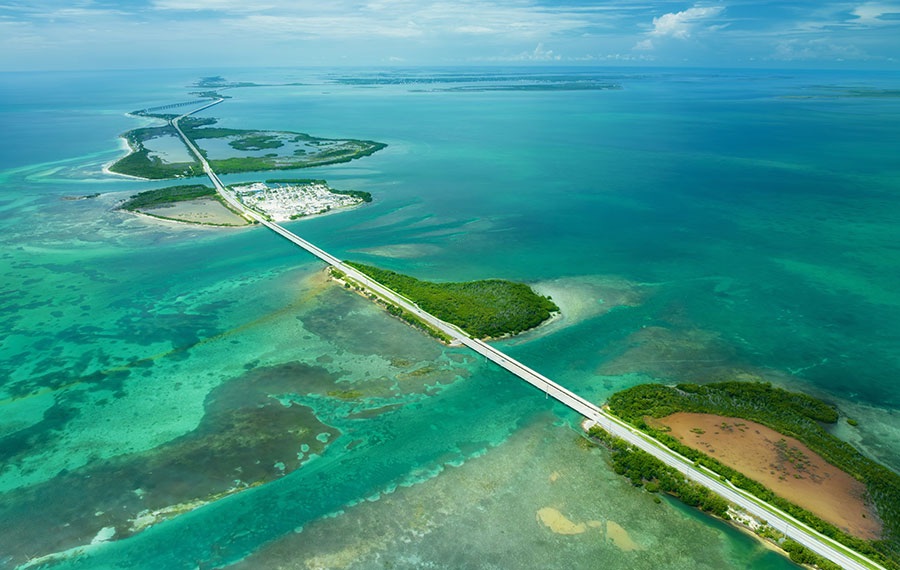
Florida's Keys stretch 200 kilometres from Miami to Key West, with America's only living barrier reef running parallel to them. The Spiegel Grove — a 159-metre US Navy landing ship sunk in 2002, now one of the most biologically rich artificial reefs in the Atlantic — draws goliath grouper, nurse sharks, and dense reef fish. Molasses Reef, the most dived site in the US, still produces eagle rays, turtles, and schooling fish. The Christ of the Abyss replica at Key Largo, a bronze statue at nine metres, is both kitsch and genuinely moving. June brings warm water, active marine life, and a bleaching risk that hasn't yet arrived.
The Keys are the most accessible destination on this list. Day trips run from Key Largo to Key West with multiple operators; no liveaboard or minimum dive count required. NOAA BleachWatch consistently rates June as LOW bleaching risk, with escalation beginning in July and peaking in August-September. The 2023 season was the most damaging on record; 2024 was moderate. June is when the summer reefs are at their best.
On reef health
The Florida reef has lost 80-90% of its coral cover since the 1970s — stony coral tissue loss disease, bleaching, and pollution have caused serious damage. Wreck sites and deeper reefs remain excellent. Adjust expectations around coral coverage, but marine life and infrastructure are both strong.
Why June
June sits between the peak December-May season and the problematic July-September heat stress period. Water is warm, nurse sharks and goliath groupers are active, and bleaching hasn't arrived. It's not the Keys at their absolute best — that's winter — but it's the best the summer months offer.
4-Day Key Largo & Islamorada Plan
Day 1: Fly into Miami (MIA) or Fort Lauderdale (FLL). Drive to Key Largo (~1.5 hrs). Afternoon: Christ of the Abyss and Molasses Reef.
Day 2: Spiegel Grove (two dives): bow at 18m, stern at 35m. Goliath grouper, nurse sharks, barracuda.
Day 3: Islamorada: Cheeca Rocks reef dive (turtles, rays). Afternoon: Eagle Ray Alley near Snake Creek.
Day 4: Night dive at Carysfort Reef (deep wall, groupers). Drive back to Miami for morning flight.
Getting There
Fly into Miami (MIA) or Fort Lauderdale (FLL). Drive south on US-1, the Overseas Highway — Key Largo is ~1.5 hrs from Miami, Islamorada another 30 min south. Rental car essential; no practical public transport in the Keys. Book dive operators in advance — June summer demand is picking up.
Three oceans. One month.
The Pacific delivers its predators in June — the Galápagos and Cocos open their peak seasons, the mobula migration peaks in Baja. The Caribbean and Gulf offer something less violent and more surprising: whale sharks feeding at the surface, sinkholes lit like cathedrals, a limestone island with 80 shore dive sites and no hurricane on the horizon. The question is not which of these is best. It is which one you haven't been to yet.
Share
Frequently asked questions
What is the best scuba destination in the Americas in June 2026?+
It depends on what you want. For peak hammerhead density, Cocos Island (June opens the season, August-September peak). For whale sharks, Galápagos (June arrivals, August-October peak) or Isla Mujeres (June opens, before crowds). For pure spectacle, the Baja mobula migration — but go early June, density drops after mid-month. For accessible Caribbean diving outside the hurricane belt, Bonaire.
When can I see whale sharks in Mexico in 2026?+
Isla Mujeres whale shark season opens in June 2026 and runs through September. Aggregations of several hundred individuals feed near the surface. Mexican regulations permit snorkeling only — no scuba with whale sharks. Early June is the best window: season open, crowds low.
Do I need a liveaboard for the Galápagos?+
Only for Darwin and Wolf islands — the remote northern archipelago accessible only by liveaboard, and where the famous hammerhead and whale shark dives happen. Central island sites (Gordon Rocks, Cousin's Rock, North Seymour) are reachable as day trips from Santa Cruz or San Cristóbal. Liveaboards depart from Baltra. Book 12-18 months ahead for June.
Is June safe for diving in the Caribbean during hurricane season?+
June 1 marks the official start of Atlantic hurricane season, but historical risk is much lower than August-October. Bonaire sits south of the hurricane belt — minimal risk year-round. The Yucatán and Florida Keys carry some June risk; travel insurance is strongly recommended for those regions.
When does the Baja mobula migration peak in 2026?+
The mobula ray migration in the Sea of Cortez runs late April through early July, with the highest density in late May and early June 2026. After mid-June, numbers decline. Book early June, not late June. Los Islotes (the famous sea lion colony) is closed June 1-August 31 for pupping season — don't expect to swim with sea lions during this window.
Start a trip Fortrip can actually defend.
Sketch a brief. We come back with an itinerary that reads like a recommendation, not a checklist — and tell you what we’d change about it.