Best Scuba Diving in Europe in June 2026: A Practical Guide
A WWII bomber intact at 72 metres in Croatia, a fissure between two tectonic plates in Iceland, basking sharks the size of a transit van off Cornwall — six European dive destinations chosen for what June specifically delivers.
Galápagos whale sharks arriving, Yucatán cenotes at peak light, Cocos hammerhead season opening, Baja's mobula migration in its final weeks — six June dive destinations across the Americas, chosen for when the specific animal or phenomenon actually shows up.
Tubbataha's final crowd-free weeks, Sipadan glassy and wide open, Komodo's northern pinnacles at peak clarity, Nusa Penida's mola mola season just opening — six June scuba destinations chosen for what's actually in the water.
Europe is not where you go for warm water. It is where you go for a WWII bomber intact at 72 metres, for the fault line between two continents, for basking sharks the size of a transit van feeding off the Cornish headland. The scale of what's down there rarely matches the temperature of what's above it.
June occupies a specific position in the European dive calendar. The Mediterranean is warming and clearing before the crowds arrive. Iceland's surface is as hospitable as it will get. The Atlantic plankton blooms are peaking, drawing sharks inshore. The Adriatic centres open for the season. None of these windows lasts. The following six destinations are the ones that belong specifically to June.
1. Silfra Fissure — Iceland, Þingvellir National Park
UNESCO World Heritage Site · scuba, snorkeling, freediving (surface only)
Water temp: 2-4°C year-round · Visibility: 100m+ · Max depth (diving): 18m · Scuba requirement: Open Water + dry suit certification, or 10 logged dry suit dives within 2 years (logbooks checked) · Snorkelling: no certification required
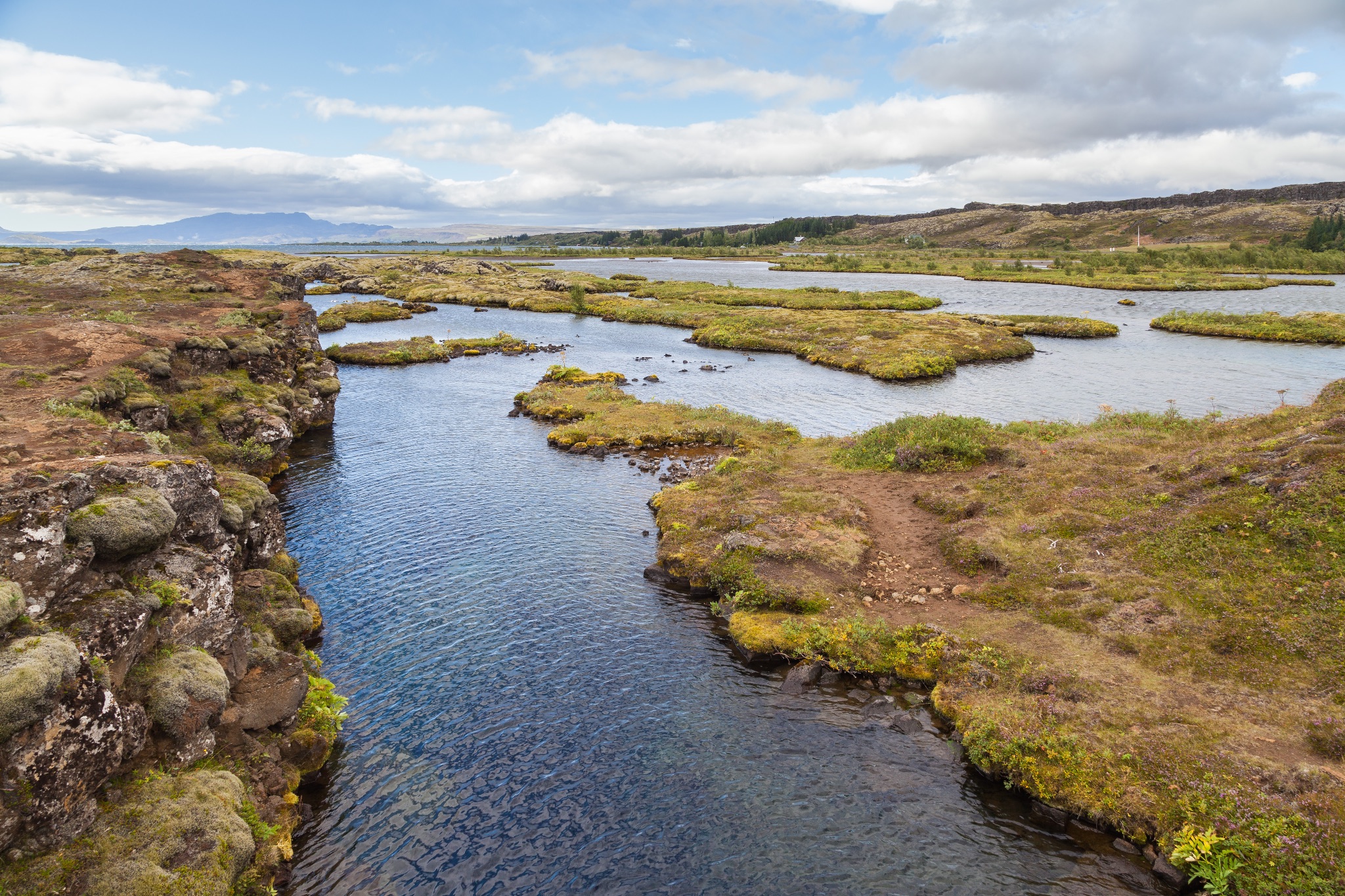
There is one place on earth where you can scuba dive between two tectonic plates. Silfra sits in the rift between the North American and Eurasian plates, which are moving apart by roughly 2cm per year. The water originates from Langjökull glacier, 60km north, filtered through volcanic rock for decades before emerging in the fissure — pure enough to drink, clear enough to see for over 100 metres. The main dive runs through four sections: the Crack, Hall, Cathedral, and Lagoon. The Cathedral is the centrepiece: a 100-metre-long fissure with lava walls dropping vertically on either side, the water an impossible blue, the bottom visible far below. Vivid green troll-hair algae clings to the rock. The sensation, confirmed by nearly every diver who has made it, is less like swimming than like flying.
Scuba requires Open Water certification plus dry suit certification — or written proof from a certified instructor of at least 10 logged dry suit dives within the past two years. Operators check logbooks on arrival. For snorkellers, no certification is needed; dry suits are provided. There is minimal marine life in the fissure itself. This is not a wildlife dive. It is a geology dive, a clarity dive, a once-in-a-lifetime dive.
Why June
Water temperature is identical year-round — 2-4°C, always. What changes is topside: June brings up to 20 hours of daylight, the mildest surface weather of the year, and campsite facilities at full operation. The dive itself doesn't change between seasons. What changes is how tolerable it is to stand in a car park in a dry suit.
4-Day Reykjavík-Based Plan
Day 1: Arrive Reykjavík (KEF). Equipment fitting and briefing with dive operator. Explore the city.
Day 2: Drive to Þingvellir (~1 hr). Silfra dive or snorkel tour. Afternoon: Gullfoss and Geysir on the Golden Circle.
Day 3: Ocean shore dives, or Davíðsgjá fissure — a quieter second rift site near Þingvellir.
Day 4: Reykjanes Peninsula lava tube or Blue Lagoon before evening flight.
Getting There
Fly into Keflavík International Airport (KEF) — direct flights from most European hubs including London, Amsterdam, Copenhagen, and Frankfurt. Operators run daily minibus transfers to Silfra (~1 hr each way), or self-drive via Route 36 to Þingvellir National Park.
Water temp: ~20°C (June) · Visibility: 30-40m · Depth range: 5-60m · Skill: all levels (cave/deep for advanced) · Access: shore diving + boat trips
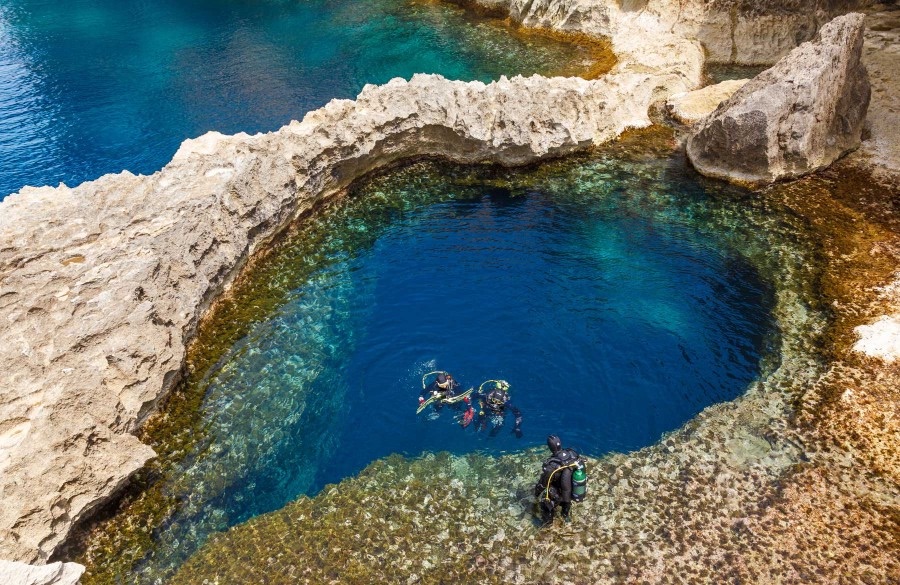
Gozo has been a diving destination since the 1970s, and its reputation has held. The Blue Hole at Dwejra Point is the island's centrepiece: a natural circular pool connected to the open sea through a submerged arch at 8-15 metres, beyond which a wall drops into the blue. Sunbeams angle through the opening; the rock is dense with sponges, tubeworms, and small groupers. Nearby, the boulders left by the 2017 collapse of the Azure Window — the Game of Thrones arch — create an eerie reef field worth its own dive. For wrecks: the MV Karwela and MV Cominoland are among the best intentionally sunk artificial reefs in the Mediterranean, accessible from shore, hulls now thickly colonised. Seahorses, moray eels, octopuses, stingrays, and barracuda on nearly every dive. Over 40 sites ring the island's coastline, almost all reachable from shore without a boat.
Open Water divers can access the majority of sites from day one. Advanced certification opens the deeper wrecks (40m+) and longer tunnel systems. Gozo is one of Europe's finest shore-diving destinations — infrastructure around L-Qbajjar Bay and Xlendi is set up for independent diving.
Why June
June is the start of Gozo's best diving season: water is warming, clarity is at or near its annual peak, and the island hasn't filled with summer crowds. The Blue Hole requires no booking. Dive centres fill up in July and August. June is the window of excellent conditions without competition for space.
4-Day Gozo-Based Plan
Day 1: Fly Malta (MLA), ferry to Gozo (~25 min). Afternoon orientation dive at San Dimitri Point or Cirkewwa Reef.
Day 2: Dwejra Bay: Blue Hole and inland sea tunnel in the morning. Afternoon: Azure Reef (underwater remains of the collapsed arch).
Day 3: Wrecks: MV Karwela and MV Cominoland at Xlendi. Night dive at Reqqa Point — reef wall, large groupers, moray eels.
Day 4: Billinghurst Cave (advanced). Ferry back to Malta; optional afternoon dive at Cirkewwa Marine Park before evening flight.
Getting There
Fly into Malta International Airport (MLA). Taxi or bus to Ċirkewwa on Malta's northern tip (~45 min), then the Gozo Channel Company ferry to Mġarr (~25 min, runs frequently). Rent a car on Gozo for site access; dive centres cluster around Marsalforn, Xlendi, and Dwejra.
3. The Azores — Portugal, Mid-Atlantic Archipelago
Atlantic pelagic diving · season opens
Water temp: 20-22°C (June) · Visibility: 20-40m · Depth: 15-50m+ (seamounts) · Peak pelagic season: July-September (not June — see below) · Skill: Open Water to Advanced, site dependent
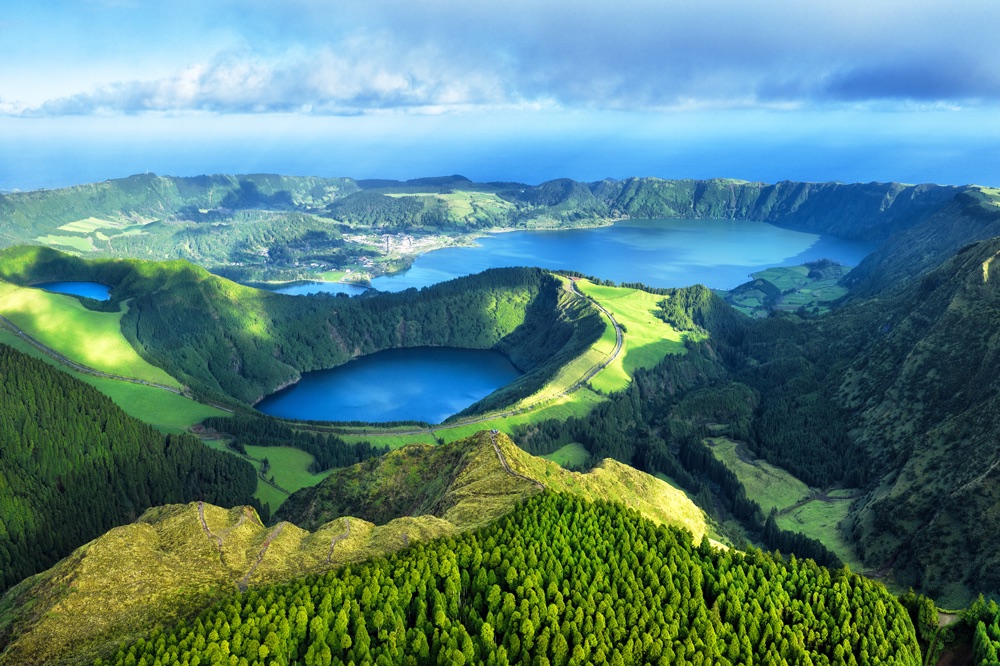
Nine volcanic islands rising from the mid-Atlantic, the Azores sit in the migratory path of virtually everything that moves through the North Atlantic. Princess Alice Bank — a submerged seamount southwest of Pico — draws hundreds of mobula rays who ascend from depth to hover at 30 metres above cleaning stations. Ambrósio, off Santa Maria, is a manta ray hotspot in summer. Blue sharks and occasional makos are encountered at baited offshore dives near Faial. The inshore reefs around each island hold dusky groupers, moray eels, bream, and wrasse against black volcanic rock. The scale is always Atlantic — open water, deep blue, visibility reaching 60 metres at the right site.
An honest note on June: the Azores' true peak for pelagic encounters — mobula aggregations at Princess Alice, blue shark density, best offshore conditions — runs from July to September. June is the season opening. Conditions are good and inshore reef diving is excellent, but the signature big-animal encounters are less reliable than in high summer. Come in June for the Azores experience; come in August for the rays. Princess Alice and offshore seamount dives require Advanced Open Water and confidence in current.
Why June (honest version)
Sea conditions become more stable, water reaches 20-22°C, and visibility peaks. Inshore reef and wreck diving is at its best. Pelagic encounters are possible but not guaranteed. June means the Azores with fewer crowds.
4-Day São Miguel & Faial/Pico Plan
Day 1: Fly into Ponta Delgada, São Miguel (PDL). Afternoon coastal reef dive at Vila Franca do Campo islet.
Day 2: Formigas Islets day trip: seamount with pelagic fish, possible rays and sharks; Olympia wreck (30-50m, advanced).
Day 3: Inter-island flight to Faial (FLW). Princess Alice Bank (advanced) or Contador for blue shark encounter.
Day 4: Shrimp Cave near Faial (candy-striped shrimp in a narrow underwater corridor). Return to Ponta Delgada for evening flight.
Getting There
Fly into Ponta Delgada, São Miguel (PDL) — direct from Lisbon, London, Amsterdam, and Frankfurt on SATA/Azores Airlines, TAP, and Ryanair. Inter-island flights to Faial (FLW) take ~35 minutes on SATA. All diving is day-trip based from island dive centres; no permanent liveaboard operates in the Azores.
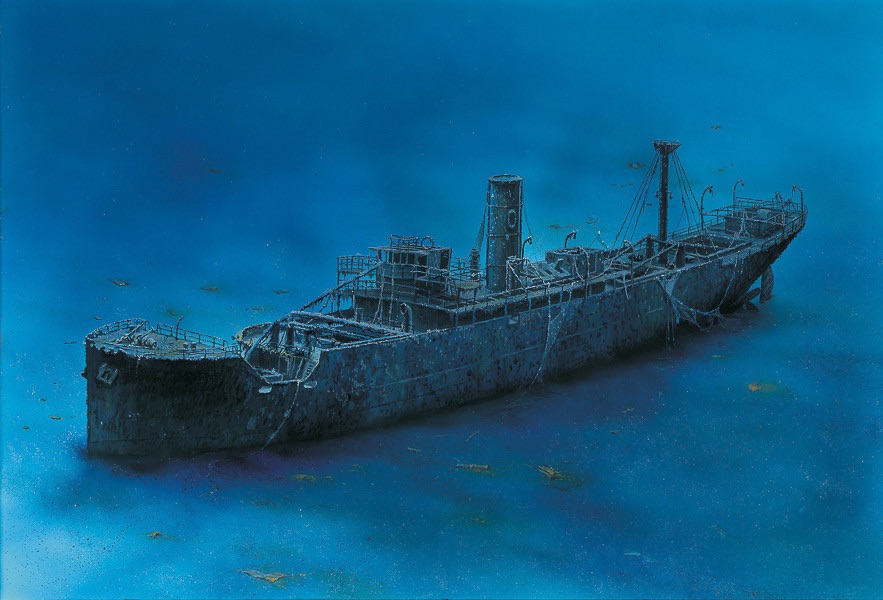
Vis is Croatia's furthest inhabited island from the mainland, and for forty years after WWII it was a closed Yugoslav naval base. When it opened in 1989, divers found what the sea had quietly been keeping: one of the densest concentrations of WWII wreckage in the Adriatic. The B-17 Flying Fortress — shot down on 6 November 1944 — lies at 72 metres, almost perfectly intact, fuselage and wings settled into the sand as if it had merely landed there. Technical divers only. The B-24 Liberator at 37 metres (main section) is accessible to advanced recreational divers: engines, propellers, and tail section all still recognisable. Beyond the aircraft, five shipwrecks of varying depth, caves, underwater archaeology, and Mediterranean reef life.
Advanced Open Water accesses the B-24's main section and multiple shipwrecks. The B-17 requires TDI/PADI Tec certification and appropriate gas mixes. All divers must hold a Croatian Diving Permit (€15, issued by dive centres on presentation of certification card and passport). Note: visibility in Vis can drop in May due to plankton blooms; June typically sees the water clear again.
Why June
Dive centres open fully in June, and the May plankton bloom has usually cleared, giving the best Adriatic clarity of the summer. The island is quiet — June has tourists, but not the wall-to-wall charter crowds of July and August. The right month to have the wrecks largely to yourself.
4-Day Komiža-Based Plan
Day 1: Fly to Split (SPU), ferry to Vis or Komiža. Afternoon reef dive to acclimatise.
Day 2: B-24 Liberator (recreational divers to 37m; tech divers to 52m tail section). Afternoon: Vassilios T. steamship.
Day 3: B-17 Flying Fortress for technical divers (72m). Recreational divers: Teti wreck + Ravnik cave (Green Cave).
Day 4: Morning reef dive at Stupiste — red sea fans, scorpionfish. Ferry back to Split for evening flight.
Getting There
Fly to Split Airport (SPU). From Split ferry terminal, Jadrolinija runs daily ferries to Vis town (2.5 hrs) and Komiža; a catamaran runs in season (~1.5 hrs). Komiža is the best base for wreck diving. No car needed — dive centres arrange boat transfers to all sites.
5. Cornwall — Basking Sharks — United Kingdom, England
Limited season window
Water temp: 13-16°C (June) · Visibility: 7-20m (variable) · Basking shark peak: mid-May to late June · Blue shark season: June-October · Shark interaction: snorkelling only (WiSe code of conduct — no scuba)
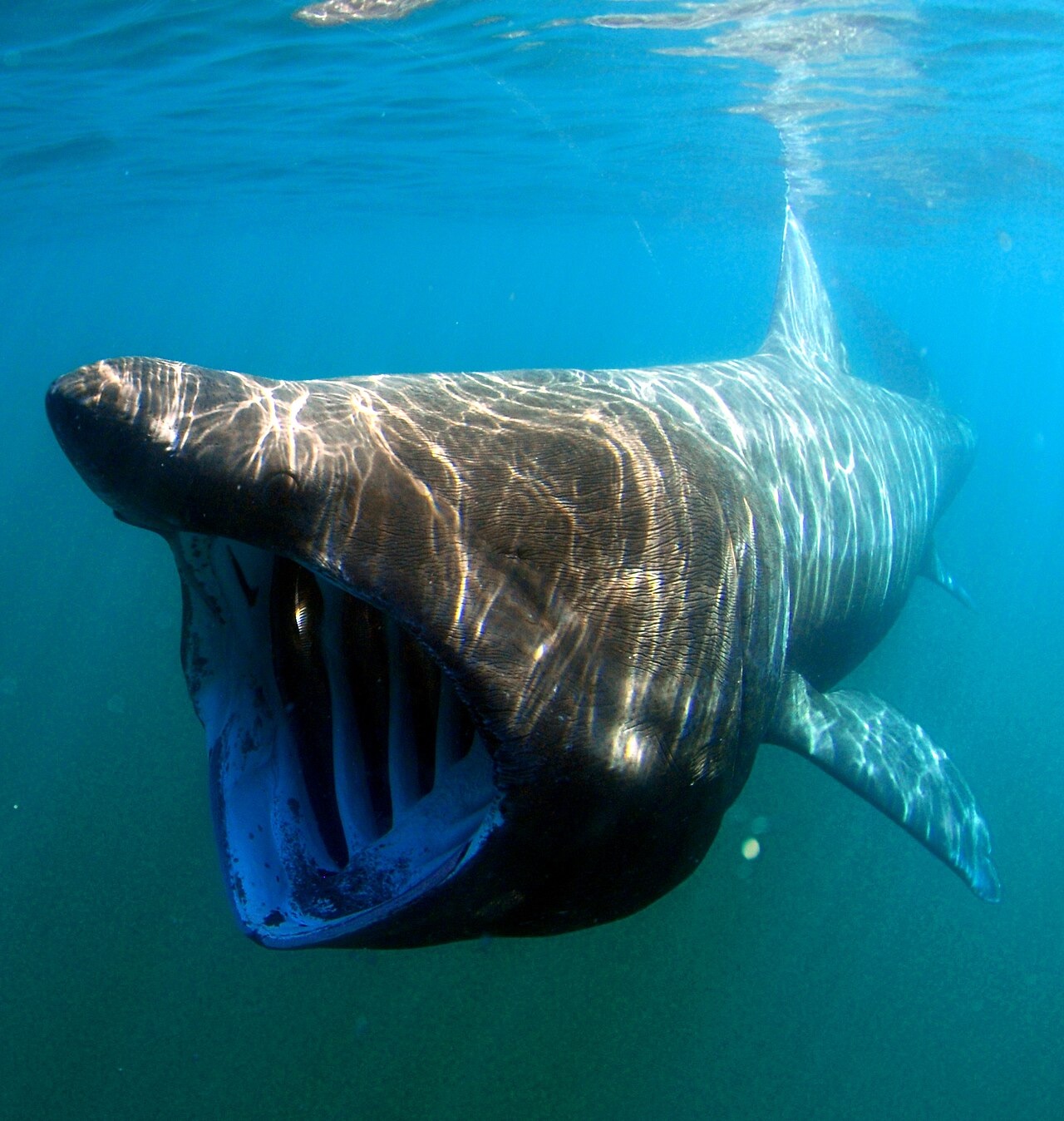
Basking sharks are the second-largest fish on earth — up to 12 metres, seven tonnes — and every June they arrive off Cornwall's headlands to feed on plankton blooms, swimming slowly at the surface with their mouths open. Being in the water next to one is, by most accounts, overwhelming. They show no interest in divers and often continue feeding within arm's reach. Operators including Porthkerris Divers run trips from the Lizard Peninsula when sharks are present and conditions allow — flat seas are a prerequisite, as the sharks drop below the surface in any swell. Alongside the basking shark window, blue sharks visit Cornwall's offshore waters from June onward; several operators run baited blue shark snorkel trips 15-20 miles offshore from Penzance. Cornwall also offers solid conventional scuba: the Manacles reef, Lizard coast wrecks, kelp forests, and cold-water species.
Under the WiSe code of conduct, all interactions with basking sharks are snorkelling only — no scuba permitted. No certification is needed for basking shark trips; open-water confidence is required. Sightings are never guaranteed — trips are announced short-notice based on reported sightings, so a flexible schedule is essential. For conventional scuba, June water temperatures run 14-16°C, requiring a 5-7mm wetsuit or dry suit.
Why June
Late June is the tail end of Cornwall's basking shark season — the peak runs from mid-May. After late June, the sharks follow the plankton bloom north toward Scotland. Blue shark season opens simultaneously in June. It is the one month where both are possible in the same week.
4-Day Lizard Peninsula-Based Plan
Day 1: Travel to Penzance or the Lizard. Afternoon reef scuba dive at The Manacles — gorgonians, wrasse, conger eels.
Day 2: Basking shark snorkel trip (weather and sightings dependent — check operators' social media the morning before). If sharks absent: second reef dive.
Day 3: Blue shark snorkel trip offshore (~6 hrs, 15-20 miles from Penzance). Open-water confidence needed; no certification required.
Day 4: Shore dive at Porthkerris Cove (kelp forest, octopus, sea fans). Explore Kynance Cove before departure.
Getting There
Fly into Newquay Cornwall Airport (NQY) from London Gatwick or Manchester on Ryanair. Alternatively, train from London Paddington to Penzance (~5.5 hrs) or drive via the M4/A30 (~5 hrs). Shark trip operators (Porthkerris Divers, Blue Shark Snorkel) are based around Penzance and the Lizard. Book short-notice — trips depend on weather and sightings.
6. Medes Islands Marine Reserve — Spain, Costa Brava
Mediterranean biodiversity peak
Water temp: 22-25°C (June) · Visibility: 30-35m · Depth: 5-40m · Skill: all levels (caves/walls for advanced) · Nearest airport: Girona (GRO), 40km; Barcelona (BCN), 130km
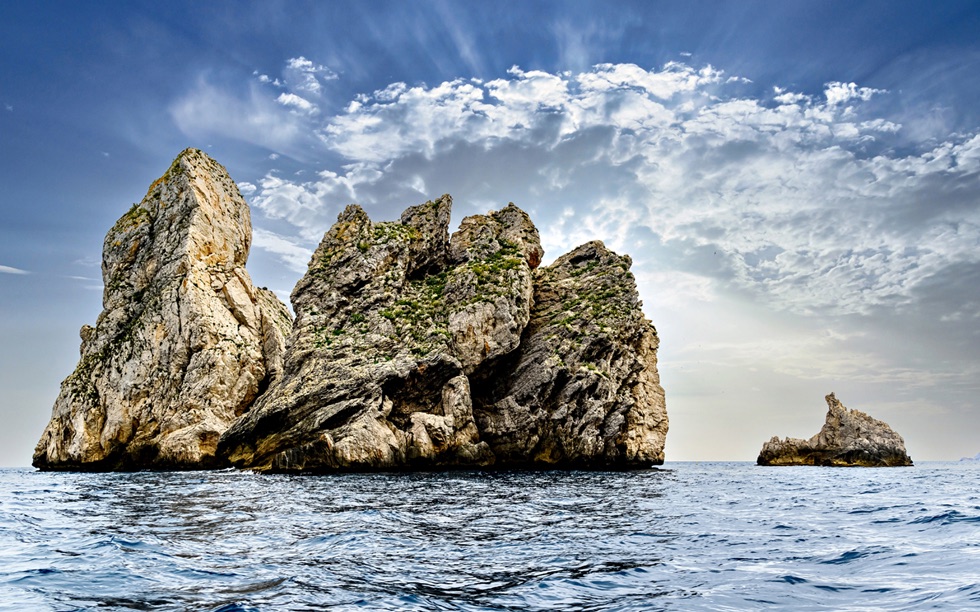
Protected since 1983, the Medes Islands are seven small islets off L'Estartit on the Costa Brava, and forty years of protection has done exactly what conservation is supposed to do. Dusky groupers exceeding 50kg patrol the reefs without any concern for divers. Barracuda rotate in slow columns above the walls. The gorgonian sea fans — red and yellow, some over a metre across — line the cavern entrances and current-exposed pinnacles. Red coral grows in the shade zones. Seahorses shelter in the seagrass meadows. Below the islands, a network of tunnels and caverns runs through the limestone. The dive infrastructure in L'Estartit is some of the most developed on the Mediterranean coast — over a dozen dive centres serve the reserve, and most sites are accessible directly from shore.
Most of the Medes' best reef sites are suitable from Open Water level; the deeper walls (La Vaca, El Dofí Nord) and cave systems need Advanced Open Water or cave certification. The reserve enforces a strict daily diver quota — book dive slots at least a day in advance in June, further ahead in July and August. Snorkelling is excellent in the shallower bays. Freedivers appreciate the clean water and dramatic topography of the north coast.
Why June
June is early summer on the Costa Brava — water at 22-25°C, visibility 30-35 metres, fish entering peak activity as spawning season approaches. L'Estartit is lively but not yet overrun, and quota slots are far easier to secure than in high season. For underwater photographers, June light levels are among the year's best.
4-Day L'Estartit-Based Plan
Day 1: Fly into Girona (GRO) or Barcelona (BCN); drive to L'Estartit. Afternoon dive at Tascó Petit — shallow, clear, abundant fish.
Day 2: La Vaca and El Dofí Nord (advanced): deep walls, gorgonian fans, barracuda. Afternoon: La Catedral cave system.
Day 3: Morning grouper zone dive. Afternoon: Cap de Creus Natural Park — wilder, more exposed, different species including eagle rays.
Day 4: Gorgonia Wall — red coral and sea fans at their densest. Drive to Girona or Barcelona for evening flight.
Getting There
Fly into Girona Airport (GRO), ~40km from L'Estartit, on Ryanair from many European cities. Alternatively, fly into Barcelona El Prat (BCN, ~130km). From either airport, rent a car — the most practical option. From Girona, regional bus to L'Estartit takes roughly an hour. Once in L'Estartit, dive centres are within walking distance of accommodation.
Six windows. One month.
Europe in June is a calendar of brief overlaps: Silfra's mildest topside conditions, Gozo's clearest water before the summer crowds, the Azores opening, Vis clearing after the May plankton bloom, Cornwall's basking sharks in their final weeks, Medes biodiversity at peak activity. Miss the month and most of these become harder, colder, busier, or simply unavailable. Get the timing right, and you dive Europe at its quietest — and frequently its best.
Share
Frequently asked questions
What is the best scuba destination in Europe in June 2026?+
It depends on what you want. For a one-off geological dive, Silfra Fissure in Iceland (drysuit required). For Mediterranean wreck and cave diving, Gozo (Malta). For Atlantic pelagic life, the Azores — though true peak is July-September. For technical WWII wreck diving, Vis Island in Croatia (B-17 at 72m). For basking sharks, Cornwall — late-June is the tail end of the season. For Mediterranean biodiversity at its richest, the Medes Islands in Spain.
Do I need a dry suit for Silfra in Iceland?+
Yes for scuba — Silfra water is 2-4°C year-round, so all scuba divers must have dry suit certification, or written proof of at least 10 logged dry suit dives within the past two years. Operators check logbooks on arrival. Snorkellers can use dry suits provided by the operator with no certification required.
Can recreational divers see the B-17 at Vis Island?+
No. The B-17 Flying Fortress lies at 72 metres and requires TDI/PADI Tec certification with appropriate gas mixes. The B-24 Liberator at 37 metres (main section) is accessible to advanced recreational divers. All divers at Vis must hold a Croatian Diving Permit (€15).
When can I see basking sharks in Cornwall in 2026?+
Cornwall's basking shark season peaks from mid-May to late June 2026. Late June is the tail end — after that, the sharks follow the plankton bloom north toward Scotland. Blue shark season opens simultaneously in June. Under the WiSe code of conduct, all interactions are snorkelling only — no scuba permitted. Sightings are weather and conditions dependent; book short-notice.
Are the Azores good for diving in June?+
June is the start of the Azores diving season — water at 20-22°C, visibility peaks, inshore reef and wreck diving at its best. But the signature pelagic encounters (mobula aggregations at Princess Alice, blue shark density at Faial) peak July-September, not June. Come in June for stable conditions and fewer crowds; come in August for the rays.
Start a trip Fortrip can actually defend.
Sketch a brief. We come back with an itinerary that reads like a recommendation, not a checklist — and tell you what we’d change about it.