Where to Dive in Asia This June 2026: Six Destinations Where the Season Lines Up
Tubbataha's final crowd-free weeks, Sipadan glassy and wide open, Komodo's northern pinnacles at peak clarity, Nusa Penida's mola mola season just opening — six June scuba destinations chosen for what's actually in the water.
Galápagos whale sharks arriving, Yucatán cenotes at peak light, Cocos hammerhead season opening, Baja's mobula migration in its final weeks — six June dive destinations across the Americas, chosen for when the specific animal or phenomenon actually shows up.
A WWII bomber intact at 72 metres in Croatia, a fissure between two tectonic plates in Iceland, basking sharks the size of a transit van off Cornwall — six European dive destinations chosen for what June specifically delivers.
June is a month most dive guides get wrong. They recycle the same lists — Raja Ampat, Richelieu Rock, Komodo — without mentioning that Richelieu closes in May, that Raja Ampat's wet season begins in June, or that Tubbataha's four-month window shuts by mid-month. The reef doesn't care about your travel dates. But get the timing right, and June delivers some of the year's most memorable diving: Tubbataha in its final, crowd-free days; Sipadan glassy and wide open; Komodo's northern pinnacles at peak clarity; Nusa Penida's cold upwelling just beginning to summon the mola mola.
Below are six destinations that earn their place in June — chosen for season, conditions, and what's actually in the water.
1. Tubbataha Reef — Philippines, Palawan
Season closing · last chance · liveaboard only
Water temp: 27-30°C · Visibility: 10-35m · Depth: 7-50m+ · Minimum dives: 50 logged · Season: mid-March to mid-June
Ten hours by sea from the nearest port, Tubbataha sits alone in the Sulu Sea — a UNESCO-protected atoll system that sees fewer divers in an entire season than Sipadan sees in a week. The payoff is proportional. Walls drop past 100 metres. Hammerheads appear on nearly every dive. Reefs hold over 360 coral species and more than 600 fish species, and the hawksbill and green turtles that nest on the atolls treat divers with the indifference of animals that have never learned to fear them. The Washing Machine at South Atoll — a roiling drift that spits you into open water ringed by grey reef sharks — is among the most purely exhilarating dives in the Philippines.
Tubbataha demands confidence in current: negative entries, reef hooks, reading the surge. Fifty logged dives are required by the park authority, and the threshold is earned. This is exclusively a scuba destination — pelagic walls, not macro or caverns.
Why June
The season closes mid-June when the southwest monsoon arrives. Miss it and you wait until March. June diving is still excellent — aim for the first two weeks when crossings are calmer. Liveaboards fill months in advance.
4-Day Liveaboard Plan
Day 1: Manila → Puerto Princesa (PPS). Board liveaboard at dusk; overnight crossing (~10 hrs).
Day 2: North Atoll at dawn: Amos Rock, North Wall, Shark Airport cleaning station. 3-4 dives.
Day 3: South Atoll: Washing Machine drift, Delsan Wreck, Jessie Beazley Reef. Night dive at anchor.
Day 4: Final morning dive; overnight sail back. Arrive Puerto Princesa at dawn.
Getting There
Fly Manila (MNL) → Puerto Princesa (PPS), ~1 hr, on Philippine Airlines, Cebu Pacific, or AirAsia. All liveaboards depart from Puerto Princesa harbour; most operators arrange airport transfers. Budget at least one night in PPS before departure — there is no other way to reach the reef.
2. Sipadan Island — Malaysia, Sabah, Borneo
Must-dive classic · wall diving · reef diving
Water temp: 28-30°C · Visibility: 20-30m · Depth: surface to 600m wall · Daily permit quota: 252 divers · Skill: Advanced Open Water required
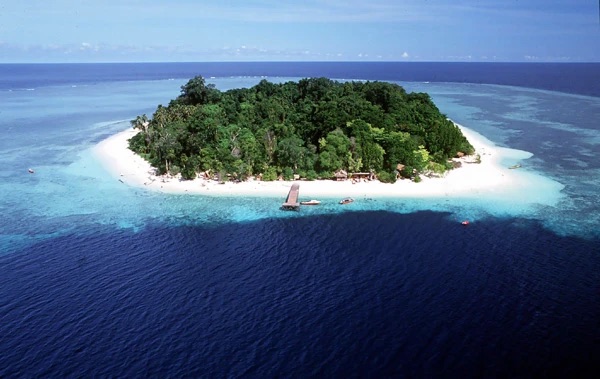
Sipadan is a volcanic seamount rising 600 metres from the floor of the Celebes Sea — and from the moment you roll backwards off the boat, the wall just keeps going. Green sea turtles glide past in numbers that stop feeling remarkable only on the third or fourth dive. At Barracuda Point, a perpetual column of chevron barracuda spirals in open water above the reef, catching light like a living mirror. Whitetip, blacktip, and grey reef sharks work the edges. On non-Sipadan days, Mabul fills the gaps with world-class macro: mimic octopus, flamboyant cuttlefish, pygmy seahorses on gorgonian fans.
Advanced Open Water is mandatory; only two dives per day are permitted on Sipadan itself. Each resort holds a small daily permit allocation — book three to six months ahead for June, which is peak season. The 2025 quota increase to 252 daily permits eases pressure somewhat, but availability is still tight in high summer.
Why June
The dry season runs mid-February through mid-November. June delivers flat seas and 25-metre-plus visibility — the wall at its clearest. Book permits early; last-minute slots in June are rare.
4-Day Island-Based Plan
Day 1: Tawau (TWU) → Semporna by road (60-90 min) → resort boat to Mabul. House reef dive in the afternoon.
Day 2: Sipadan: Barracuda Point, Turtle Cavern, South Point. Afternoon macro at Mabul.
Day 3: Sipadan (permit dependent): Hanging Gardens, Lobster Wall. Dives at Kapalai in the afternoon.
Day 4: Final morning dive at Mabul or Kapalai; boat to Semporna, transfer to Tawau.
Getting There
Fly to Tawau (TWU) from Kuala Lumpur or Kota Kinabalu on Malaysia Airlines, AirAsia, or MASwings. Taxi or minibus to Semporna (60-90 min); resort boats run from there. No accommodation exists on Sipadan — stays are on Mabul, Kapalai, or Mataking.
3. Komodo National Park — Indonesia, East Nusa Tenggara
Peak visibility season · drift diving · day trip or liveaboard
Water temp: 26-29°C north, 22-25°C south · Visibility: 20-30m (north/central) · Depth: 5-40m · Best zone in June: north and central
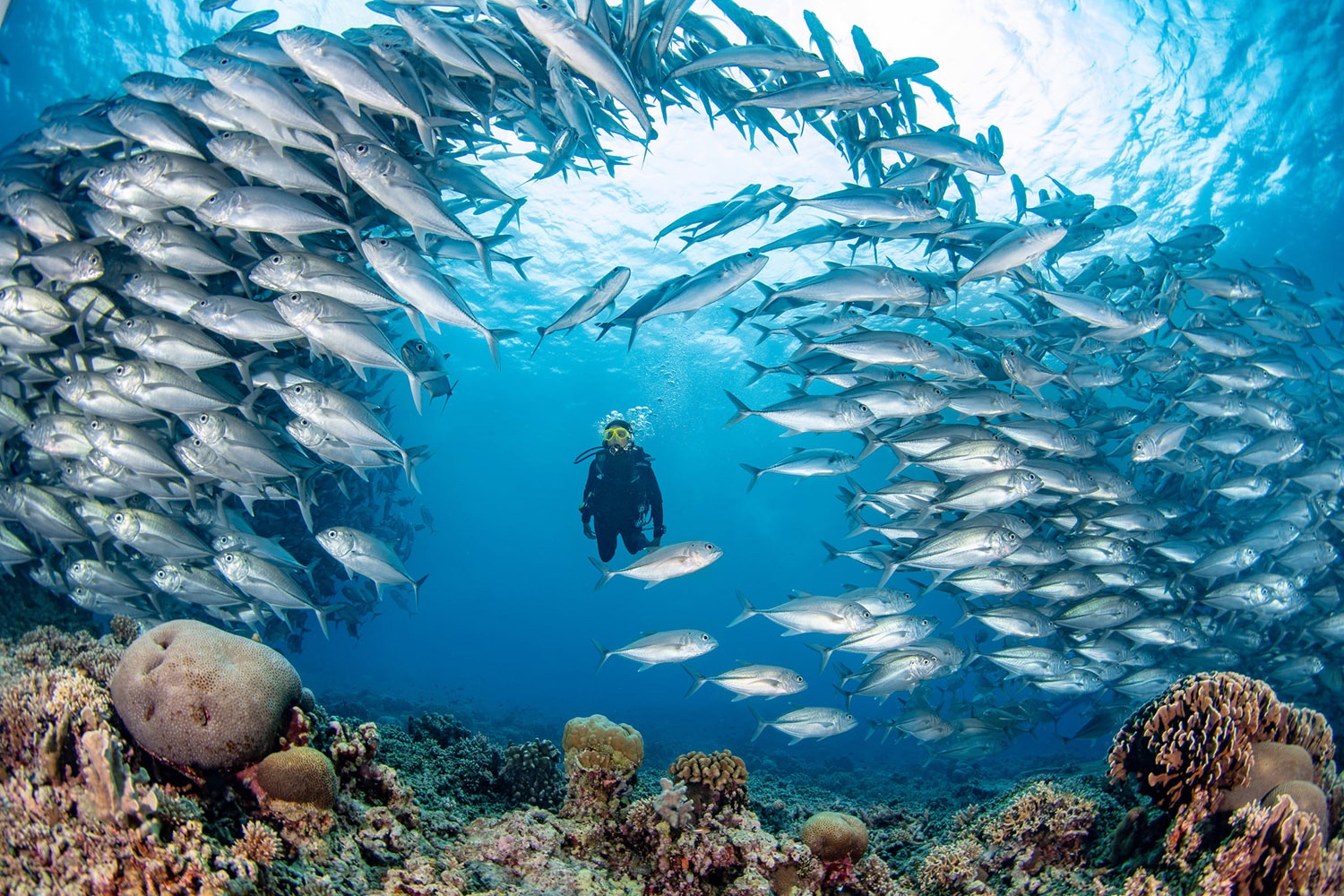
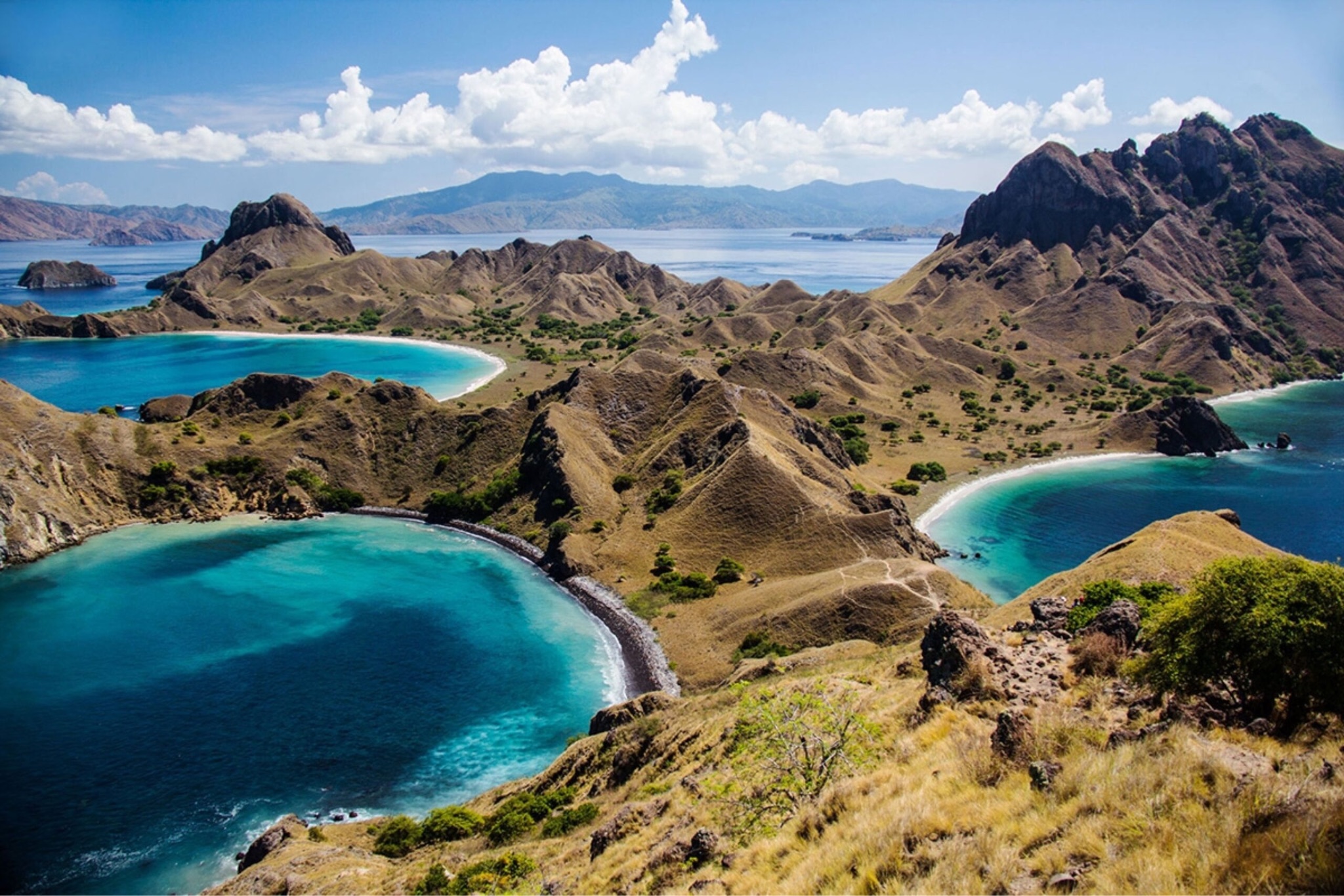
Batu Bolong is a current-swept pinnacle blanketed so thickly in orange anthias that you lose sight of the rock underneath. Castle Rock and Crystal Rock in the north deliver what drift diving should feel like: fast, purposeful, attended by Napoleon wrasse and grey reef sharks and walls of schooling fish that part around you like smoke. The Cauldron — a channel between two islands that catches tidal surge and ejects you into open water — is Komodo at its most theatrical. Above the waterline, the same dynamics that run the ocean here have produced another predator: komodo dragons pace the same beaches where your dive boat is anchored.
Beginners have options at Pink Beach and Siaba Besar; experienced drift divers head straight to the northern pinnacles. One caveat: manta rays are most reliable October through March, and many push south in June into water too rough to follow. Come for the reef and the current — not primarily for mantas.
Why June
Dry season means 20-30-metre visibility in the north and central park, without July and August's crowds. Early June is the sweet spot — quality diving before peak season pressure builds.
4-Day Day-Trip Plan from Labuan Bajo
Day 1: Arrive Labuan Bajo (LBJ). Check dive at Siaba Besar — turtles, macro, easy currents.
Day 2: Batu Bolong, Crystal Rock, Castle Rock. Evening walk at Rinca to see komodo dragons.
Day 3: The Cauldron drift (experienced divers), Pink Beach, Central Komodo macro sites.
Day 4: Morning dive; Padar Island viewpoint before afternoon flight.
Getting There
Fly to Labuan Bajo (LBJ) from Bali (~1 hr) or Jakarta (~2.5 hrs) on Garuda Indonesia, Lion Air, or Batik Air. Day trips depart from the town harbour; a 2-4-night liveaboard reaches the more remote southern sites.
Water temp: 18-26°C (thermoclines) · Visibility: 15-25m · Manta rays: year-round at Manta Point · Mola mola: begins June, peaks August-October · Skill: intermediate (strong currents)
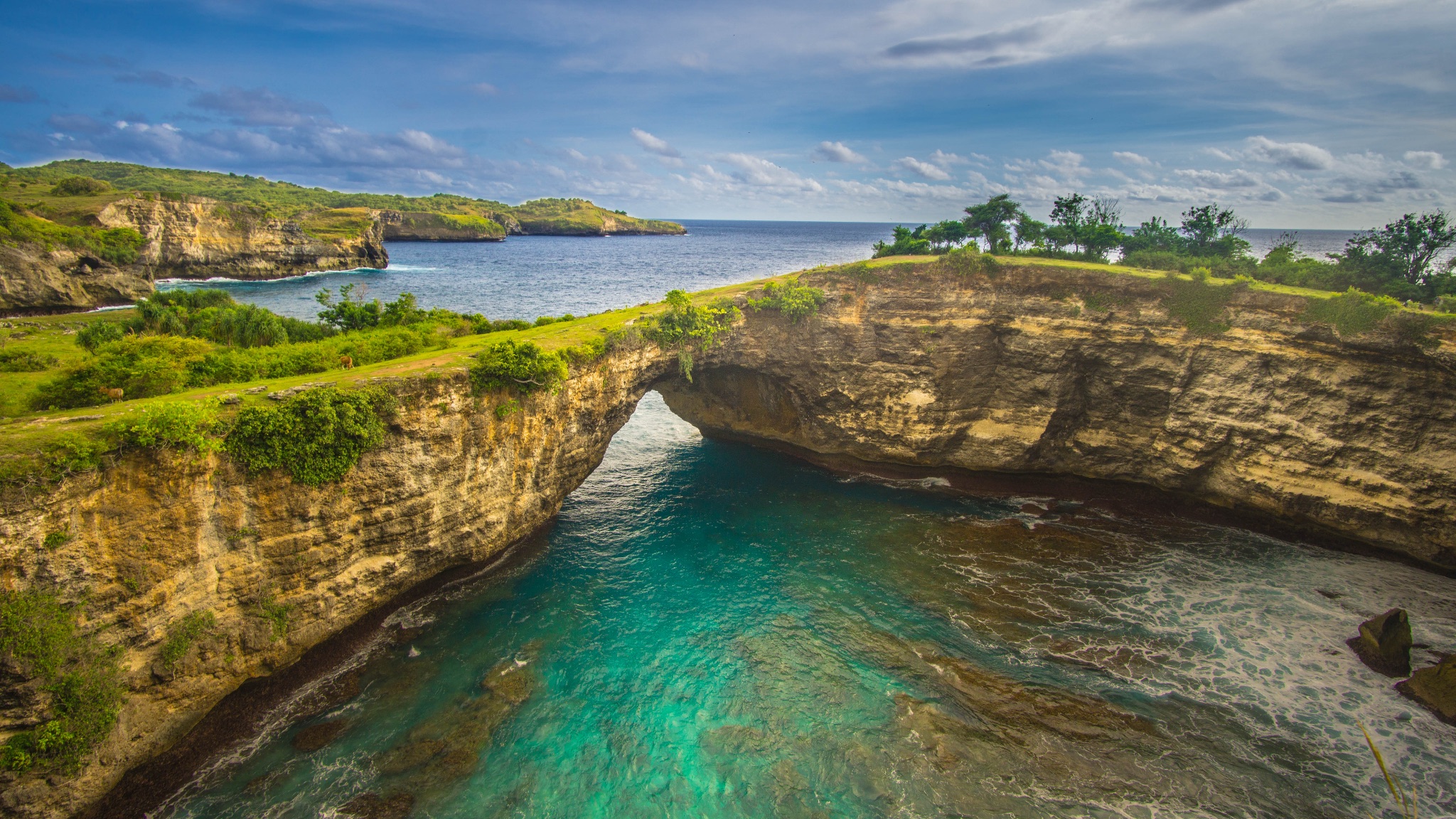
Thirty minutes from Bali's Sanur harbour, Nusa Penida sits at the edge of the Lombok Strait, and the cold, fast water that pours through it changes everything below the surface. Manta rays hold station at Manta Point year-round, unhurried, close enough that you could reach out — don't. From June onward, the mola mola arrive: the ocean sunfish, the world's heaviest bony fish, rising from depth to be cleaned at Crystal Bay's stations, enormous and improbably serene. The drift dives — Blue Corner, Toyapakeh channel — run fast and rich with life, the kind of diving that leaves you slightly winded at the surface, not from exertion but from trying to take it all in.
Manta Point is one of the few world-class sites accessible without a scuba tank — snorkellers and freedivers encounter mantas as reliably as divers. Bring a 5mm wetsuit for June; thermoclines can strip ten degrees off the temperature without warning.
Why June
The Lombok Strait's cold upwelling intensifies as the dry season settles in, triggering the start of mola mola season. The island is dry, uncrowded, and at its clearest. Sightings begin in June — patience at Crystal Bay rewards.
4-Day Island-Based Plan
Day 1: Fast boat Sanur → Nusa Penida (30 min). Afternoon dives at SD Point and Pura Ped — north-coast sites, turtles, easy entry.
Day 2: Manta Point in the morning (best light), Blue Corner drift in the afternoon.
Day 3: Crystal Bay: two dives for mola mola. Toyapakeh channel drift. Clifftop walk at dusk.
Day 4: Gamat Bay macro (frogfish, leaf scorpionfish, nudibranchs). Fast boat back to Sanur.
Getting There
Fly into Bali (DPS). Grab or taxi to Sanur harbour (30-45 min). Fast boats run daily to Nusa Penida; crossing is roughly 30 minutes. Most dive operators include accommodation and pier transfers in their packages.
5. Raja Ampat — Indonesia, West Papua
Off-peak · reefs to yourself
Water temp: 27-30°C year-round · Visibility: 10-20m (variable in June) · Depth: 3-40m · June conditions: wet season — flexibility required · Skill: intermediate-advanced
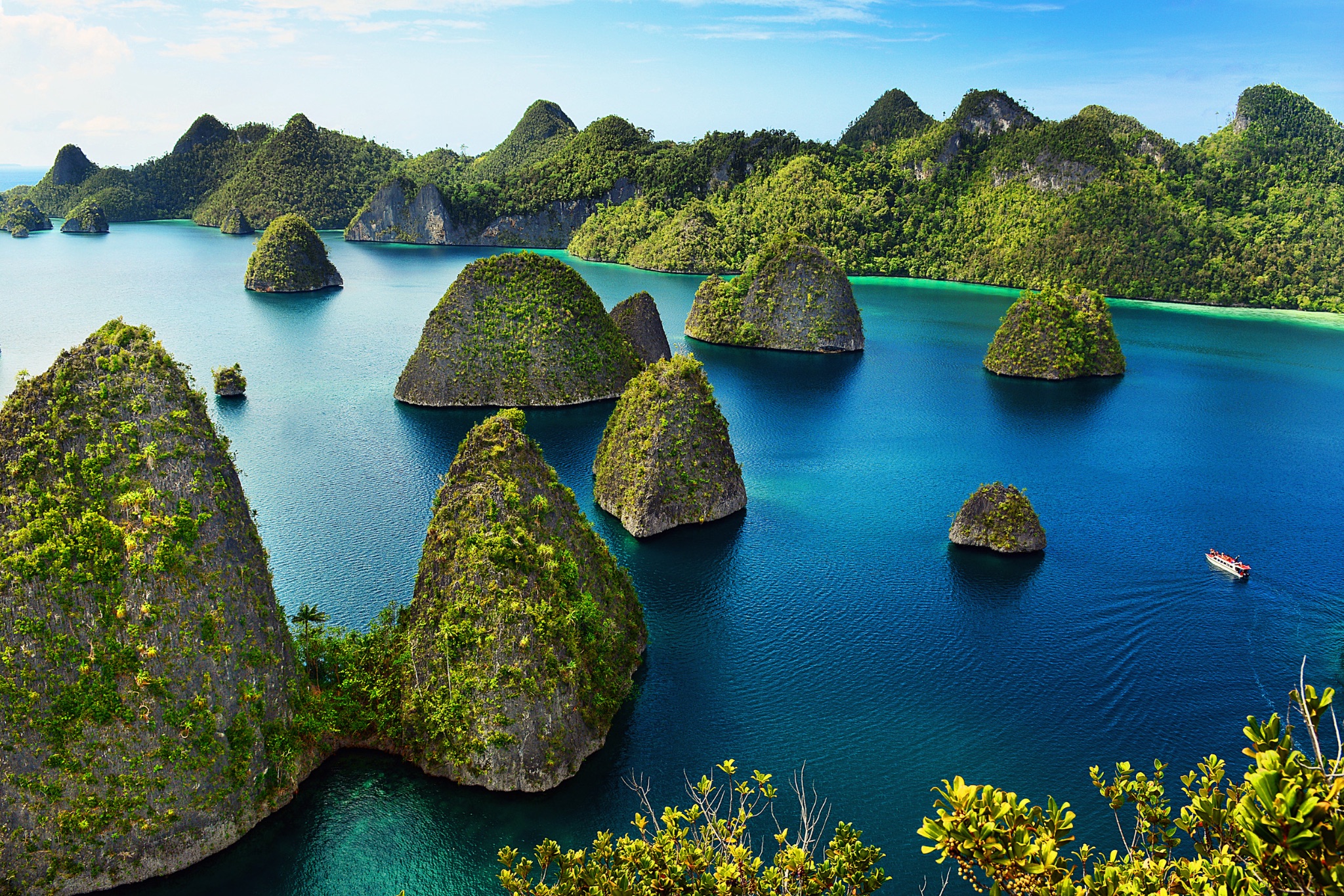
The superlatives attached to Raja Ampat are, for once, accurate: roughly 75% of the world's known coral species, over 1,600 reef fish species, and dive sites — Cape Kri, Melissa's Garden, Blue Magic — with no real equivalents anywhere else on the planet. Walking sharks drag themselves across the reef on their pectoral fins. Pygmy seahorses smaller than a thumbnail grip gorgonian fans. At Cape Kri, the fish count on a single dive holds the world record. Whether you're peering at macro or drifting through ten thousand fish in open water, the sensation is the same: like diving somewhere that hasn't been discovered yet.
Honest note for June: this is the start of the wet season. Visibility can drop to 10-15 metres in exposed areas, and some liveaboards reduce operations. The reefs don't change — biodiversity is year-round — but conditions are less predictable. Choose a sheltered location like Kri Island, build flexibility into your schedule, and you'll still dive some of the finest reefs on earth, with far fewer people around.
Why June (with caveats)
Lower prices, minimal crowds, the same extraordinary reef. For experienced divers who can adapt to shifting conditions day by day, it's a compelling trade. Go knowing it's wet season — not despite it.
4-Day Resort-Based Plan, Kri Island
Day 1: Sorong (SOQ) → speedboat to Kri Island (30-60 min). Jetty dive on the house reef.
Day 2: Cape Kri, Sardines, Blue Magic (conditions permitting). Night dive at the house reef.
Day 3: Melissa's Garden, Manta Sandy, The Passage. Afternoon kayak through the karst.
Day 4: Morning dive; speedboat back to Sorong for onward flight.
Getting There
Fly to Sorong (SOQ) via Jakarta on Garuda Indonesia or Batik Air — often transiting Makassar or Manado. Allow at least one night in Sorong; connections run late. Resorts and liveaboards handle speedboat transfers from the harbour. Waisai on Waigeo Island is served by public ferry from Sorong and is the main hub for budget homestays.
Water temp: 27-29°C · Visibility: 15-30m · Depth: 3-43m · Skill: all levels (cave cert required for caverns) · Highlight: limestone caverns + WWII wreck fleet
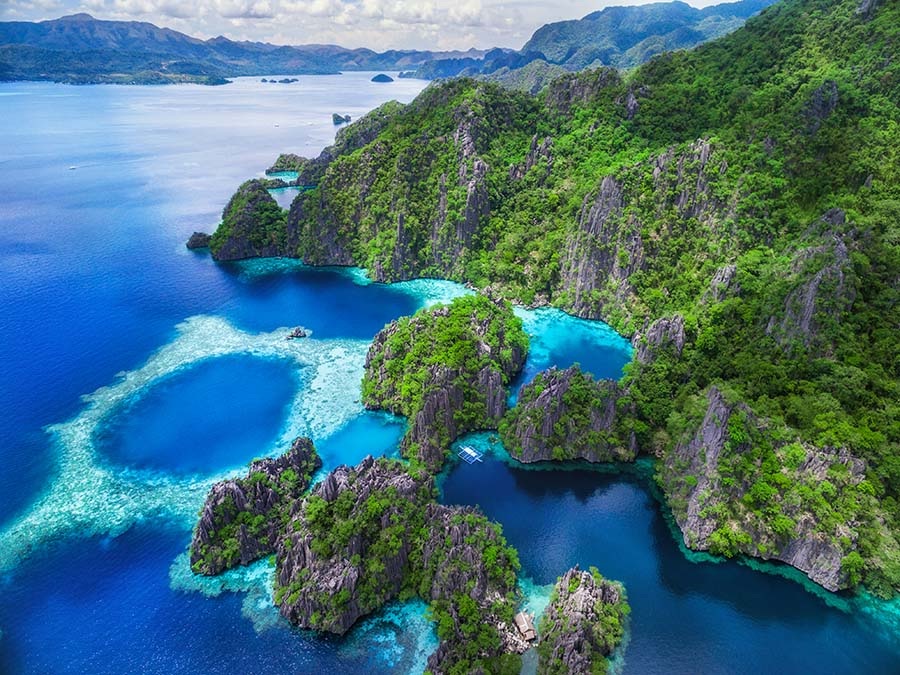
El Nido's limestone karst doesn't stop at the waterline. Below the surface, the same rock that walls in the island's famous lagoons forms caverns lit by morning light — stalactites descending into clear water, the ceiling turning gold. Coron, three hours north, is a different reckoning entirely: in September 1944, American aircraft sank a Japanese supply fleet in Coron Bay in a single raid. The Okikawa Maru, Akitsushima, Irako, and a dozen more now lie at 10 to 43 metres depth, colonised by coral, circled by fish. It is among the most atmospheric wreck diving in Southeast Asia — the kind of dive where you surface slightly altered.
Cave diving in El Nido's cavern systems requires overhead environment certification — no exceptions. Coron's wreck interiors need wreck certification; exteriors are fine at Open Water. Snorkellers can access the lagoons and shallow reefs without a tank, making this the most accessible destination on this list for mixed groups.
Why June
Late dry season: visibility peaks and morning sunlight enters El Nido's caverns at its sharpest angle of the year. Aim for early June before the southwest monsoon begins to build. Both towns are open year-round, no liveaboard required.
4-Day El Nido-Based Plan
Day 1: Fly to El Nido (ENI) or Puerto Princesa + 5-hr van. Afternoon reef dive at Nat Nat.
Day 2: Cudugnon Cave (stalactites, cathedral light), Lagen Island cavern system.
Day 3: Dilumacad Island caverns (advanced divers). South Miniloc afternoon — jacks, reef sharks.
Day 4: Twin Rocks macro dive; island-hopping by pump boat. Evening flight to Manila or Puerto Princesa.
Getting There
El Nido: AirSwift flies Manila (MNL) → El Nido (ENI), ~1 hr — book months ahead, it fills. Alternatively, fly to Puerto Princesa (PPS) and take a van to El Nido (~5-6 hrs; bumpy but scenic). Coron: Philippine Airlines and AirAsia fly Manila → Busuanga (USU), ~1 hr. Tricycle or van to Coron town (~45 min).
One ocean. Six windows.
The best June dive trip isn't the most famous reef on the list — it's the one that fits your certification, your timeline, and your tolerance for the unexpected. Tubbataha closes mid-month. Raja Ampat gets wet. Mola mola take their time. The ocean runs on its own calendar, and June, read correctly, offers something worth planning a year around.
Share
Frequently asked questions
What is the best scuba destination in Asia in June 2026?+
It depends on certification and what you want to see. Tubbataha (Philippines, season closes mid-June) offers hammerheads and pelagic walls but requires 50+ logged dives and liveaboard booking. Sipadan (Malaysia) delivers peak visibility on the wall and is the cleanest June pick for Advanced Open Water divers. Nusa Penida (Bali) marks the start of mola mola season. Komodo's northern pinnacles peak for clarity. Raja Ampat is wet season — go knowing that.
When does Tubbataha Reef close in 2026?+
Tubbataha's dive season runs mid-March through mid-June 2026 — it closes when the southwest monsoon arrives. The first two weeks of June have the calmest crossings and the last realistic window. After mid-June, the next opportunity is March 2027.
Do I need 50 logged dives for Tubbataha?+
Yes — the park authority requires 50 logged dives. The threshold is earned, not arbitrary: Tubbataha demands confident drift diving with negative entries, reef hooks, and the ability to read surge. Liveaboards verify logbooks before departure.
Is Raja Ampat worth it in June?+
June is the start of Raja Ampat's wet season — visibility can drop to 10-15 metres in exposed areas, and some liveaboards reduce operations. The reefs themselves don't change (75% of the world's known coral species are still there year-round). For experienced divers willing to adapt day by day, June offers lower prices and minimal crowds at the same extraordinary reef. Choose a sheltered base like Kri Island and build flexibility into the schedule.
When can I see mola mola at Nusa Penida?+
Mola mola (ocean sunfish) season opens in June 2026 at Nusa Penida and peaks August through October. June sightings are possible but require patience at Crystal Bay. Manta rays at Manta Point are year-round.
Start a trip Fortrip can actually defend.
Sketch a brief. We come back with an itinerary that reads like a recommendation, not a checklist — and tell you what we’d change about it.