12 Red Flags That Make a Multi-City Itinerary Unrealistic
Most multi-city trips don't fall apart from one big mistake — they fall apart from a dozen small mismatches in timing, pacing, and logistics that never got checked. Here are the 12 we see most often, and how to catch them before you book.
A multi-city trip is where good intentions go to die. Everyone starts with a reasonable list of places they want to see, and somewhere between the planning spreadsheet and the actual booking, that list turns into six cities in nine days with a two-hour ferry connection nobody double-checked.
Most of these itineraries don't fall apart because of one big mistake. They fall apart because of small, specific mismatches — a date that collides with a festival, a pace built for someone twenty years younger, a "quick transfer" that's actually a mountain road. None of these show up as a single red flag on their own. Stacked together across a dozen destinations, they're the reason a trip that looked perfect on paper turns into a slog by day four.
Here are the twelve we see most often, grouped by where they tend to come from.
Timing Problems: When the Calendar Fights the Itinerary
1. The trip lands on a major holiday or festival — and nobody adjusted for it
Share
Start a trip Fortrip can actually defend.
Sketch a brief. We come back with an itinerary that reads like a recommendation, not a checklist — and tell you what we’d change about it.
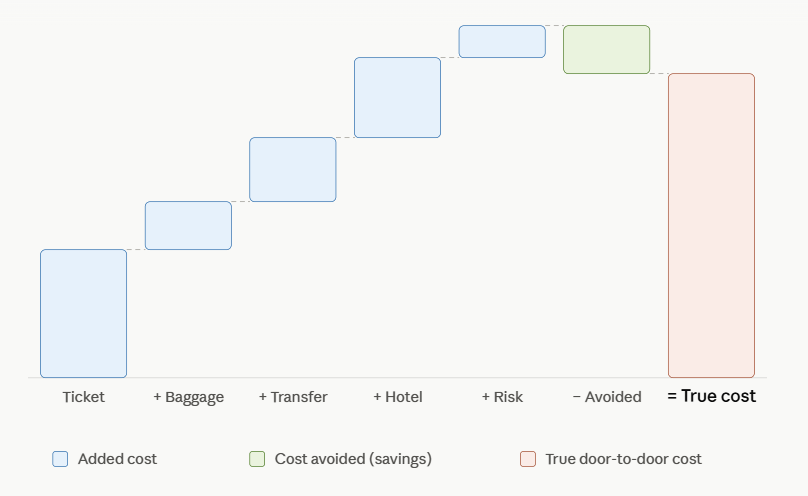
A cheap flight and a pricier train can end up costing the same once you add baggage, transfers, and an extra hotel night. Here's how to compare the full door-to-door cost — with five real routing cases where the obvious choice wasn't actually the cheapest one.
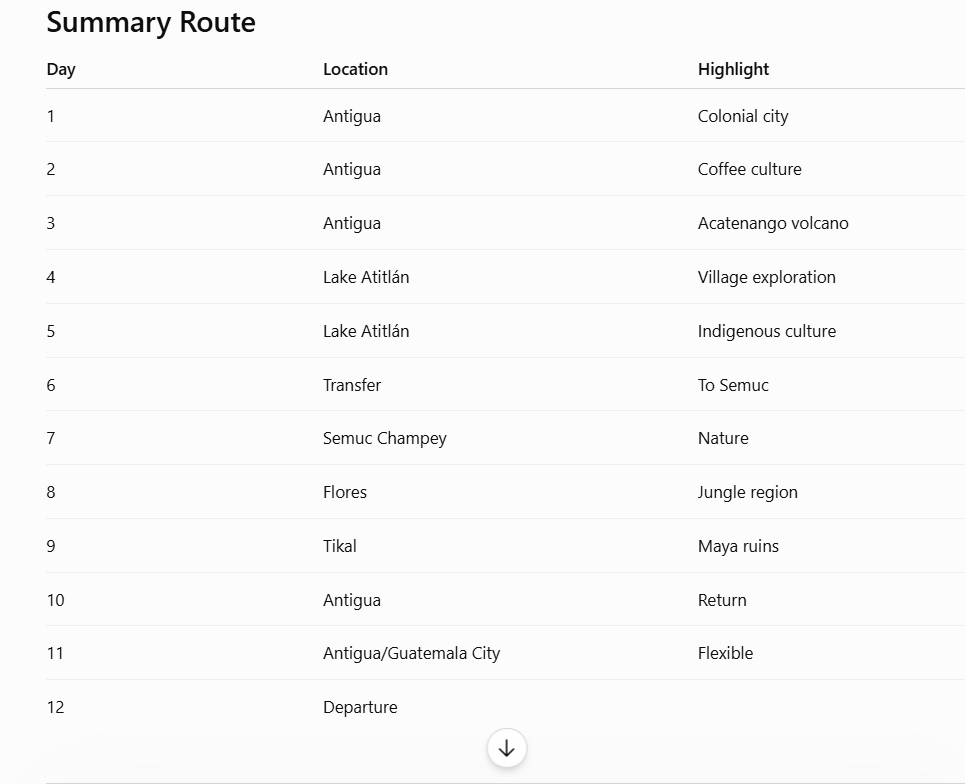
ChatGPT can plan a Guatemala trip in seconds — but a validator caught an altitude risk, two 10+ hour transfer days, and a season the itinerary never accounted for. Here's what to check before you book.
Visiting China during Spring Festival sounds atmospheric until you try to book a train ticket. Timing a trip to Japan around Hanabi season means gorgeous fireworks and also hotel prices that have quietly doubled, plus traffic that doubles with them. These aren't reasons to avoid the dates — they're reasons to plan around them, which most itineraries simply don't do.
2. The season doesn't match the activity
June in Costa Rica is objectively wet. March in Tanzania scatters the wildlife across tall grass that just got its yearly growth spurt. December in Nepal can close high-altitude trekking routes outright, and July in Patagonia isn't "winter, but doable" — it's winter, and several trails are shut. A season that's fine for the destination in general can still be wrong for the specific thing you came to do there.
3. Weather patterns nobody accounted for — wind, fog, storms
April in Wadi Rum means sandstorms, not a windy afternoon. Monsoon season in Palawan doesn't just mean rain — it kills visibility for diving entirely. November at the Jungfrau frequently means a viewing platform wrapped in cloud. These are predictable, seasonal, and almost never factored into a first-draft itinerary.
Pacing Problems: When the Schedule Assumes a Different Traveler
4. Too many destination changes for the number of days
There's a version of "efficient" travel that's actually just exhausting travel. Five countries in seven days isn't a tight itinerary — it's five arrival days and two hours of actual sightseeing. The tell is usually in the transfer count: if you're changing cities more often than every two or three days, ask whether you're visiting places or just passing through them.
5. High-intensity days stacked back-to-back with no recovery
Arequipa has genuinely spectacular mountain climbing nearby. Doing one climb is a highlight. Doing four in a row is a different trip entirely, and one your body may not thank you for. The same goes for destinations with heavy multi-day diving — Belize's reef sites are incredible, but stacking deep dives every single day raises real fatigue and safety concerns, not just tiredness.
6. One night somewhere that deserves several
A single overnight in Patagonia, or one day in the Amazon, technically checks the box. It also means you're leaving right as you'd start to actually see what makes the place worth the trip — the quiet trail at sunrise, the wildlife that only shows up once the day-trippers clear out. Short stays in slow places are one of the most common ways an itinerary looks complete while being quietly hollow.
Group and Budget Mismatches
7. The itinerary doesn't match who's actually going
A multi-day trek in Patagonia works differently for a solo hiker than it does for a family bringing grandparents and young kids along. Everyone has a different pace and a different physical ceiling, and an itinerary built for the fittest member of the group often means everyone else is either miserable or left behind.
8. Budget and destination don't line up
Wanting to dive and wanting a honeymoon in the Maldives are two different trips, even though they can look like the same trip on a map. If diving is the actual priority, the Philippines or Indonesia often deliver better sites, more dive operators, and a fraction of the cost. The same logic applies to birding trips in Costa Rica versus neighboring Panama or Colombia — gorgeous either way, very different price tags for a comparable experience.
Logistics Gaps: The Details That Get Skipped
9. Permits and entrance requirements nobody mentioned
The Inca Trail requires a permit booked well in advance, and permits sell out months ahead during peak season. Some sunrise viewpoints at major archaeological sites require a separate early-entry ticket on top of standard admission. These aren't obscure details — they're the difference between doing the trip you planned and standing at a gate you can't get through.
10. Transportation reality versus transportation on a map
A short-looking drive to reach mountain viewpoints near Kula Kangri can mean ten-plus hours on switchback roads. Getting to Churchill to see polar bears, or to Nunavut in the Canadian Arctic, means working around genuinely limited flight schedules — book late and you may not get there at all, or pay several times what an early booking would have cost.
11. Daily sequencing that ignores real-world variables
An itinerary that assumes every flight lands on time, every ferry runs on schedule, and every activity takes exactly as long as listed is an itinerary with zero margin. The moment one thing runs long — and on a multi-city trip, something always does — the rest of the day, and sometimes the rest of the week, has to be renegotiated on the fly.
12. No prep for destination-specific realities
Some of the most common trip-ruining surprises aren't about the itinerary at all — they're about what nobody packed. Public restrooms in much of China don't provide toilet paper. Cuba's internet access is limited enough that offline maps aren't optional. High altitude in Tibet makes sleep aids and a proper adjustment period genuinely useful, not just a nice-to-have. None of this shows up in a bullet-point schedule, but all of it shows up on the trip.
Why These Red Flags Are Easy to Miss
None of these twelve problems are exotic. Individually, most travelers would catch at least a few of them with a bit of research. The real issue is volume: a multi-city itinerary has dozens of moving pieces — dates, pacing, group needs, budget, permits, weather, transport — and checking all of them by hand, for every city, is genuinely tedious. That's usually where the gaps sneak in, not from a lack of travel knowledge, but from running out of patience halfway through the checklist.
This is exactly the gap we built Fortrip's itinerary validator to close. Instead of manually cross-checking dates against festivals, pacing against group composition, and transport times against actual road conditions, the validator runs your full itinerary through all of it at once — and flags what's actually worth worrying about, not just a generic list of travel tips.
Try Your Itinerary Against These Red Flags
If your trip touches more than two or three cities, it's worth running it past a second set of eyes before you book flights and non-refundable hotels. Fortrip's Validator checks your itinerary against timing conflicts, pacing issues, group mismatches, budget gaps, and the logistics details above — the same categories that cause most multi-city trips to go sideways. Paste in your plan and see what it catches.
FAQ
What's the most common reason a multi-city itinerary falls apart?
Pacing, more than anything else. Too many destination changes for the number of days, or high-intensity activities stacked without recovery time, cause more trip fatigue than any single bad booking.
How many cities is too many for a two-week trip?
There's no fixed number, but if you're changing cities more often than every two to three days, you're likely spending more time in transit than actually experiencing each place. Fewer stops with more time each usually beats a longer list.
Do I need to check festival and holiday dates even if I'm not attending the festival?
Yes. Major holidays affect train and flight availability, hotel pricing, and crowd levels even for travelers who have no interest in the festival itself. Chinese New Year and Japan's Hanabi season are two of the most common examples.
How do I know if my itinerary's pace is realistic for my group?
Look at the least experienced or least physically able person in your group, not the most capable one. An itinerary that only works for the fittest traveler in the group usually doesn't work for the group as a whole.
Can a travel itinerary validator actually catch things a human planner would miss?
It's less about catching things no human could find, and more about checking everything consistently. A validator cross-references dates, pacing, transport, budget, and group needs all at once, rather than relying on remembering to check each one manually across every city on the trip.